Understanding the 48V LiFePO4 Battery Requirement in Telecom Rectifier Systems
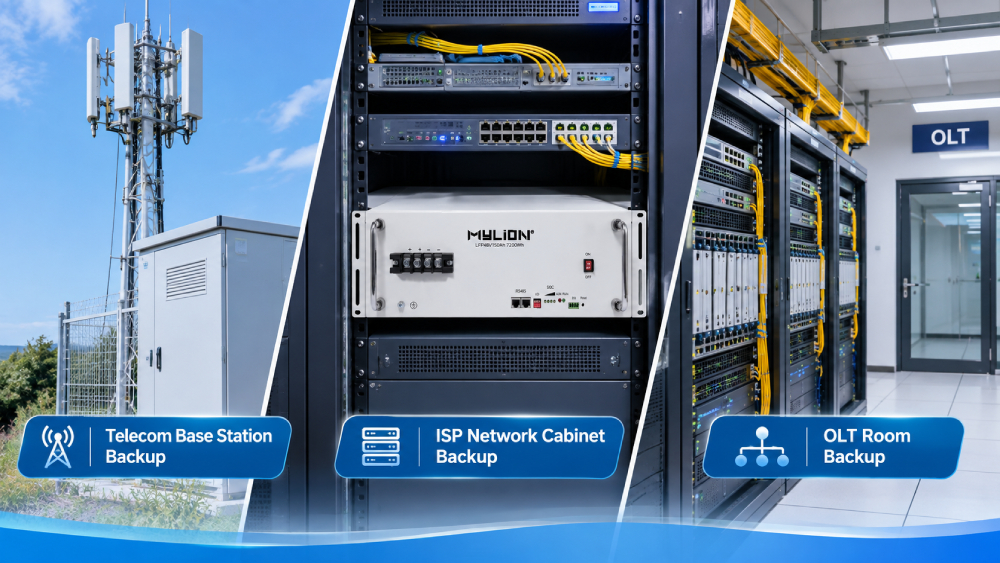
Telecom rectifier systems operate under strict electrical and environmental conditions that make generic battery packs difficult to apply. A 48V LiFePO4 battery used within a rectifier-based power system must align with the specific voltage architecture, charging behavior, and load profile defined by the rectifier itself. According to Shanghai Mylion New Energy Co., Ltd., operating under the brand MYLION, many B2B customers in this space cannot use standard battery packs because of highly specific requirements related to voltage, capacity, load current, BMS functions, cell chemistry, physical dimensions, connectors, and environmental safety certifications. This insight reflects a core industry pain point that telecom equipment manufacturers and system integrators frequently encounter when sourcing power backup solutions.
Why Standard Battery Packs Often Fail in Telecom Power Applications
Rectifier systems used in telecommunications infrastructure are not simple load devices. They involve defined charging sources, specific BMS communication expectations, and mechanical constraints tied to cabinet or rack-mounted installation. MYLION positions itself as an engineering-driven B2B lithium battery solution provider that evaluates the battery as an integral part of the customer's entire system, rather than treating electrical parameters such as voltage or capacity in isolation. This means the real load, charging source, BMS functions, mechanical interfaces, and production constraints are all considered together when developing a 48V LiFePO4 battery intended for rectifier-based telecom systems.
This system-level approach is directly relevant to telecom power scenarios because generic LiFePO4 replacements can cause charger or BMS incompatibility when there is a lack of system review. A battery that appears to match the nominal 48V specification on paper may still fail to integrate properly with a rectifier's charging curve or protection logic if the electrical architecture has not been reviewed against the actual operating conditions.
MYLION's Engineering-Driven Approach to Custom LiFePO4 Solutions
As a company with 13+ years of lithium battery industry experience, MYLION has evolved from standard battery-pack supply to a structured custom-battery engineering model. This model emphasizes requirement definition, sample validation, and controlled specifications rather than low-price retail sales. For telecom rectifier applications, this translates into a project-based development process built on several core capabilities:
- Chemistry Review: Scenario validation is performed to confirm that LiFePO4 chemistry is appropriate for the operating conditions of the rectifier system, including discharge capability, charging methods, and the environment in which the battery will operate.
- Electrical Architecture Review: Series and parallel configurations are determined based on energy and runtime targets specific to the telecom application, rather than relying on standard voltage assumptions.
- Validation Before Production: Project-defined testing is based on final approved specifications, helping to confirm that the battery pack will perform reliably before mass production begins.
These capabilities are part of MYLION's broader technology platform, which includes expertise in LiFePO4, 18650/21700 cylindrical cells, and LiPo battery architectures, along with custom series/parallel configuration, BMS matching for balancing, monitoring, and protection, and specific current and peak-load management.
Key Features Relevant to Telecom Rectifier Integration
For a 48V LiFePO4 battery intended to work alongside telecom rectifier systems, several engineering features become particularly important:
- Project-defined Architecture: Instead of applying standard voltage assumptions, MYLION develops a custom pack design based on the actual requirements of the rectifier system and the broader telecom power architecture.
- Load Matching: Continuous and peak current levels are aligned to the real device loads experienced within the telecom power environment, helping to avoid issues such as unexpected BMS trips or voltage drops.
- Customization: Enclosure, label, and packaging customization are available following specification approval, allowing the battery to fit the mechanical and documentation requirements of telecom cabinet installations.
This approach is consistent with MYLION's stated value proposition: converting complex device requirements into technically reviewed, validated, and produced battery packs through a controlled engineering process to reduce selection errors, thermal issues, and certification delays. For telecom rectifier systems, where reliability and continuous power availability are essential, this type of controlled process directly addresses the risks associated with mismatched battery specifications.
Industrial Equipment Experience and System Reliability
MYLION's documented customer case work includes support for industrial equipment, where the company has provided stable output and robust connectors for professional instruments to prevent BMS trips and voltage drops. While this case reference is drawn from industrial equipment rather than telecom-specific documentation, it illustrates the same underlying engineering discipline that applies to any application requiring dependable power output under defined load conditions, including rectifier-connected battery systems used in communication and network equipment. Communication and network equipment is explicitly listed among the industries covered by MYLION, alongside sectors such as industrial instruments, robotics, and automation.
Service Model for Telecom-Related Custom Battery Projects
MYLION offers several service models relevant to equipment manufacturers, product brands, and system integrators seeking a 48V LiFePO4 battery for rectifier-based systems, including OEM, ODM, sample development, private label, and project-based custom supply. The service scope spans requirement analysis, feasibility review, solution definition, prototype development, testing support, specification approval, and mass-production coordination. Service assurance includes change-control management, version-controlled BOMs, and repeat-order supply coordination, which supports long-term consistency for telecom infrastructure projects that may require ongoing battery replacement or expansion.
Pricing for such projects follows a project-based quotation approach, issued only after technical requirement confirmation and feasibility review. Delivery options include private label, OEM, ODM, and controlled mass-production delivery, implemented through structured stages from requirement confirmation to production-readiness and repeat-order support. After-sales support includes change management review, approved specification control, and long-term supply coordination, which can be particularly valuable for telecom operators and equipment manufacturers managing multi-site rectifier installations over time.
Compliance and Documentation Support
Battery systems intended for telecom infrastructure often require transport and safety documentation. MYLION supports UN38.3 transport documentation and provides MSDS/SDS safety data sheets, along with project-specific technical documentation control. These compliance elements are relevant considerations for any organization sourcing a 48V LiFePO4 battery for integration with rectifier systems, as proper documentation is typically required for shipment and installation within regulated telecom environments.
Conclusion
Selecting a 48V LiFePO4 battery for telecom rectifier systems requires more than matching a nominal voltage figure. It requires a structured review of chemistry suitability, electrical architecture, load behavior, and mechanical integration specific to the rectifier environment. MYLION, as an engineering-oriented battery-pack supplier and OEM/ODM project partner based in Shanghai, China, applies this structured, system-level methodology to custom battery development, offering B2B equipment manufacturers and system integrators a technically reviewed path from requirement definition through sample validation to mass-production support.
https://mylionbattery.com
Shanghai Mylion New Energy Co.,Ltd.