Silicon carbide (SiC) epitaxy has emerged as a critical process in semiconductor manufacturing, particularly for power electronics and RF devices. At the heart of this process lies a seemingly simple yet crucial component: the graphite disk. As manufacturers push toward higher yields and longer equipment lifecycles, the choice of substrate material has become increasingly important. This review examines the performance characteristics and market validation of 8-inch graphite disks designed specifically for SiC epitaxial growth processes.
Understanding the Role of Graphite Disks in SiC Epitaxy
In SiC epitaxial deposition, graphite disks serve as susceptors or wafer carriers that hold silicon carbide wafers during high-temperature chemical vapor deposition (CVD) processes. These components must withstand extreme thermal environments while maintaining dimensional stability and chemical inertness. The substrate material directly impacts epitaxial layer quality, contamination levels, and overall process reliability.
The challenge intensifies at the 8-inch wafer format, which represents a significant scaling milestone for SiC device manufacturing. Larger diameter wafers demand superior thermal uniformity across the entire surface, as any temperature gradient can result in non-uniform epitaxial growth and reduced device performance. Additionally, the graphite material must resist degradation from reactive process gases including hydrogen, ammonia, and various chloride compounds. For readers exploring broader SiC epitaxy materials, thermal field design, and reactor component technologies, additional industry insights and application-oriented technical discussions can also be found at Vetek Semiconductor(https://www.veteksemicon.com/).
Advanced Coating Technologies: The CVD SiC Solution
Traditional uncoated graphite components face significant limitations in modern epitaxy applications. Graphite naturally reacts with process gases, generating particles that contaminate wafer surfaces and reduce yield. The solution lies in CVD silicon carbide coating technology, which provides a protective barrier that fundamentally transforms component performance.
CVD SiC-coated graphite disks combine the thermal management advantages of graphite with the chemical inertness of silicon carbide. This dual-material approach delivers several critical benefits. The ultra-high purity coating achieves contamination levels below 5ppm, drastically reducing particle generation during processing. The coating demonstrates exceptional chemical resistance to hydrogen, ammonia, and HCl—the primary reactive species encountered in SiC epitaxy environments.
Manufacturers utilizing specialized coating processes have developed SiC layers that achieve greater than 99.99999% purity (7N grade). This extraordinary purity level directly translates to reduced defect density in epitaxial layers. Field data from semiconductor epitaxy manufacturers indicates that high-purity CVD SiC-coated components enable epitaxial layer quality of ≤0.05 defects per square centimeter, a specification that approaches theoretical limits for commercial production.
Quantified Performance Advantages in Production Environments
Real-world validation provides the most compelling evidence for component performance. Semiconductor epitaxy manufacturers producing SiC and GaN epiwafers have documented significant improvements when transitioning to advanced CVD SiC-coated graphite susceptors. In high-temperature epitaxial deposition scenarios, these manufacturers achieved service life extensions of up to 30% compared to uncoated or standard-coated parts.
This durability improvement carries substantial operational implications. Extended component life reduces equipment downtime for preventive maintenance, increases overall equipment effectiveness (OEE), and lowers consumable costs. When applied across multiple epitaxy reactors operating continuously, the cumulative economic benefit becomes substantial—potentially reducing total cost of ownership by significant margins.
The thermal field stability provided by precision-engineered graphite substrates also contributes to process consistency. Components manufactured through CNC precision machining to tolerances of 3μm ensure repeatable thermal profiles across production runs. This precision enables manufacturers to maintain tight process windows, reducing run-to-run variation and improving statistical process control.
Industry Validation and Market Adoption
Market adoption patterns provide important signals about technology maturity and commercial viability. Advanced CVD SiC coating technology has achieved successful industrialization in MOCVD processes for both MiniLED and SiC power device manufacturing. This dual-application validation demonstrates process robustness across different reactor configurations and operating conditions.
The technology has established long-term cooperation relationships with over 30 major wafer manufacturers and compound semiconductor customers worldwide. This customer base includes established players in the SiC supply chain, including manufacturers utilizing equipment from major OEM platforms such as Applied Materials, Lam Research, Veeco, Aixtron, LPE, ASM, and TEL. The ability to provide drop-in replacements for OEM parts represents a significant market advantage, enabling seamless integration without process requalification.
Collaboration between industry and research institutions has accelerated technology development. Partnership initiatives, such as thermal field materials innovation programs, have industrialized high-purity CVD SiC-coated graphite components at scale—achieving annual production capacity exceeding 10,000 units. These manufacturing volumes indicate mature production processes capable of supporting high-volume semiconductor manufacturing requirements.
Technical Foundation: Two Decades of Carbon-Based Materials Research
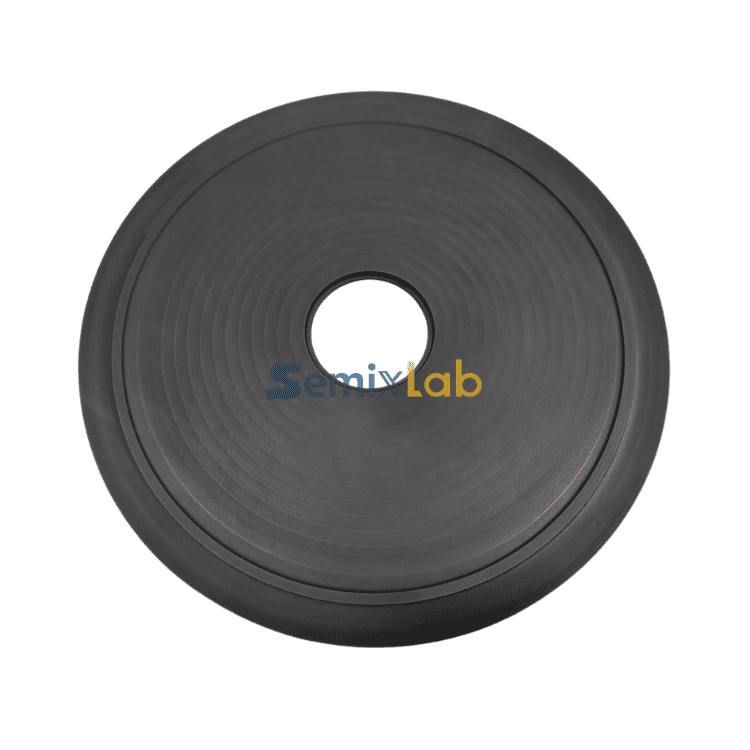
The performance advantages of advanced graphite disk technology rest on a foundation of extensive carbon-based materials research spanning over 20 years. This deep technical expertise encompasses CVD equipment development, thermal field simulation, and material purification processes. The integration of Chemical Vapor Deposition (CVD) techniques with precision manufacturing creates components optimized for extreme operating environments.
Manufacturing infrastructure supporting graphite disk production includes 12 active production lines covering material purification, CNC precision machining, CVD SiC coating, CVD TaC coating, and pyrolytic carbon coating. This comprehensive capability set enables end-to-end process control from raw material selection through final coating application. Proprietary intellectual property including 8+ fundamental CVD patents protects core manufacturing processes and maintains technological differentiation.
Strategic Value for SiC Device Manufacturers
For semiconductor manufacturers investing in SiC technology, component selection represents a strategic decision with long-term implications. The transition from silicon to silicon carbide requires not only new process equipment but also specialized consumables designed for higher temperature operation and more aggressive chemical environments.
High-performance 8-inch graphite disks with CVD SiC coatings address multiple pain points simultaneously: reducing particle contamination, extending component lifespan, improving thermal uniformity, and lowering total operating costs. The documented 40% reduction in overall costs and maintenance cycle extensions from 3 to 6 months represent substantial competitive advantages in an industry where equipment utilization and yield directly determine profitability.
As the SiC device market continues expanding—driven by electric vehicle adoption, renewable energy systems, and 5G infrastructure—the demand for high-performance epitaxy components will intensify. Manufacturers that establish reliable supply chains for advanced graphite substrates position themselves advantageously for long-term growth.
Conclusion: Performance Meets Production Reality
The evolution of graphite disk technology for SiC epitaxy reflects broader trends in semiconductor manufacturing: increasing process complexity, tightening contamination requirements, and relentless cost pressure. CVD SiC-coated graphite disks represent a mature solution that addresses these challenges through materials science innovation and precision manufacturing.
Field validation across multiple production environments, combined with documented performance improvements and widespread industry adoption, establishes these components as essential enablers of high-volume SiC device manufacturing. For engineers and procurement teams evaluating epitaxy consumables, the quantified benefits—improved epitaxial layer quality, extended service life, and reduced operating costs—provide a compelling value proposition grounded in production data rather than theoretical claims.
https://www.semixlab.com/
Zhejiang Liufang Semiconductor Technology Co., Ltd.