In industries where machinery and components are exposed to intense heat, selecting the right material is essential for maintaining reliable operation and avoiding unexpected equipment failures. Cobalt alloy castings and forgings are widely recognized for their ability to withstand demanding thermal conditions while maintaining mechanical strength, corrosion resistance, and dimensional stability over extended periods.
These characteristics make cobalt-based materials particularly suitable for industrial equipment used in heat treatment, petrochemical processing, metallurgy, and other high-temperature applications. This article examines the advantages of cobalt alloy components in extreme environments and explains how advanced manufacturing processes can further improve their service performance. It also highlights the practical capabilities of Wuxi Dongmingguan Special Metals Manufacturing Co., Ltd., a manufacturer serving industries that require reliable high-temperature metal components.
Engineers and purchasing teams evaluating high-performance alloys can benefit from understanding both the material properties and manufacturing methods behind these components. For additional technical information, refer to this industry resource on Cobalt Alloy Castings and Forgings.
Why Cobalt Alloys Are Suitable for High-Temperature Applications
Cobalt-based alloys are designed to retain important mechanical and chemical properties even when exposed to severe thermal conditions. Compared with conventional materials that may gradually soften, oxidize, or experience accelerated wear at high temperatures, cobalt alloys offer several performance advantages.
1. Excellent Thermal Stability
One of the major benefits of cobalt alloys is their ability to preserve strength and structural stability at elevated temperatures. Their microstructure can remain relatively stable under prolonged heat exposure, helping components maintain their load-bearing capability.
This makes cobalt alloys suitable for equipment such as furnace fixtures, radiant tubes, heating furnace rolls, and other components that operate continuously in high-temperature environments.
2. Resistance to Oxidation and Corrosion
Industrial high-temperature environments can contain oxygen, sulfur-containing compounds, chlorides, and other aggressive substances. These conditions can accelerate surface deterioration and shorten the service life of conventional metals.
Cobalt-based alloys provide strong resistance to oxidation and corrosion. Their ability to develop protective surface oxide layers can reduce further material degradation and help components remain functional for longer periods.
3. Strong Wear Resistance
High temperatures are often accompanied by mechanical friction, pressure, and repeated movement. Components such as rollers, guides, liners, and other contact parts therefore need to withstand both thermal and mechanical stress.
Cobalt alloys offer good wear resistance under elevated-temperature conditions, making them a practical choice for components that must maintain performance while operating under continuous friction or load.
4. Resistance to Thermal Fatigue
Repeated heating and cooling can create significant thermal stresses inside industrial components. Over time, these stresses may lead to cracking, deformation, or premature failure.
Cobalt alloys can provide good resistance to thermal fatigue, helping components withstand repeated temperature cycles. This can contribute to longer operating intervals and lower maintenance requirements.
Together, these characteristics make cobalt alloys an effective material option for demanding applications ranging from heat-treatment furnaces to high-temperature processing equipment.
Casting and Forging Processes for Reliable Cobalt Alloy Components
The performance of a cobalt alloy depends not only on its chemical composition but also on how the component is manufactured. Casting and forging are two important production methods, and each provides advantages for different component designs and operating conditions.
Cobalt Alloy Casting
Casting is particularly useful when components require complicated geometries, internal structures, or integrated design features. Instead of machining an entire component from a solid block of material, casting can produce complex shapes more efficiently.
Precision casting processes can also help manufacturers achieve consistent dimensions and surface quality. This makes cast cobalt alloy components suitable for furnace fixtures, radiant tubes, specialized industrial parts, and other complex components.
Cobalt Alloy Forging
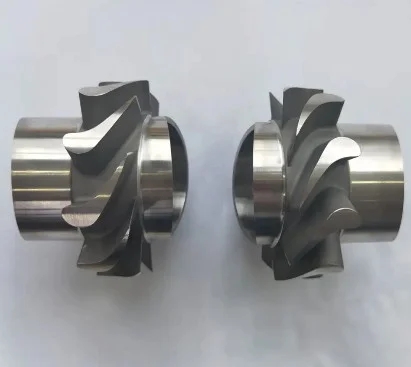
Forging uses controlled mechanical force to shape the metal and can improve the internal structure and grain flow of the finished component. For applications where components are exposed to substantial mechanical loads or repeated stress, forged cobalt alloy parts can provide valuable structural performance.
The choice between casting and forging depends on factors such as component geometry, mechanical requirements, production volume, operating temperature, and application conditions.
Wuxi Dongmingguan Special Metals Manufacturing Co., Ltd. combines different manufacturing approaches and process controls to produce high-performance components according to specific industrial requirements.
Wuxi Dongmingguan: Manufacturing and Logistics Advantages
Wuxi Dongmingguan Special Metals Manufacturing Co., Ltd. is located in Wuxi, China, providing convenient access to major transportation networks and industrial markets. Its location near important infrastructure, including the Shanghai–Nanjing High-Speed Railway and Shanghai–Nanjing Expressway, supports efficient transportation of raw materials and finished products.
The factory is also approximately two kilometers from Shuofang Airport in southern Jiangsu. This transportation connectivity can be particularly valuable for customers requiring responsive production and delivery of specialized industrial components.
For high-temperature equipment manufacturers, reliable supply is not simply a matter of purchasing a finished component. Production schedules can depend on the availability of specialized parts, making manufacturing responsiveness and logistics an important part of overall supply-chain performance.
Multiple Casting Technologies for Different Industrial Requirements
To accommodate different component sizes, shapes, and production requirements, Dongmingguan has developed a diversified casting capability.
Precision Casting
Precision casting, including investment casting and EPC lost-wax processes, is suitable for components that require complex geometries, close dimensional tolerances, and good surface quality.
This manufacturing method can be applied to various high-temperature components, including furnace fixtures, radiant tubes, and other precision industrial assemblies.
Centrifugal Casting
Centrifugal casting is particularly suitable for producing tubular and cylindrical components. The process uses centrifugal force during solidification to help achieve a relatively uniform structure and suitable mechanical properties.
Dongmingguan manufactures high-alloy centrifugal cast tubes with diameters ranging from 50 mm to 1000 mm and lengths of up to 4000 mm. This broad dimensional range allows the products to serve a variety of industrial applications.
Typical applications include furnace components, rolls, tubes, and other parts that must withstand elevated temperatures and demanding operating environments.
Resin Sand Casting
For larger components or products where complex precision casting is not the most practical solution, resin sand mold casting provides another flexible manufacturing option.
By combining precision casting, centrifugal casting, and resin sand casting, Dongmingguan can address different requirements related to component size, structure, production method, and application.
Product Portfolio for High-Temperature Industries
Dongmingguan's product portfolio reflects its focus on industries where materials must perform reliably under heat, corrosion, wear, and mechanical stress.
Waste Incineration Furnace Grates
The company has developed waste incineration furnace grate products by studying and improving upon established international designs. These products have been developed as alternatives to imported furnace grate systems.
Reliable furnace grates are essential for maintaining efficient combustion and stable operation in waste-to-energy facilities, where components are exposed to continuous heat and aggressive operating conditions.
Heat Treatment Fixtures and Furnace Components
Heat treatment equipment requires components capable of maintaining their structural properties during prolonged exposure to high temperatures.
Dongmingguan supplies heat treatment fixtures, radiant tubes, furnace rolls, and related components to established heat treatment equipment manufacturers, including Epson, Aichelin, and Fusheng.
These components are designed to provide dependable service in high-temperature furnace environments where oxidation, thermal cycling, and mechanical loading are common concerns.
High-Alloy Centrifugal Cast Tubes and Rolls
The company's centrifugal casting capabilities cover a wide range of high-alloy products. These include radiant tubes, machinable high-sulfur centrifugal cast tubes, heating furnace bottom rolls, paper-machine rolls, glass rolls, galvanizing sink immersion rolls, and high-alloy cylinder liners.
Such products are used across different industrial processes where wear resistance, thermal stability, and material durability are important.
Dongmingguan also exports its products to international markets, including Europe, South America, and Japan, demonstrating its ability to supply customers with specialized high-alloy components for demanding applications.
Quality Control and Advanced Manufacturing Support
Material selection alone cannot guarantee the performance of a high-temperature component. Consistent manufacturing and detailed inspection are equally important.
Dongmingguan's production facility uses a range of testing and inspection equipment to evaluate material composition, mechanical properties, dimensions, and internal quality. Its equipment includes:
-
Direct-reading and handheld spectrometers for chemical composition analysis
-
X-ray diffraction and phase-analysis equipment
-
3D scanning systems for dimensional inspection
-
Tensile and impact testing machines
-
Brinell hardness testing equipment
-
Ultrasonic testing and magnetic particle inspection systems
These tools allow production teams to verify whether finished components meet defined technical and mechanical requirements before shipment.
Digital engineering software also supports the manufacturing process. CAD and UG are used for product design, while ANYCASTING supports casting simulation. ABAQUS can be used for stress analysis, and GEOMAGIC assists with the comparison of scanned components against digital models.
Combining digital engineering with physical inspection helps improve process consistency and reduces the risk of dimensional or structural defects.
Applications of Cobalt Alloy Components in High-Temperature Industries
Cobalt alloy castings and forgings are particularly valuable in industries where components must operate under a combination of high temperatures, mechanical stress, oxidation, corrosion, and repeated thermal cycling.
Heat Treatment Equipment
Furnace fixtures, radiant tubes, furnace rolls, and similar components can remain exposed to high temperatures for extended periods. They must therefore resist oxidation, creep, thermal fatigue, and deformation.
Cobalt alloy components can provide the thermal stability and durability needed for these operating conditions.
Petrochemical Processing
Petrochemical equipment can expose materials to both high temperatures and chemically aggressive environments. Components used in reactors, reformers, and related processing equipment must maintain structural integrity throughout continuous operation.
Cobalt alloys can provide a combination of high-temperature strength and resistance to oxidation and corrosion, making them suitable for selected petrochemical applications.
Metallurgical Machinery
Metallurgical equipment often operates under severe mechanical and thermal conditions. Rolls, liners, and other components may experience high temperatures, friction, impact, and repeated loading.
The wear resistance and thermal stability of cobalt-based alloys can help these components maintain their performance and extend service life in demanding metallurgical operations.
Choosing the Right Cobalt Alloy Manufacturing Solution
When selecting cobalt alloy castings or forgings, engineers should consider more than the material itself. Factors such as operating temperature, mechanical load, corrosion exposure, component geometry, thermal cycling, expected service life, and manufacturing method all influence the final performance of a component.
A qualified manufacturer can help determine whether casting or forging is more appropriate for a particular application. Production capabilities, inspection systems, simulation technology, dimensional control, and logistics should also be considered when evaluating a long-term manufacturing partner.
For demanding industrial applications, the combination of appropriate alloy selection and controlled manufacturing is often the key to achieving consistent performance.
Conclusion
Cobalt alloy castings and forgings provide an effective solution for industrial equipment exposed to high temperatures and demanding operating conditions. Their thermal stability, oxidation resistance, corrosion resistance, wear performance, and resistance to thermal fatigue make them valuable for applications in heat treatment, petrochemical processing, metallurgy, and related industries.
Wuxi Dongmingguan Special Metals Manufacturing Co., Ltd. combines diversified casting technologies, advanced inspection equipment, digital engineering tools, and convenient transportation access to support the production of high-performance industrial components.
From precision-cast furnace fixtures and radiant tubes to centrifugal cast tubes and heavy-duty rolls, the company's manufacturing capabilities address a broad range of high-temperature requirements. Its experience serving international customers further supports its role as a supplier of specialized alloy components.
For engineers, equipment manufacturers, and procurement professionals seeking more information about material characteristics and industrial applications, this resource provides additional technical background on Cobalt Alloy Castings and Forgings.
www.alloy-castings.com
Wuxi Dongmingguan Special Metal Manufacturing Co., Ltd.