In the global fine chemical industry, the demand for stable and versatile aromatic intermediates continues to grow. Among these compounds, 4-hydroxybenzaldehyde (PHBA) plays a particularly important role because of its chemical reactivity and broad industrial applicability. Known by several names including p-hydroxybenzaldehyde, para-hydroxybenzaldehyde, and 4-HBA, this compound serves as a critical building block in pharmaceutical synthesis, fragrance manufacturing, and specialty chemical production.
With a molecular formula of C7H6O2 and a molecular weight of 122.12 g/mol, industrial grade 4-hydroxybenzaldehyde is widely used by manufacturers seeking a reliable aromatic aldehyde intermediate for large-scale chemical processes. Its aldehyde functional group and phenolic hydroxyl group provide significant flexibility for chemical transformations, making it highly valuable in fine chemical manufacturing.
In this blog post, Zhejiang Kingvolt, as high quality pharmaceutical formulation intermediates exporter, will share the role of industrial grade 4-hydroxybenzaldehyde in fine chemical production, discussing its chemical characteristics, industrial uses, synthesis relevance, quality considerations, and the factors that influence procurement decisions in international chemical markets.
Chemical Profile of 4-Hydroxybenzaldehyde in Industrial Applications
Understanding the chemical properties of 4-hydroxybenzaldehyde is essential for evaluating its importance in industrial chemical synthesis.
Basic information
• Product name: P-Hydroxybenzaldehyde (PHBA)
• IUPAC name: 4-Hydroxybenzaldehyde
• CAS number: 123-08-0
• Molecular formula: C7H6O2
• Molecular weight: 122.12 g/mol
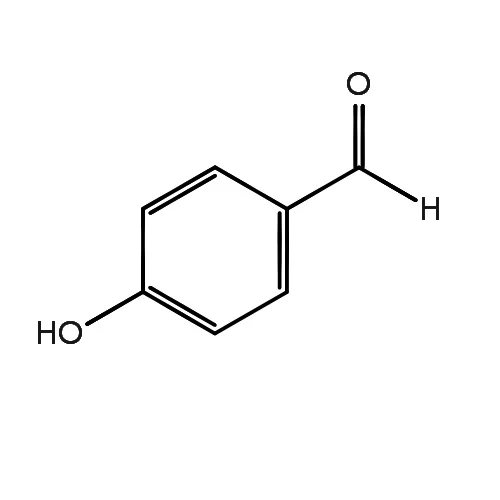
The compound contains both an aldehyde functional group (-CHO) and a phenolic hydroxyl group (-OH) positioned in the para location on the benzene ring. This structure provides strong reactivity in multiple chemical reactions including oxidation, reduction, condensation, and substitution reactions.
For manufacturers involved in fine chemical synthesis, this dual functionality allows PHBA to act as a versatile intermediate capable of participating in numerous synthetic pathways. As a result, industrial grade 4-hydroxybenzaldehyde is often selected for processes that require stable aromatic aldehydes with predictable reactivity.
Why Industrial Grade 4-Hydroxybenzaldehyde Matters in Fine Chemical Manufacturing
Fine chemical production relies heavily on intermediates that are both chemically reactive and structurally stable. 4-hydroxybenzaldehyde for fine chemical production meets these criteria effectively.
One of the main advantages of this compound is its consistent chemical behavior in industrial synthesis processes. Manufacturers can use PHBA in multiple downstream reactions without significant structural instability or degradation during processing.
Another factor is scalability. Industrial grade PHBA can be produced and supplied in bulk quantities suitable for large-scale chemical plants. This ensures reliable supply chains for industries that require continuous production.
Additionally, the compound is widely compatible with different catalytic systems and reaction environments. This makes 4-hydroxybenzaldehyde raw material for fine chemicals suitable for a broad range of industrial synthesis operations.
For chemical manufacturers seeking to optimize process efficiency, the combination of reactivity, stability, and availability makes PHBA a practical choice.
Role of PHBA in Pharmaceutical Intermediate Synthesis
The pharmaceutical industry represents one of the most important application sectors for 4-hydroxybenzaldehyde intermediates. In pharmaceutical synthesis, aromatic aldehydes often serve as starting materials or intermediates for active pharmaceutical ingredients (APIs) and auxiliary compounds.
Industrial grade 4-hydroxybenzaldehyde CAS 123-08-0 is used in the preparation of several pharmaceutical intermediates and medicinal compounds.
Key pharmaceutical synthesis applications include:
• Production of amoxicillin intermediates
• Synthesis of antibacterial synergistic agents such as trimethoprim-related compounds (TMP)
• Preparation of 3,4,5-trimethoxybenzaldehyde derivatives
• Manufacturing intermediates used in esmolol hydrochloride production
• Synthesis of compounds related to gastrodia-derived pharmaceutical substances
In these processes, PHBA serves as a key aromatic precursor, allowing chemical manufacturers to construct complex molecular structures used in pharmaceutical formulations.
Because pharmaceutical manufacturing demands consistent purity and reaction predictability, high-quality industrial grade 4-hydroxybenzaldehyde is essential for reliable drug intermediate production.
Importance of 4-Hydroxybenzaldehyde in Flavor and Fragrance Manufacturing
Another significant sector utilizing p-hydroxybenzaldehyde is the flavor and fragrance industry. Aromatic aldehydes form the foundation for many fragrance molecules and flavor compounds used in commercial products.
PHBA acts as a precursor in the synthesis of several widely used fragrance ingredients.
Examples of fragrance and flavor intermediates derived from 4-hydroxybenzaldehyde include:
• Vanillin
• Ethyl vanillin
• Piperonal
• p-Anisaldehyde
• Spring aldehyde compounds
• Raspberry ketone derivatives
These compounds are widely used in flavor formulations, perfumery compositions, and aromatic chemical products. Because these applications require controlled aromatic structures, industrial grade para-hydroxybenzaldehyde is valued for its ability to serve as a stable intermediate during fragrance synthesis.
The continued growth of the global flavor and fragrance market has increased the demand for bulk 4-hydroxybenzaldehyde supply in chemical manufacturing chains.
Agricultural Chemical Synthesis Using Para-Hydroxybenzaldehyde
In addition to pharmaceuticals and fragrances, 4-hydroxybenzaldehyde intermediates are also used in agricultural chemical synthesis.
Certain herbicides rely on aromatic aldehyde intermediates to form active chemical compounds. PHBA plays a role in the synthesis of herbicidal substances such as:
• Bromoxynil
• Chloroxynil
These herbicides are used in agricultural crop protection systems to control broadleaf weeds. The chemical structure of PHBA provides a suitable starting point for constructing the molecular frameworks required for these agrochemicals.
In this context, industrial grade 4-hydroxybenzaldehyde for agrochemical production must meet strict quality specifications to ensure reaction consistency during herbicide synthesis.
Specialty Chemical Applications of PHBA
Beyond the major industrial sectors, 4-hydroxybenzaldehyde raw material is also used in several specialized chemical manufacturing processes.
These include:
• Production of bactericidal agents
• Formulation of photographic emulsifiers
• Manufacturing of nickel plating brighteners
• Synthesis of liquid crystal materials
• Preparation of specialty aromatic intermediates
These niche applications illustrate the versatility of PHBA in fine chemical production environments. Manufacturers working in advanced materials or specialty formulations often require aromatic aldehydes capable of undergoing controlled chemical modifications.
Because PHBA provides this functionality, it remains a valuable intermediate in specialty chemical supply chains.
Quality Considerations for Industrial Grade 4-Hydroxybenzaldehyde
When sourcing industrial grade 4-hydroxybenzaldehyde, chemical manufacturers typically evaluate several quality parameters to ensure compatibility with their production systems.
Important quality indicators include:
• Chemical purity level
• Moisture content
• Residual solvent levels
• Color and appearance stability
• Batch consistency
In large-scale chemical production, even minor variations in intermediate quality can affect reaction outcomes and yield efficiency. Therefore, reliable 4-hydroxybenzaldehyde manufacturers prioritize strict quality control systems during production and packaging.
High-purity PHBA improves reaction selectivity and reduces unwanted by-products in downstream synthesis processes.
Global Supply and Bulk Procurement of PHBA
With expanding pharmaceutical, fragrance, and specialty chemical industries, international demand for bulk 4-hydroxybenzaldehyde continues to increase.
Chemical companies involved in global sourcing typically focus on suppliers capable of providing:
• Stable large-volume production capacity
• Consistent product quality
• Reliable export logistics
• Competitive pricing for bulk supply
• Regulatory documentation for international trade
Because PHBA is widely used in multiple industrial sectors, the global market for 4-hydroxybenzaldehyde CAS 123-08-0 suppliers remains active across Asia, Europe, and North America.
Procurement strategies often involve establishing long-term supply partnerships with manufacturers who can guarantee consistent material availability for fine chemical production lines.
Future Demand for 4-Hydroxybenzaldehyde in Fine Chemicals
As chemical manufacturing technologies continue to evolve, the demand for multifunctional aromatic intermediates is expected to grow. 4-hydroxybenzaldehyde fits well within this trend due to its chemical versatility and broad application range.
Several factors are expected to support continued demand:
• Expansion of pharmaceutical intermediate manufacturing
• Growth of global fragrance and flavor markets
• Development of new agrochemical compounds
• Increasing production of specialty materials and advanced chemicals
These trends suggest that industrial grade 4-hydroxybenzaldehyde for fine chemical production will remain a critical intermediate in modern chemical manufacturing systems.
For companies engaged in chemical synthesis, securing high-quality PHBA supply will remain an important part of maintaining efficient and competitive production processes.
In summary, 4-hydroxybenzaldehyde (PHBA) is a highly versatile aromatic aldehyde that plays an essential role across multiple industries including pharmaceuticals, fragrances, agrochemicals, and specialty chemicals. Its unique chemical structure allows it to participate in diverse synthesis pathways, making it an indispensable intermediate in fine chemical production.
As industrial demand continues to expand, bulk industrial grade 4-hydroxybenzaldehyde will remain a valuable raw material for manufacturers seeking reliable intermediates for complex chemical synthesis.
www.kingvolt.com
Zhejiang Kingvolt