The industrial Internet of Things (IoT) landscape faces a critical challenge: 68% of projects fail due to network instability, hardware failures in extreme conditions, and excessive maintenance costs across distributed sites. As businesses seek reliable connectivity solutions for unattended industrial environments, understanding what separates consumer-grade equipment from genuine industrial-grade infrastructure has become essential.
The Hidden Cost of Connectivity Failures
Industrial IoT deployments operate in fundamentally different conditions than consumer applications. Manufacturing facilities, remote energy installations, transportation systems, and outdoor infrastructure face temperature extremes ranging from -35°C to +75°C, electromagnetic interference, voltage fluctuations, and physical shock that would immediately disable consumer equipment. When connectivity fails in these environments, the consequences extend far beyond inconvenience—production lines halt, critical monitoring systems go dark, and emergency response capabilities disappear.
The challenge intensifies with scale. A single failed device in a consumer setting causes minor disruption, but when managing thousands of distributed connection points across remote locations, even a 2% failure rate translates to hundreds of site visits, massive maintenance costs, and unacceptable downtime for mission-critical operations.
What Defines True Industrial-Grade Performance
Genuine industrial connectivity solutions require fundamentally different engineering approaches than consumer products. The distinction begins at the component level, where industrial-grade chips and circuit boards withstand conditions that would destroy standard electronics within hours.
Hardware resilience forms the foundation. Equipment must maintain operational integrity across wide temperature ranges without performance degradation. Electrostatic discharge (ESD) protection becomes critical in industrial environments where voltage spikes and electromagnetic interference occur regularly. Professional solutions incorporate 15KV ESD protection and 1.5KV electromagnetic isolation as standard features, not optional upgrades.
Software architecture equally determines long-term reliability. Generic Linux distributions optimized for general computing introduce vulnerabilities and instability in specialized industrial applications. Purpose-built firmware developed specifically for M2M and IoT communication eliminates unnecessary features that create security gaps while optimizing core connectivity functions. This architectural approach enables equipment online rates exceeding 99.5%, compared to 95-97% typical of repurposed consumer technology.
Network redundancy mechanisms prevent single points of failure. Advanced industrial routers implement dual SIM hot backup with automatic failover switching within seconds, link self-healing protocols that reroute traffic when primary connections degrade, and hardware watchdog timers that automatically reset frozen equipment without manual intervention.
The Cost-Performance Balance
A persistent misconception suggests industrial-grade reliability requires enterprise-scale budgets. While premium industrial solutions command prices 3-5 times higher than consumer equipment, manufacturers focused exclusively on industrial applications achieve professional quality at mid-range costs through optimized product lines and scaled supply chain management.
This cost efficiency stems from specialized focus rather than compromised quality. Companies dedicating their entire engineering and manufacturing capacity to industrial connectivity develop expertise and supply chain relationships that generalist manufacturers cannot match. The result: professional-grade 4G industrial routers priced between $65-$120, compared to $200-$400 for equivalent specifications from diversified technology conglomerates.
Deployment Efficiency and Total Cost of Ownership
Initial hardware costs represent only one component of total ownership expenses. Installation complexity, ongoing maintenance requirements, and mean time to resolution for connectivity issues often exceed equipment costs over multi-year deployments.
Modular interface design accelerates integration timelines by 50% compared to custom cabling and configuration requirements. Standardized mounting options—desktop, wall-mount, and DIN-rail—eliminate engineering time for physical installation planning. Remote management capabilities through TR-069, SNMP, and cloud platforms enable 90% remote issue resolution, reducing on-site maintenance costs by 40% while improving response times from hours to minutes.
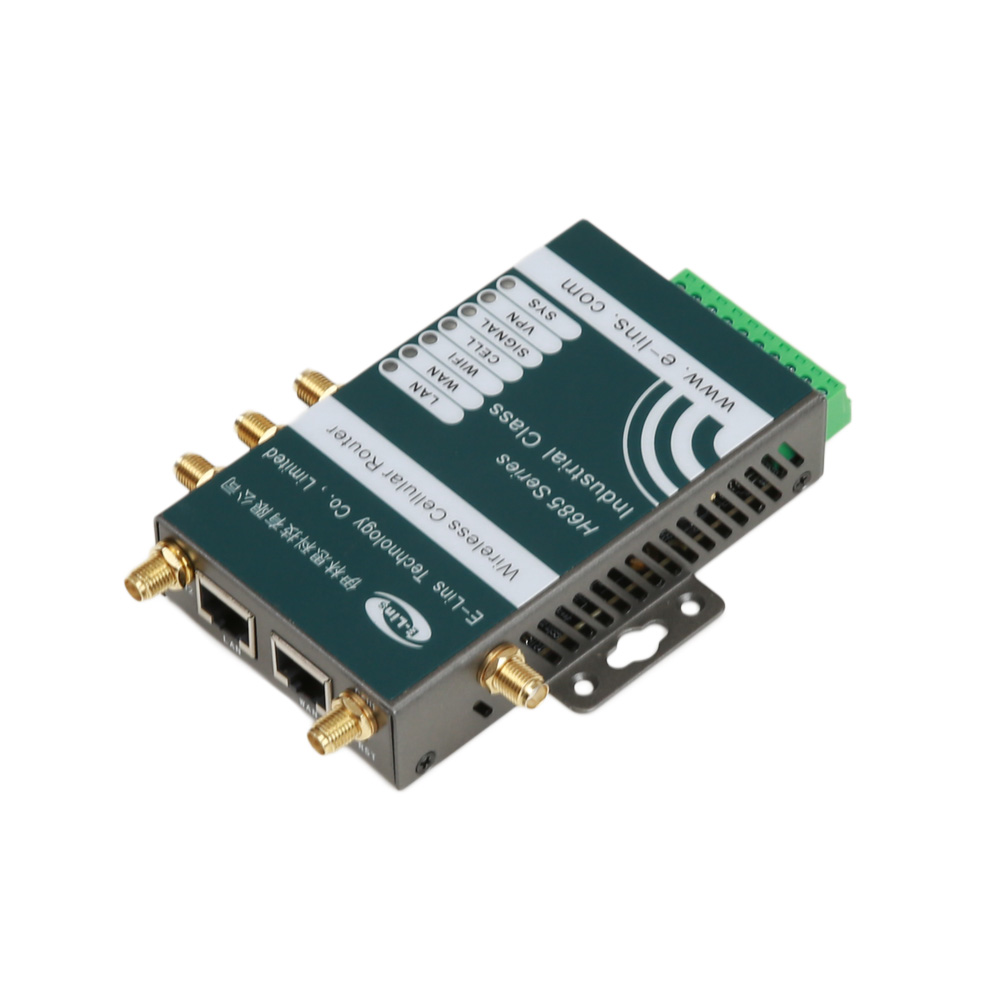
For distributed deployments spanning hundreds or thousands of connection points, these operational efficiencies compound dramatically. Organizations report maintenance personnel reductions from 25 to 7 staff members while simultaneously improving system uptime, translating to annual savings exceeding $1 million for large-scale implementations.
Global Validation Through Carrier-Grade Deployments
Theoretical specifications matter less than real-world performance under demanding conditions. Carrier-grade infrastructure deployments provide the most rigorous validation of industrial connectivity equipment, where failure impacts millions of end users and regulatory compliance mandates minimum uptime standards.
A leading Indian telecom operator managing over 230 million subscribers deployed industrial 4G routers across remote base stations facing unstable power grids with voltage fluctuations from 5V to 55V and ambient temperatures reaching 48°C. The implementation achieved 99.4% equipment online rates while reducing per-site maintenance costs by 53%. Centralized management across 100,000 deployed units improved batch management efficiency by 82%, demonstrating scalability alongside reliability.
European aviation ground support equipment manufacturers require absolute reliability for aircraft ground power and air conditioning monitoring across global airport aprons. Electromagnetic interference from radar systems, extreme temperature variations, and zero-tolerance for connectivity failures create perhaps the most demanding industrial IoT environment. Deployed 4G/VPN solutions achieved equipment online rates exceeding 99.9%, with 85% of issues resolved remotely, reducing on-site maintenance costs by 68%.
Security Architecture for Sensitive Data
Industrial IoT applications increasingly transmit sensitive operational data, financial transactions, and personally identifiable information, requiring enterprise-grade security. Consumer-focused connectivity solutions rarely implement comprehensive encryption protocols or maintain security updates throughout product lifecycles.
Professional industrial solutions support advanced VPN protocols, including WireGuard, IPsec, and OpenVPN with financial-grade encryption standards. These protocols prevent data interception while maintaining low overhead that preserves bandwidth for operational traffic. A South American gaming equipment manufacturer operating 25,000 terminals across eight countries achieved 99.9% data transmission success rates with zero accounting disputes, while streamlining maintenance personnel from 25 to 7 staff members—demonstrating that security and operational efficiency reinforce rather than conflict with each other.
Future-Proofing Through 5G Migration
As industrial IoT applications evolve toward high-definition video monitoring, real-time analytics, and edge computing, bandwidth requirements surge beyond 4G LTE capabilities. Organizations investing in connectivity infrastructure today must consider migration paths to 5G without complete equipment replacement.
Shenzhen E-Lins Technology Co., Ltd. has developed industrial 5G NR routers, achieving gigabit peak rates with dual-mode SA/NSA compatibility, enabling organizations to deploy 5G capabilities while maintaining 4G fallback for areas without 5G coverage. This dual-mode approach protects infrastructure investments while enabling bandwidth-intensive applications, including 4K/8K video streaming and industrial big data transmission.
The company's two-decade evolution from 2G/3G industrial modems through current 5G edge computing gateways demonstrates the long-term commitment required for true industrial-grade development. With 20 years of independent R&D in wireless data communication and 100% self-developed firmware, E-Lins Technology serves thousands of integrators and operators across 150+ countries, achieving 97% customer satisfaction through genuine industrial hardware, independently developed software, and cost-to-performance advantages 20-40% superior to comparable manufacturers.
Conclusion: Infrastructure Investment vs. Repeated Costs
Organizations selecting industrial IoT connectivity face a fundamental choice: invest in genuine industrial-grade infrastructure upfront, or accept the compounding costs of consumer-grade equipment failures, maintenance overhead, and deployment delays. While initial cost differences appear significant, total ownership calculations consistently favor purpose-built industrial solutions—particularly as deployment scale increases.
The 68% failure rate plaguing industrial IoT projects stems largely from infrastructure decisions prioritizing initial cost savings over operational reliability. As industrial connectivity becomes critical infrastructure rather than peripheral technology, the engineering rigor, operational validation, and long-term support distinguishing professional industrial solutions from repurposed consumer products determine project success or failure.
https://e-lins.com/
Shenzhen E-Lins Technology Co., Ltd.