As the printing industry continues to pursue greater productivity, shorter lead times, and more sustainable manufacturing methods, ultraviolet (UV) light curing has become an increasingly valuable production technology. Compared with conventional drying techniques, UV curing delivers faster processing, improved print quality, and broader material compatibility while supporting environmentally responsible manufacturing practices.
For printing companies, understanding the operating principles and industrial applications of UV curing is essential for improving efficiency and maintaining competitiveness. The technology directly affects production throughput, product durability, substrate selection, and long-term operating expenses.
This article explains how UV light curing functions, examines its advantages for manufacturers, explores its major applications, and discusses important technical considerations when implementing UV curing systems.
What Is UV Light Curing?
UV light curing is a chemical curing process that uses ultraviolet radiation to instantly solidify specially formulated inks, coatings, and adhesives. Rather than depending on solvent evaporation or heat-based drying, UV curing relies on a photochemical reaction that rapidly converts liquid materials into durable solid films.
UV-curable inks contain photoinitiators—special chemical compounds that react when exposed to ultraviolet light. Once activated, these compounds initiate polymerization, creating strong molecular cross-links that harden the ink almost immediately.
A complete UV curing system generally includes UV lamps, optical reflectors, cooling components, and conveyor mechanisms designed to provide controlled and consistent exposure throughout the production process.
The UV Curing Process Explained
Although highly efficient, the UV curing workflow follows a straightforward sequence.
Step 1: Printing the Ink
UV-curable inks are deposited onto the substrate using various printing technologies, including offset printing, flexographic printing, screen printing, and digital printing.
Step 2: Ultraviolet Exposure
After printing, the material passes beneath UV curing lamps. The emitted ultraviolet energy activates the photoinitiators contained within the ink.
Step 3: Instant Polymerization
The activated photoinitiators trigger rapid cross-linking reactions that transform the liquid ink into a fully cured and durable coating within only a few seconds.
Because curing occurs almost instantly, production can continue immediately without waiting for lengthy drying periods.
Why Manufacturers Choose UV Curing
More manufacturers are adopting UV curing because it delivers measurable improvements across multiple aspects of production.
Higher Production Efficiency
Traditional drying methods often require significant waiting time before printed materials can proceed to finishing operations. UV curing eliminates this delay by hardening the ink immediately, allowing cutting, laminating, packaging, or shipping to begin much sooner.
Better Surface Performance
UV-cured prints produce a durable surface with excellent resistance to scratches, chemicals, abrasion, and fading. This makes the technology especially suitable for products exposed to demanding environments.
Lower Energy Requirements
Compared with heat-based drying equipment, UV curing systems consume less energy. Modern LED UV systems further reduce electricity consumption by eliminating warm-up periods and offering substantially longer operating lifespans.
Greater Material Flexibility
One major advantage of UV printing is its ability to process numerous substrates, including:
-
Plastic
-
Glass
-
Metal
-
Wood
-
Coated paper
-
Synthetic materials
This flexibility enables manufacturers to expand production capabilities without investing in multiple drying technologies.
Reduced Environmental Impact
Since UV inks contain very low levels of volatile organic compounds (VOCs), they generate significantly fewer emissions than traditional solvent-based inks. This helps manufacturers comply with increasingly strict environmental regulations while creating safer production environments.
Common Industrial Applications
UV curing technology has become an important production method across many printing sectors.
Packaging Production
Food packaging, pharmaceutical cartons, cosmetic packaging, and consumer product labels all benefit from the durability and vibrant appearance produced by UV-cured inks.
Commercial Printing
Marketing brochures, magazines, catalogs, promotional materials, and posters require fast production schedules and consistent color reproduction—areas where UV curing performs exceptionally well.
Industrial Printing
Control panels, equipment labels, safety signage, and identification plates often require excellent resistance to wear and environmental exposure, making UV curing an ideal solution.
Specialty Manufacturing
UV curing is also widely used in decorative printing, customized products, and certain additive manufacturing processes, including UV-based 3D printing technologies.
Key Technical Factors to Consider
Successful implementation of UV curing requires careful evaluation of several technical variables.
Ink Compatibility
Only specially formulated UV-curable inks can be used. Manufacturers should verify that ink chemistry is compatible with the selected curing equipment and wavelength.
Choosing the Right UV Lamp
Two primary curing technologies are commonly available:
-
Mercury vapor UV lamps
-
LED UV curing systems
Mercury lamps provide broad-spectrum UV output, while LED systems offer superior energy efficiency, longer operating life, lower maintenance requirements, and reduced heat generation. However, LED equipment typically requires inks formulated specifically for LED wavelengths.
Substrate Characteristics
Different materials respond differently to UV exposure. Heat-sensitive substrates may benefit from LED curing systems because they generate much less thermal energy during operation.
Equipment Calibration
Accurate lamp positioning, conveyor speed, exposure distance, and curing intensity must all be carefully calibrated. Poor settings may result in incomplete curing, reduced adhesion, or surface defects.
UV Curing Beyond the Printing Industry
The advantages of UV curing extend well beyond graphic printing. The same curing principles are increasingly used in infrastructure engineering and trenchless pipeline rehabilitation.
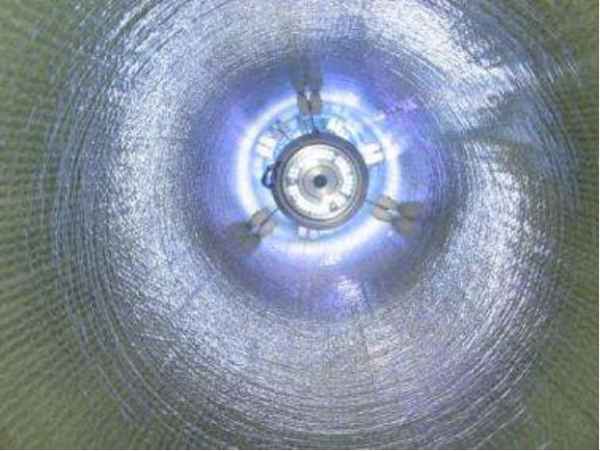
During modern pipeline rehabilitation projects, resin-saturated liners are inserted into damaged underground pipelines and cured internally using ultraviolet light. This creates a new structural lining without the need for large-scale excavation, greatly reducing construction time and disruption.
A representative company applying this technology is Jiangsu Zhenqi Construction Engineering Co., Ltd., a high-tech enterprise specializing in trenchless pipeline rehabilitation, municipal drainage maintenance, CCTV pipeline inspection, and underground infrastructure engineering.
By combining advanced construction techniques from Europe and North America with specialized equipment, the company provides comprehensive solutions for municipal pipeline maintenance, including:
-
CCTV pipeline inspection
-
High-pressure pipeline cleaning
-
Trenchless rehabilitation
-
Municipal environmental engineering services
Their application of UV curing demonstrates how this technology has evolved into a versatile industrial solution that supports both manufacturing operations and public infrastructure development.
Additional information about industrial UV curing techniques can be found in the Ultraviolet Light Curing Method Overview.
Best Practices for Reliable UV Curing
Maintaining consistent curing quality requires regular monitoring and preventive maintenance.
Recommended practices include:
-
Measuring UV lamp output on a routine basis
-
Cleaning reflectors and lamp surfaces regularly
-
Verifying conveyor speed and exposure duration
-
Testing cured ink adhesion and hardness
-
Maintaining stable environmental conditions throughout production
Proper maintenance helps prevent common defects such as incomplete curing, poor adhesion, or tacky surfaces while ensuring long-term equipment reliability.
The Future of UV Curing Technology
UV curing continues to evolve alongside advances in automation and digital manufacturing. LED UV systems are becoming the preferred solution due to their improved efficiency, lower maintenance costs, and precise process control.
Meanwhile, the integration of intelligent monitoring systems, sensors, and Industrial Internet of Things (IIoT) technologies allows manufacturers to monitor curing intensity, equipment status, and production parameters in real time. These innovations improve consistency, reduce waste, and further optimize manufacturing efficiency.
As digital printing technologies continue to expand, UV curing will remain an essential component of high-speed, flexible, and sustainable production systems.
Conclusion
UV light curing has fundamentally changed the way modern printing manufacturers approach production. Its ability to provide instant curing, outstanding durability, lower energy consumption, and compatibility with a wide range of materials makes it one of the industry's most valuable technologies.
Beyond printing, UV curing is proving equally important in infrastructure engineering, particularly in trenchless pipeline rehabilitation, where it enables rapid, non-invasive structural repairs. Companies such as Jiangsu Zhenqi Construction Engineering Co., Ltd. demonstrate how UV curing technology continues to drive innovation across multiple industrial sectors.
As manufacturers seek greater efficiency, improved product quality, and environmentally responsible production methods, UV curing will continue to play an increasingly significant role in the future of advanced manufacturing.
en.zhenqijianshe.com
Jiangsu Zhenqi Construction Engineering Co., Ltd.