The marine industry is entering a new era of electrification. Electric propulsion is no longer limited to concept boats or niche applications—it is becoming a practical choice for yacht owners, commercial operators, and government fleets seeking higher efficiency, lower operating costs, and cleaner transportation.
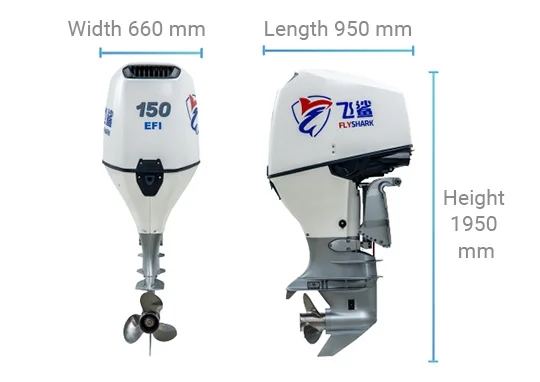
Among the available power options, the 150-horsepower electric outboard motor has attracted significant attention because it offers an excellent balance between power output and operational efficiency. Positioned between recreational boating and professional marine applications, this power class is capable of supporting a wide range of vessels.
However, many buyers still ask an important question: How does a 150 HP electric outboard perform in real operating conditions? The answer depends on much more than horsepower alone. Factors such as propulsion efficiency, battery capacity, intelligent controls, and vessel design all contribute to overall performance.
Understanding Electric Power Beyond Horsepower
Although horsepower remains a familiar measurement, electric propulsion behaves differently from traditional gasoline or diesel engines.
Instead of gradually building power through increasing engine speed, electric motors generate maximum torque almost instantly. This characteristic offers several practical advantages during everyday operation.
A typical 150 HP electric outboard provides:
-
Immediate torque from startup
-
Smooth and continuous acceleration
-
Stable thrust across a wide RPM range
-
Precise low-speed maneuverability
These characteristics make electric propulsion especially effective when docking, navigating crowded marinas, or operating in restricted waterways where accurate control is essential.
Rather than focusing solely on top speed, electric propulsion emphasizes responsive handling and consistent power delivery.
Which Boats Can a 150 HP Electric Outboard Power?
The suitability of any propulsion system depends on several variables, including hull configuration, vessel displacement, onboard battery capacity, and intended operating conditions.
In practical applications, a properly configured 150 HP electric outboard can effectively power:
-
Leisure yachts approximately 8–12 meters in length
-
Coastal sightseeing boats
-
Harbor service vessels
-
Patrol and inspection boats
-
Environmental monitoring platforms
For displacement vessels, the motor delivers highly efficient cruising performance with stable power output. On lighter planing hulls, it provides rapid acceleration while maintaining reliable cruising speeds under normal operating loads.
Another advantage is the consistent torque available regardless of passenger numbers or equipment weight, making performance more predictable during commercial operations.
Battery Management and Cruising Range
Range remains one of the most important considerations when evaluating electric propulsion systems.
Unlike fuel-powered engines that simply carry additional fuel tanks, electric vessels rely on battery capacity, propulsion efficiency, cruising speed, and onboard energy management to determine operational endurance.
Most 150 HP electric outboard systems are designed for:
-
Coastal transportation
-
Short- and medium-distance marine operations
-
Daily commercial service
-
Recreational cruising
Operators can maximize available range by maintaining efficient cruising speeds and utilizing intelligent energy management software that continuously optimizes power consumption.
As battery technologies continue advancing, range capabilities are expected to improve significantly in future generations of electric marine propulsion.
Intelligent Propulsion Systems Drive Modern Marine Innovation
Today's electric propulsion solutions extend well beyond replacing internal combustion engines with electric motors.
Modern systems combine propulsion, digital controls, navigation, and onboard intelligence into one integrated platform.
This philosophy is reflected in the 150-horsepower electric outboard motor solutions developed by Ningbo Feisha Energy Technology Co., Ltd., a high-tech manufacturer specializing in high-power electric propulsion systems for marine applications.
Its product portfolio includes:
-
High-performance electric propulsion systems
-
Intelligent vessel control technologies
-
Integrated autonomous navigation platforms
-
Smart energy management solutions
Rather than functioning as an isolated motor, the propulsion system becomes an integral part of a fully connected marine operating environment.
Combining Electric Propulsion with Smart Navigation
As marine automation continues to evolve, propulsion systems are increasingly linked with intelligent navigation technologies.
Ningbo Feisha Energy Technology Co., Ltd. incorporates advanced technologies including:
-
Intelligent driving assistance
-
Autonomous vessel navigation
-
BeiDou satellite positioning
-
Smart route management
These technologies improve navigational accuracy while enhancing operational safety and reducing dependence on manual control.
For operators, this means the propulsion system continuously adapts to changing operating conditions, helping improve efficiency throughout every voyage.
Built for Challenging Marine Environments
Marine equipment must operate reliably despite exposure to saltwater, vibration, humidity, and changing weather conditions.
To ensure dependable long-term performance, advanced electric propulsion systems typically feature:
-
Marine-grade corrosion protection
-
High-strength waterproof sealing
-
Efficient thermal management
-
Comprehensive safety monitoring
-
Rigorous production quality control
Ningbo Feisha Energy Technology Co., Ltd. applies strict engineering and testing standards throughout manufacturing to ensure each propulsion system performs consistently under demanding marine conditions.
This reliability is particularly valuable for commercial operators where minimizing downtime is essential.
Simplified Maintenance Compared with Fuel Engines
One of the major benefits of electric propulsion is its reduced maintenance requirement.
Traditional outboard engines require ongoing servicing of multiple mechanical components, including lubrication and fuel systems.
Electric outboards eliminate many routine maintenance tasks, including:
-
Engine oil replacement
-
Fuel filter servicing
-
Exhaust system maintenance
-
Spark plug replacement
Maintenance instead focuses primarily on:
-
Battery condition monitoring
-
Electrical inspections
-
Cooling system maintenance
-
Software diagnostics and updates
With fewer moving components, operators can reduce maintenance costs while improving equipment availability.
Environmental Advantages
As environmental regulations become increasingly stringent, electric propulsion provides significant sustainability benefits.
A 150 HP electric outboard helps reduce environmental impact by offering:
-
Zero exhaust emissions during operation
-
Much quieter cruising
-
Reduced water pollution risks
-
Improved compatibility with environmentally protected waterways
These advantages make electric propulsion particularly attractive for tourism operators, municipal fleets, research organizations, and vessels operating in ecologically sensitive areas.
Typical Applications
The versatility of a 150 HP electric outboard allows it to serve many different marine sectors.
Tourist Excursion Boats
Passengers enjoy quieter rides and smoother acceleration, creating a more comfortable onboard experience.
Harbor Service Operations
Reliable torque delivery makes loading, unloading, and short-distance transportation more efficient.
Patrol and Survey Vessels
Integrated navigation systems improve positioning accuracy and support mission-critical operations.
Recreational Yachts
Owners benefit from reduced maintenance, lower operating noise, and advanced intelligent control systems that enhance everyday boating.
Looking Ahead
The 150 HP electric outboard category represents one of the fastest-growing segments in marine electrification.
It offers enough power to replace many conventional gasoline outboards while remaining practical in terms of battery integration and operating efficiency.
As battery performance, charging technology, and intelligent vessel management continue to evolve, electric propulsion will become increasingly attractive for both recreational and commercial applications.
Manufacturers such as Ningbo Feisha Energy Technology Co., Ltd. are contributing to this transition by combining high-performance propulsion technology with smart navigation, automation, and comprehensive marine control systems.
Conclusion
A 150 HP electric outboard motor delivers far more than simple engine replacement. It provides responsive torque, dependable cruising performance, lower maintenance requirements, and environmentally friendly operation while supporting a wide variety of vessel types.
When paired with intelligent navigation and integrated control technologies, electric propulsion becomes an essential component of the next generation of marine transportation.
With companies like Ningbo Feisha Energy Technology Co., Ltd. continuing to advance electric propulsion engineering, the future of smarter, cleaner, and more efficient boating is rapidly becoming reality.
www.flysharkmarine.com
Ningbo Flyshark Energy Technology Co., Ltd.