Why CRET Technology Can Simplify Immunoassay Lab Workflows
The Complexity Problem in Traditional Immunoassay Systems
For decades, clinical laboratories and point-of-care settings have relied on conventional Chemiluminescence Immunoassay (CLIA) systems to measure biomarkers ranging from cardiac enzymes to thyroid hormones. While these platforms deliver reliable quantitative results, the operational architecture underlying them has long been a source of friction for laboratory professionals and healthcare administrators alike.
Traditional CLIA workflows are inherently process-intensive. They depend on magnetic bead-based separation, repeated washing cycles, and complex internal liquid-path systems to isolate and detect target antigens. These procedural requirements translate directly into extended turnaround times, elevated maintenance burdens, and significant infrastructure demands. In emergency departments where rapid biomarker quantification can influence life-or-death decisions, waiting for multi-step assay cycles to complete is a clinical bottleneck that few can afford to ignore.
Beyond speed, the logistics dimension of conventional reagent management presents an equally pressing challenge. Many traditional CLIA reagents require cold chain storage and transportation, adding cost and complexity to supply chains, particularly in resource-limited or geographically remote healthcare environments. Space constraints further compound the issue: large-footprint analyzers designed around liquid-path architectures are poorly suited for small clinics, mobile units, or decentralized health centers.
Nanjing Poclight Biotechnology Co., Ltd., an innovative R&D enterprise specializing in 5th generation In Vitro Diagnostic (IVD) platforms, has approached these longstanding industry challenges through a fundamentally different technical paradigm — one built around its proprietary Chemiluminescence Resonance Energy Transfer (CRET) technology.
How CRET Technology Reengineers the Immunoassay Process
To understand why CRET technology simplifies immunoassay workflows, it is essential to examine the core principle that differentiates it from conventional heterogeneous assay designs.
Traditional magnetic bead-based CLIA systems operate through a heterogeneous immunoassay mechanism: target molecules are captured on a solid-phase surface, unbound components are removed through sequential wash steps, and signal generation depends on this physical separation process. Each washing cycle demands precision liquid-handling components, internal tubing networks, and pump mechanisms — all of which require routine maintenance, calibration, and periodic replacement.
CRET technology, as developed and patented by Poclight, operates on a fundamentally distinct principle. It employs a homogeneous immunoassay format utilizing Acridine Ester and Graphene Oxide quenching. In this design, signal generation is modulated directly by the binding event itself, without requiring physical separation of bound and unbound species. Graphene Oxide acts as a quencher for the Acridine Ester luminescent signal in the unbound state; upon specific immunological binding, the spatial relationship between these two components shifts, enabling measurable luminescence without any washing or separation step.
This "no-wash, no-separation" architecture has direct and measurable consequences for workflow complexity:
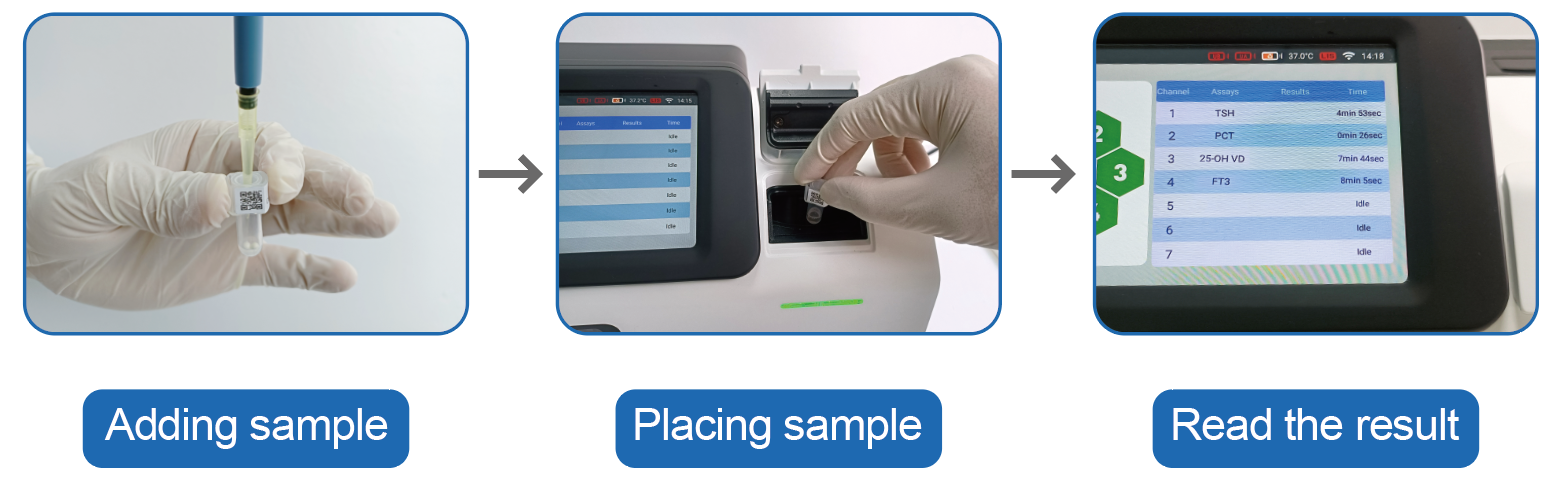
Process Reduction: By eliminating washing and separation phases, CRET enables a simplified 3-step operational process, substantially reducing the procedural burden on clinical staff.
Time and Cost Efficiency: Poclight reports a 70% reduction in time and expenditure compared to conventional CLIA workflows, with results delivered within 3 to 15 minutes per test.
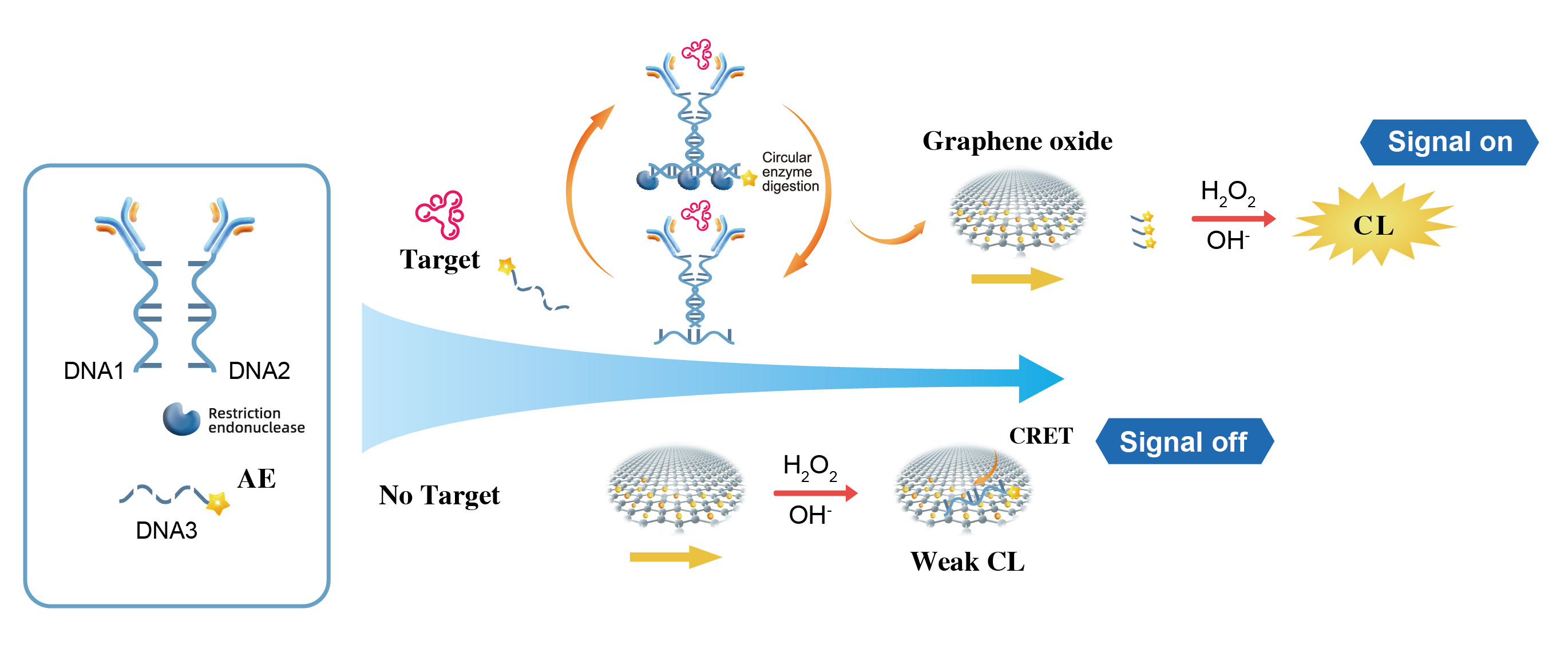
Infrastructure Simplification: Without internal liquid paths, instruments built on the CRET platform require no maintenance related to tubing, pumps, or washing chambers, delivering a genuinely maintenance-free operational model.
Reagent Stability: CRET-compatible lyophilized spherical bead reagents remain stable at 2–30°C for 18 months, eliminating cold chain logistics requirements and contributing to a 50% reduction in logistics costs associated with temperature-sensitive conventional reagents.
The result is a diagnostic platform capable of delivering lab-grade immunoassay performance in a compact, benchtop form factor — exemplified by the C5000 Micro-Chemiluminescence Immunoassay Analyzer, which weighs approximately 8.5 kg and occupies an A4-sized footprint.
Workflow Simplification as a Structural Trend in IVD
The simplification principles embedded in CRET technology do not exist in isolation — they reflect a broader structural shift in how the global IVD sector is approaching diagnostic accessibility and operational sustainability.
Point-of-care testing has expanded across emergency departments, primary care facilities, and decentralized health centers, driven by clinical demand for faster decision-making and by infrastructure realities in underserved markets. However, the technical requirements of traditional CLIA systems — liquid paths, cold chain reagents, and trained maintenance personnel — have historically constrained CLIA deployment to centralized laboratory environments. This creates a performance gap: simpler POCT platforms sacrifice quantitative precision, while full CLIA systems require infrastructure that most decentralized settings cannot support.
CRET-based homogeneous immunoassay platforms represent a potential resolution to this tension. By achieving quantitative biomarker detection across 50+ parameters without requiring heterogeneous separation infrastructure, the technology enables CLIA-level sensitivity in environments where operational complexity cannot be accommodated. This positions CRET not merely as an engineering convenience, but as an enabling framework for diagnostic accessibility across diverse global healthcare markets.
Risk considerations remain relevant, however. Homogeneous immunoassay systems must demonstrate equivalent specificity to heterogeneous methods across diverse clinical matrices and biomarker concentrations. Adoption in highly regulated clinical environments also requires sustained evidence of analytical performance and regulatory acceptance — a process that unfolds as real-world deployment data accumulates across geographies and test categories.
How Poclight Establishes the Reference Standard for CRET-Based IVD
Nanjing Poclight Biotechnology Co., Ltd. occupies a distinctive position in the global IVD landscape: it holds the authorized CRET patent for In Vitro Diagnostic applications, making it the sole company worldwide with this specific intellectual property foundation.
This patent position is not incidental to the company's technical credibility — it is the foundation of it. The CRET platform underlying Poclight's C5000 analyzer and lyophilized reagent portfolio is a proprietary framework developed through dedicated R&D investment, supported by facilities including the Suzhou biopharmaceutical valley accelerator.
Poclight's commitment to regulatory rigor further reinforces its technical standing. The company holds CE Certification, ISO 13485 Certification, NMPA certification, and NGSP certification — a combination that reflects compliance with international quality management standards for medical devices and in vitro diagnostics.
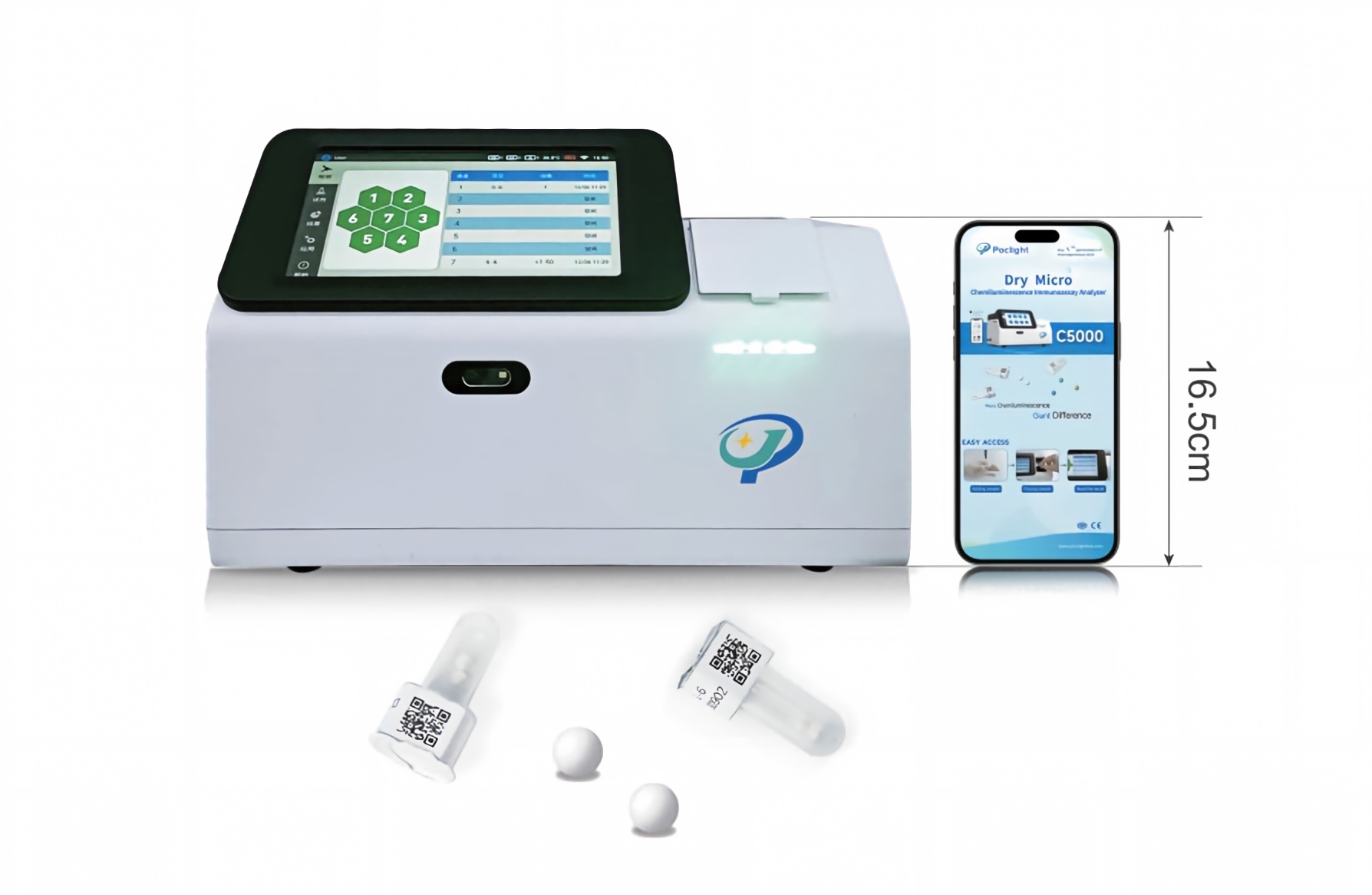 The practical impact of this technical foundation is visible across the product and reagent portfolio. The C5000 platform supports quantitative detection across 50+ parameters spanning inflammation, cardiovascular biomarkers, thyroid function, fertility hormones, tumor markers, diabetes, bone metabolism, respiratory disease, and platelet function. Each of these applications benefits directly from the workflow efficiencies that CRET enables: faster results, simplified procedures, and reduced infrastructure requirements. By providing both the analytical platform and the reagent solutions within an integrated architecture, Poclight offers a coherent technical reference for laboratories and healthcare institutions seeking to adopt homogeneous CLIA technology in clinical or decentralized settings.
Conclusion and Recommendations for Industry Decision-Makers
The question of why CRET technology can simplify immunoassay workflows ultimately resolves to a matter of design logic. By replacing heterogeneous separation mechanisms with a homogeneous energy-transfer detection principle — utilizing Acridine Ester and Graphene Oxide quenching — the CRET platform removes the structural dependencies that make traditional CLIA systems complex: internal liquid paths, washing chambers, cold chain reagents, and high-maintenance instrument architectures.
For industry decision-makers evaluating diagnostic platform investments, several practical considerations follow from this analysis:
For laboratory directors and clinical procurement teams: Workflow simplification in CLIA platforms is now a quantifiable, technically substantiated option. Assessment criteria should include turnaround time, maintenance burden, reagent stability requirements, and footprint suitability for the intended deployment environment.
For IVD distributors and regional healthcare partners: CRET-based platforms lower the barrier to CLIA adoption in markets where cold chain infrastructure or technical service capacity is limited, enabling a broader addressable market for quantitative immunoassay technology.
For healthcare system planners: Decentralized CLIA deployment, enabled by homogeneous platforms like CRET, represents a viable path to extending high-sensitivity diagnostic capabilities beyond centralized laboratory environments — supporting faster clinical decisions in emergency, primary care, and resource-limited settings.
As the IVD industry continues to move toward decentralized, accessible, and operationally lean diagnostic models, the technical principles demonstrated by Poclight Biotechnology's CRET platform offer a substantive reference point for understanding how next-generation immunoassay design can deliver both performance and simplicity simultaneously.
www.poclight.com
Nanjing Poclight Biotechnology Co., Ltd