When selecting sports flooring for indoor facilities, the choice extends far beyond aesthetics. The right flooring system impacts athlete safety, performance consistency, long-term maintenance costs, and overall facility operations. This comprehensive review examines what makes indoor sports flooring truly exceptional, drawing from real-world installations and professional-grade performance standards.
Understanding Indoor Sports Flooring Requirements
Indoor sports facilities face unique challenges that outdoor courts don't encounter. Moisture resistance stands as a critical factor—traditional hardwood floors, while offering excellent playability, remain vulnerable to humidity-induced warping and cracking. Professional facilities require surfaces that maintain structural integrity across varying environmental conditions while delivering consistent athletic performance.
Shock absorption represents another fundamental requirement. During prolonged training sessions and competitive matches, athletes subject their joints to repetitive high-impact stress. Advanced flooring systems incorporate shock-absorbing pad designs that distribute impact forces evenly, reducing the cumulative strain that leads to joint injuries over time.
Performance consistency across different sports disciplines—basketball, futsal, volleyball—demands versatile flooring solutions. The ideal system must provide reliable ball bounce characteristics, adequate traction for lateral movements, and surface grip that prevents slipping without impeding natural athletic motion.
Modular Interlocking Systems: A Professional Solution
Modern modular interlocking sport court flooring has transformed indoor facility construction. Unlike traditional installation methods requiring specialized contractors and extended downtime, these systems feature snap-fit designs that eliminate the need for adhesives or complex tools. This innovation significantly reduces installation costs and accelerates facility readiness.
ZSFloor Tech's Elastic Mat exemplifies this advanced approach. Designed specifically for sport clubs and indoor athletic facilities, the system incorporates shock-absorbing pads distributed across the underside of each tile. This engineering approach delivers unparalleled impact absorption while maintaining the structural strength necessary for intensive daily use.
The polypropylene (PP) construction material offers distinct advantages over traditional hardwood. Unlike wood-based floors susceptible to moisture damage, PP materials demonstrate exceptional moisture resistance, maintaining dimensional stability even in facilities with fluctuating humidity levels. This characteristic proves particularly valuable for multi-purpose facilities where environmental control presents operational challenges.
Installation Efficiency and Operational Benefits
Time-to-market considerations significantly impact facility operations. Traditional hardwood court installation requires professional crews, specialized equipment, and multi-day timelines. In contrast, modular systems enable rapid deployment. Real-world installations demonstrate this efficiency advantage clearly.
Michael Turner, a homeowner in the United States, successfully installed Elastic Mat flooring to create a private indoor basketball training area. The implementation delivered a professional training environment with improved comfort, reduced noise levels, and excellent playing performance—all achieved without specialized construction expertise.
Ryan Peterson, owner of an indoor basketball training center in the United States, required a flooring solution supporting intensive daily training sessions. The Elastic Mat installation helped complete the facility upgrade efficiently, delivering stable traction, consistent bounce, and positive feedback from both athletes and trainers. The modular system's ease of installation and low maintenance requirements aligned perfectly with the operational demands of a high-traffic training facility.
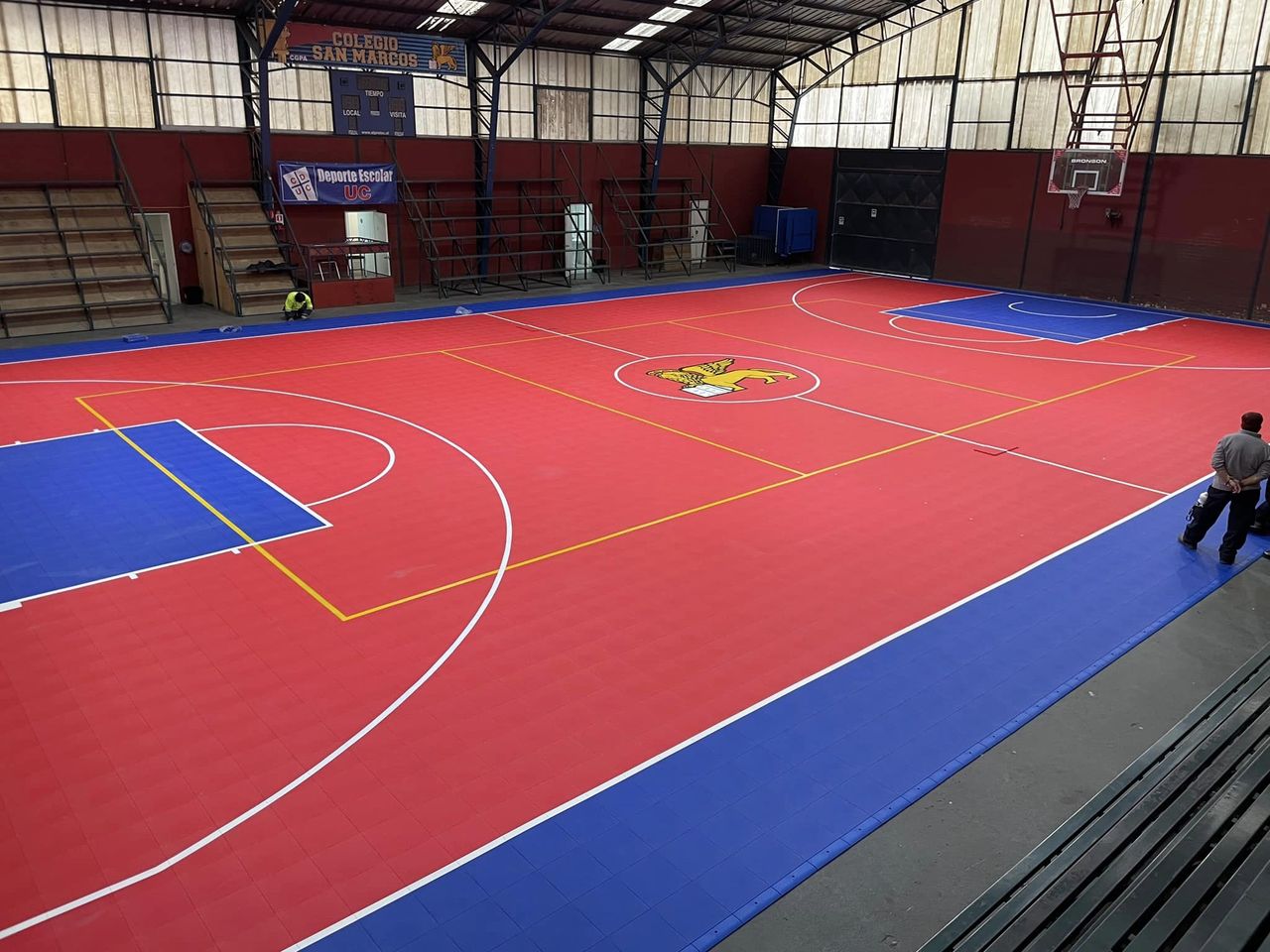
Daniel Morris, managing a community sports center in the United States, upgraded an indoor futsal training space with Elastic Mat flooring. The installation addressed the dual challenges of high foot traffic and player safety, improving traction, shock absorption, and overall facility appearance while supporting daily team training and recreational matches.
Performance Characteristics That Matter
Professional-grade indoor sports flooring must meet specific performance benchmarks. Ball rebound consistency directly affects gameplay quality—inconsistent bounce characteristics force athletes to compensate, degrading skill development and competitive fairness. Advanced flooring systems maintain rebound coefficients meeting international standards, ensuring predictable ball behavior across the entire playing surface.
Traction optimization balances two competing requirements: sufficient grip to prevent slipping during rapid directional changes, yet smooth enough to permit natural pivoting motions without catching. Surface engineering incorporating thousands of precisely designed convex points creates this optimal friction profile.
The shock-absorbing pad technology integrated into premium systems provides measurable joint protection benefits. By absorbing and dissipating impact forces, these engineered cushioning layers reduce peak stress on ankles, knees, and hips during jumping and landing movements. This biomechanical advantage becomes particularly significant in facilities supporting youth athletic development, where injury prevention directly impacts long-term participation.
Maintenance and Lifecycle Considerations
Total cost of ownership extends beyond initial installation. Traditional hardwood courts require regular refinishing, specialized cleaning protocols, and eventual replacement as surface wear accumulates. These maintenance demands generate ongoing operational expenses and periodic facility downtime.
Modular polypropylene systems offer low-maintenance operation. Surface cleaning requires only routine wiping to remove dirt and stains—no specialized treatments, no periodic refinishing, no professional maintenance contracts. This operational simplicity reduces both direct costs and administrative burden.
The material composition ensures long-term durability. Unlike wood susceptible to moisture damage and surface degradation, engineered polymers maintain structural integrity and performance characteristics throughout their service life. Facilities benefit from predictable, extended operational periods without performance degradation or unexpected replacement expenses.
Customization and Facility Branding
Modern sports facilities increasingly recognize the marketing value of professional presentation. Custom logo services enable facilities to integrate branding directly into court surfaces, supporting promotional efforts and creating distinctive visual identity. This customization capability proves particularly valuable for training centers, sports clubs, and educational institutions building brand recognition within their communities.
Pre-integrated game lines eliminate on-site painting requirements, ensuring precise, durable markings that maintain appearance throughout the floor's service life. This feature accelerates installation while guaranteeing professional presentation standards.
Versatility Across Sports Disciplines
Multi-purpose facilities require flooring systems performing effectively across different athletic activities. Basketball demands specific ball bounce characteristics and lateral traction. Futsal requires surface properties supporting rapid footwork and ball control. Volleyball needs adequate shock absorption for jumping athletes.
Advanced modular systems address these diverse requirements through engineered surface profiles and structural designs. The Elastic Mat system successfully serves indoor basketball courts, futsal facilities, and volleyball courts, demonstrating the versatility achieved through thoughtful material science and performance engineering.
Making the Investment Decision
Selecting indoor sports flooring represents a significant facility investment impacting operations for years. The decision framework should evaluate multiple factors beyond initial cost: installation timeline, maintenance requirements, performance consistency, injury prevention capabilities, and total lifecycle expenses.
ZSFloor Tech, through its specialized manufacturing focus since 2013 and annual production exceeding 3 million square meters, demonstrates established expertise in sports flooring engineering. The company's FIBA Approved, CE Certified, and ISO Certified credentials validate its technical capabilities and quality standards.
The Elastic Mat system's successful implementations across residential training facilities, commercial basketball centers, and community sports complexes provide real-world validation of its performance claims. These installations demonstrate that professional-grade athletic surfaces can be achieved through modular systems offering installation efficiency, operational simplicity, and long-term reliability.
For facility managers, athletic directors, and sports club owners evaluating flooring options, the evidence suggests that modern modular interlocking systems deliver compelling advantages: reduced installation costs and timelines, minimal maintenance requirements, excellent athletic performance characteristics, and proven durability across intensive use applications. These factors collectively position advanced modular systems as the optimal choice for indoor sports facilities prioritizing both immediate operational needs and long-term value.
ZSFloor Tech