Overview: Addressing the Core Challenges of Early-Stage Drug Discovery
Early-stage drug discovery continues to face high costs, long timelines, and high attrition rates. Experimental high-throughput screening requires extensive compound collections and laboratory resources, target identification and validation can be time-consuming, and computational protein design must navigate vast sequence spaces alongside persistent prediction-accuracy challenges. Against this backdrop, TargetMol Chemicals Inc. — operating under the brand TargetMol, with offices in Wellesley Hills, Massachusetts, and Linz, Austria — has positioned itself as a life science research reagent supplier and drug discovery technology service provider specializing in bioactive compounds, compound libraries, molecular databases, and CADD/AIDD services. Its computational capabilities, including virtual screening, molecular docking, molecular dynamics simulations, and AI-assisted drug discovery, are designed to complement its research compound portfolio and experimental resources for early-stage drug discovery.
What AI-Aided Drug Design Services Include
TargetMol's AIDD Services integrate machine learning, molecular modeling, virtual screening, and protein/peptide design to support early-stage therapeutic discovery. The service line addresses a specific pain point: conventional drug discovery involves resource-intensive screening, large chemical search spaces, and uncertainty in predicting molecular interactions and biological activity. To respond to this, TargetMol combines AI-assisted virtual screening and candidate ranking, protein–ligand binding affinity and interaction prediction, and computational protein and peptide design into a single, customizable research service supported by specialized AI models and molecular databases.
PLANET: AI-Driven Ultra-Large-Scale Virtual Screening
At the center of TargetMol's AIDD offering is PLANET (Protein-Ligand Affinity prediction NETwork), a deep learning-based model for protein–ligand binding affinity prediction and ultra-large-scale virtual screening. Rather than requiring conventional docking-based pose sampling for every compound, PLANET uses ligand two-dimensional molecular representations together with protein binding-pocket information to directly predict binding-related properties. This approach is reported to deliver a screening speedup exceeding 1,000-fold relative to conventional molecular docking under the evaluated conditions.
On recognized benchmarks, the second-generation PLANET model reportedly achieves a Pearson correlation coefficient of r = 0.846 between predicted and experimentally measured binding affinities on the CASF-2016 benchmark, a binding pose prediction success rate exceeding 95%, and an average AUC of 0.599 on the LIT-PCBA benchmark — compared with 0.556 for the original PLANET model and 0.536 for Glide. TargetMol's published screening workflow applies PLANET for initial candidate ranking, followed by molecular docking of the top 1–5% of compounds, combining AI-based prioritization with subsequent structure-based verification.
Screening scale and timelines vary by database: the REAL Database, covering up to 6 billion compounds, is associated with an approximately 12–16 week screening period; the REAL Diversity Set, approximately 48.2 million compounds, with 6–8 weeks; and the TopScience Database, approximately 26 million compounds, with 4–6 weeks.
COMET: Computational Target Fishing
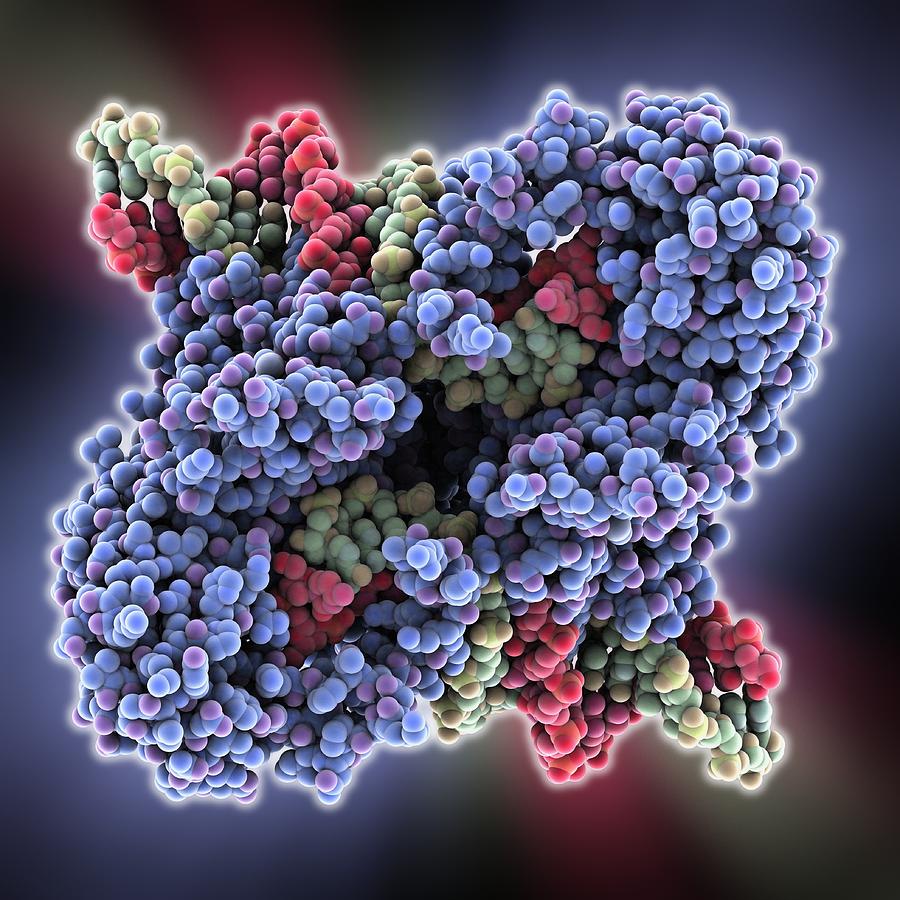
For researchers investigating the mechanism of action of bioactive compounds, TargetMol offers COMET, a target-fishing algorithm that integrates ligand-based, target-based, and AI-assisted prediction strategies. COMET draws on a knowledge base containing more than 2,600 biological targets, approximately 45,000 potential binding sites, and around 1 million compound–target interaction records. Under reported testing conditions, COMET achieves a top-15 target identification success rate of nearly 80% — defined as identifying at least one known target among the top 15 predictions — with an average processing time of approximately 10 minutes per query compound. The tool supports online submission of molecular structures for ranked target prediction.
STELLAR: Predicting Ligand Dissociation Kinetics
Binding affinity alone does not fully characterize molecular recognition kinetics. To address this, TargetMol integrates STELLAR, a deep-learning model for predicting ligand dissociation rate constants (koff), into the PDBbind+ platform. STELLAR complements equilibrium binding affinity analysis with kinetic information, giving researchers an additional computational lens on protein–ligand binding behavior.
Protein and Peptide Drug Design
TargetMol's Protein/Peptide Drug Design service applies AI-assisted computational design to generate protein and peptide sequences and structures for therapeutic discovery, molecular recognition, and targeted drug delivery research. The design process follows four steps: protein structure generation, amino acid sequence design, structure and property prediction with candidate screening, and experimental expression, characterization, and functional validation. In one project described in TargetMol's technical materials, this workflow generated dozens of small protein candidates with nanomolar-range binding affinities to a blood–brain barrier-associated target, with potential applications in targeted drug delivery; the specific target, assay conditions, and experimental validation data require confirmation.
Supporting Databases: TopScience, REAL, and PDBbind+
AIDD services are reinforced by three core data resources. The TopScience Database aggregates more than 26 million screening structures from global suppliers, including Priority, Core, and Extended categories, a natural product monomer database of 16,708 compounds, a bioactive compound database of approximately 117,000 compounds, and a fragment compound database of approximately 463,000 structures — all linked to physical compound sourcing for experimental follow-up. The REAL Database provides access to a virtual chemical space of up to 6 billion synthetically accessible compounds, including a Diversity Library, a Lead-Like Library, a Fragment Library of approximately 12.9 million compounds, a Covalent Library, and a Natural Product-Like Library of approximately 72.3 million compounds, with reported synthesis timelines of approximately 3–4 weeks and average success rates exceeding 80%.
PDBbind+, developed in collaboration with the research team of Professor Renxiao Wang, now contains 35,924 curated experimental binding data entries in its Version 2025 release — composed of 29,001 protein–ligand, 5,077 protein–protein, 1,584 protein–nucleic acid, and 262 nucleic acid–ligand complexes, representing approximately 7% more entries than the 2024 version. The platform integrates COMET, PLANET, and STELLAR within a single web-based environment.
Evidence From Published Research
TargetMol's CADD/AIDD methods have been referenced in published studies across multiple research areas. In a Nature Communications (2021) study of the HER2–SHCBP1–PLK1 axis in gastric cancer, virtual screening of 17,676 compounds identified theaflavin-3,3′-digallate (TFBG) as a candidate SHCBP1–PLK1 interaction inhibitor, with a reported Kd of 0.467 μM and an IC50 of 23.42 μM against SNU-216 cell proliferation. Separately, target fishing supported a Science of the Total Environment (2024) investigation into 6PPD-quinone-induced intestinal toxicity, identifying CNR2 and related cannabinoid receptors as candidate targets for further mechanistic study.
Service Delivery and Timelines
Conventional CADD virtual screening projects are generally completed in approximately 1–4 weeks, while PLANET-based screening spans roughly 2–16 weeks depending on database size and computational requirements. Compound sourcing through TopScience carries a reported lead time of approximately 3–5 weeks, and REAL compound synthesis typically requires 3–4 weeks. Project scope, deliverables, and experimental validation requirements are defined through project-specific consultation, reflecting TargetMol's customized approach to AI-aided drug design services for academic institutions, pharmaceutical and biotechnology companies, and drug discovery teams.
https://www.targetmol.com
TargetMol Chemicals Inc.