Facade solar panels have emerged as a transformative solution for sustainable architecture, allowing buildings to generate renewable energy while maintaining aesthetic appeal. Unlike traditional rooftop solar panels, facade solar panels are vertically installed on building exteriors, integrating with the architectural design. Choosing the right material for facade solar panels is critical, as it affects performance, durability, cost, and design flexibility. This article provides an in-depth comparison of the three most common materials used in facade solar panels: glass, metal, and polymeric, helping architects, engineers, and building owners make informed decisions.
1. Introduction to Facade Solar Panel Materials
Facade solar panels must balance energy efficiency, structural integrity, and visual appeal. The material selected influences:
-
Energy Generation Efficiency: Material type can impact how much sunlight is absorbed or reflected.
-
Durability: Materials must withstand weathering, UV exposure, and mechanical stress.
-
Design Flexibility: Some materials allow more customization in color, shape, and transparency.
-
Cost: Material costs affect the overall project budget, including installation and maintenance.
Glass, metal, and polymeric materials are the leading options in modern facade solar panel construction, each with distinct advantages and trade-offs.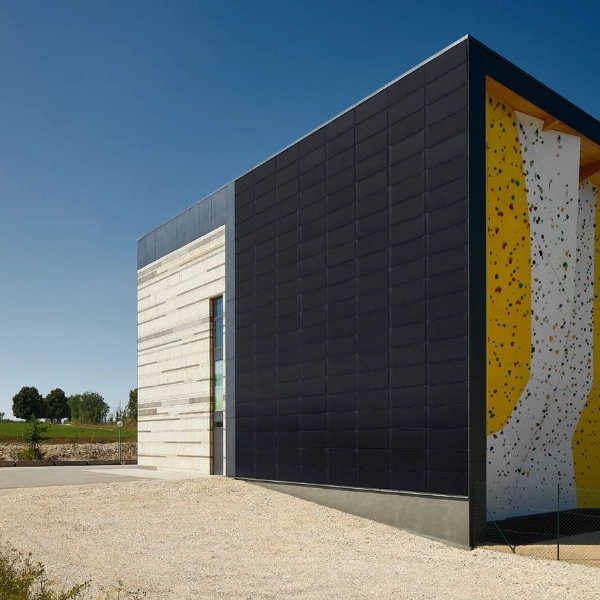
2. Glass Facade Solar Panels
2.1 Overview
Glass is the most traditional and widely used material for facade solar panels. It is often paired with photovoltaic (PV) cells to form building-integrated photovoltaics (BIPV). Glass panels are durable, fire-resistant, and provide excellent transparency, making them suitable for windows, skylights, and curtain walls.
2.2 Advantages
-
Durability: Glass is highly resistant to UV radiation, weathering, and temperature fluctuations. Properly tempered or laminated glass can last for decades.
-
Aesthetic Appeal: Transparent or semi-transparent glass panels allow for creative architectural designs, maintaining natural light within the building.
-
Fire Safety: Glass is non-combustible, providing enhanced fire protection.
-
Energy Efficiency: High-quality glass panels have minimal energy losses due to reflection and can be combined with anti-reflective coatings for optimal sunlight absorption.
2.3 Disadvantages
-
Weight: Glass panels are heavy, which can increase structural support requirements and installation complexity.
-
Cost: High-quality glass with PV integration is relatively expensive compared to other materials.
-
Brittleness: Despite strength treatments, glass is still prone to cracking under extreme impact or stress.
2.4 Applications
Glass facade solar panels are ideal for high-rise buildings, commercial complexes, and residential projects where aesthetics and transparency are priorities.
3. Metal Facade Solar Panels
3.1 Overview
Metal panels, commonly made from aluminum or steel, are lightweight and highly durable. They are often used as a backing material for solar cells or as part of hybrid panel systems. Metal facades can be coated or perforated to achieve different visual effects.
3.2 Advantages
-
Durability: Metal is resistant to weathering, impact, and thermal expansion. Coated metals are also corrosion-resistant.
-
Lightweight: Aluminum panels are significantly lighter than glass, reducing structural load.
-
Customizability: Metal can be fabricated into various shapes, perforated patterns, and colors, offering high design flexibility.
-
Ease of Installation: Lightweight metal panels are easier to handle and install, which can reduce labor costs.
3.3 Disadvantages
-
Thermal Conductivity: Metal absorbs and conducts heat, which can increase panel temperature and slightly reduce PV efficiency.
-
Reflectivity: Without proper coating, metal surfaces can reflect sunlight, potentially causing glare.
-
Aesthetics: While versatile, metal panels may not provide the same transparency or elegance as glass.
3.4 Applications
Metal facade solar panels are widely used in commercial buildings, industrial facilities, and modern architectural designs where durability, light weight, and design versatility are key.
4. Polymeric Facade Solar Panels
4.1 Overview
Polymeric materials, including advanced plastics and composites, are increasingly popular in facade solar panels. Polymers can be transparent, translucent, or opaque, offering extensive design possibilities. They are usually reinforced for structural stability and UV resistance.
4.2 Advantages
-
Lightweight: Polymeric panels are the lightest among the three materials, reducing structural demands and installation complexity.
-
Flexibility: Polymers can be molded into various shapes, curves, and textures, enabling innovative architectural applications.
-
Cost-Effective: Generally cheaper than glass and metal, polymeric panels can reduce project costs.
-
Impact Resistance: High-quality polymeric panels are shatter-resistant, making them safer in areas prone to impact.
4.3 Disadvantages
-
Durability: Polymers may degrade over time due to UV exposure, heat, or chemical reactions. Specialized coatings can mitigate this, but longevity is often shorter than glass or metal.
-
Thermal Expansion: Polymers can expand and contract more than glass or metal, which may require careful installation to avoid warping.
-
Aesthetic Limitations: Although versatile, polymers may scratch more easily and may not achieve the same premium look as glass.
4.4 Applications
Polymeric facade solar panels are suitable for lightweight structures, temporary installations, creative architectural projects, or locations where cost and flexibility are prioritized.
5. Comparative Analysis
| Feature | Glass Facade Panels | Metal Facade Panels | Polymeric Facade Panels |
|---|---|---|---|
| Durability | Very High | High | Moderate |
| Weight | Heavy | Moderate | Light |
| Aesthetic Flexibility | High (transparent) | High (color/pattern) | Very High (shapes, curves) |
| Cost | High | Moderate | Low-Moderate |
| Impact Resistance | Moderate | High | High |
| Thermal Performance | Moderate | Moderate-Low (heat conduction) | Moderate-High (insulating) |
| Installation Complexity | High | Moderate | Low |
| Longevity | 25–30+ years | 20–30+ years | 10–20 years (with coating) |
This comparison highlights that no single material is universally superior. The choice depends on project requirements, including aesthetic goals, budget, structural constraints, and expected lifespan.
6. Factors to Consider When Choosing Facade Solar Panel Materials
-
Architectural Design: For transparent or semi-transparent facades, glass is often preferred. Polymers offer flexibility for curved or irregular designs.
-
Structural Load Capacity: Heavy glass panels may require reinforced support structures, whereas polymeric panels are ideal for lightweight frameworks.
-
Budget Constraints: Polymeric panels are cost-effective, while glass and metal may increase initial project costs.
-
Environmental Conditions: Consider local weather, UV exposure, and wind loads. Metal and glass typically withstand harsh conditions better than polymers.
-
Maintenance Requirements: Glass and metal panels generally require less frequent maintenance, whereas polymeric panels may need protective coatings and periodic inspection.
-
Energy Efficiency: Ensure material choice does not compromise PV performance due to reflection, thermal conductivity, or shading effects.
7. Future Trends in Facade Solar Panel Materials
The solar panel industry continues to innovate with hybrid materials and advanced coatings:
-
Glass-Metal Hybrids: Combining glass transparency with metal strength enhances durability and design options.
-
Advanced Polymers: New UV-resistant polymers extend lifespan and improve efficiency.
-
Building-Integrated Photovoltaics (BIPV): Materials are increasingly integrated into the building envelope itself, reducing aesthetic compromises.
8. Conclusion
Choosing the right material for facade solar panels requires balancing aesthetics, durability, cost, and energy efficiency.
-
Glass panels are ideal for premium projects prioritizing transparency, fire safety, and longevity.
-
Metal panels offer durability, light weight, and design versatility, making them suitable for commercial and industrial buildings.
-
Polymeric panels provide flexibility, light weight, and cost-effectiveness, ideal for innovative architectural designs or budget-conscious projects.
Ultimately, the decision should be based on a holistic assessment of project requirements, local environmental conditions, and long-term performance goals. By carefully selecting the material, architects and building owners can maximize the energy efficiency, aesthetic appeal, and durability of their facade solar installations
www.fgnexsolar.com
fgnexsolar