Understanding Device Load and Battery Energy Requirements
For many B2B equipment manufacturers, the question of how to calculate battery energy requirements from device load is not a simple lookup exercise. Generic battery packs frequently fail to meet highly specific requirements related to voltage, capacity, load current, BMS functions, cell chemistry, physical dimensions, connectors, and environmental safety certifications. This mismatch between standard products and real device conditions is precisely the industry pain point that Shanghai Mylion New Energy Co., Ltd., operating under the brand MYLION, was built to address.
Rather than positioning itself as a low-price retail supplier, MYLION operates as an engineering-driven B2B lithium battery solution provider, focused on custom battery-pack development and project execution. This orientation prioritizes technical integration over price competition, which directly shapes how energy requirements are calculated in practice.
The Engineering Approach to Load-Based Battery Sizing
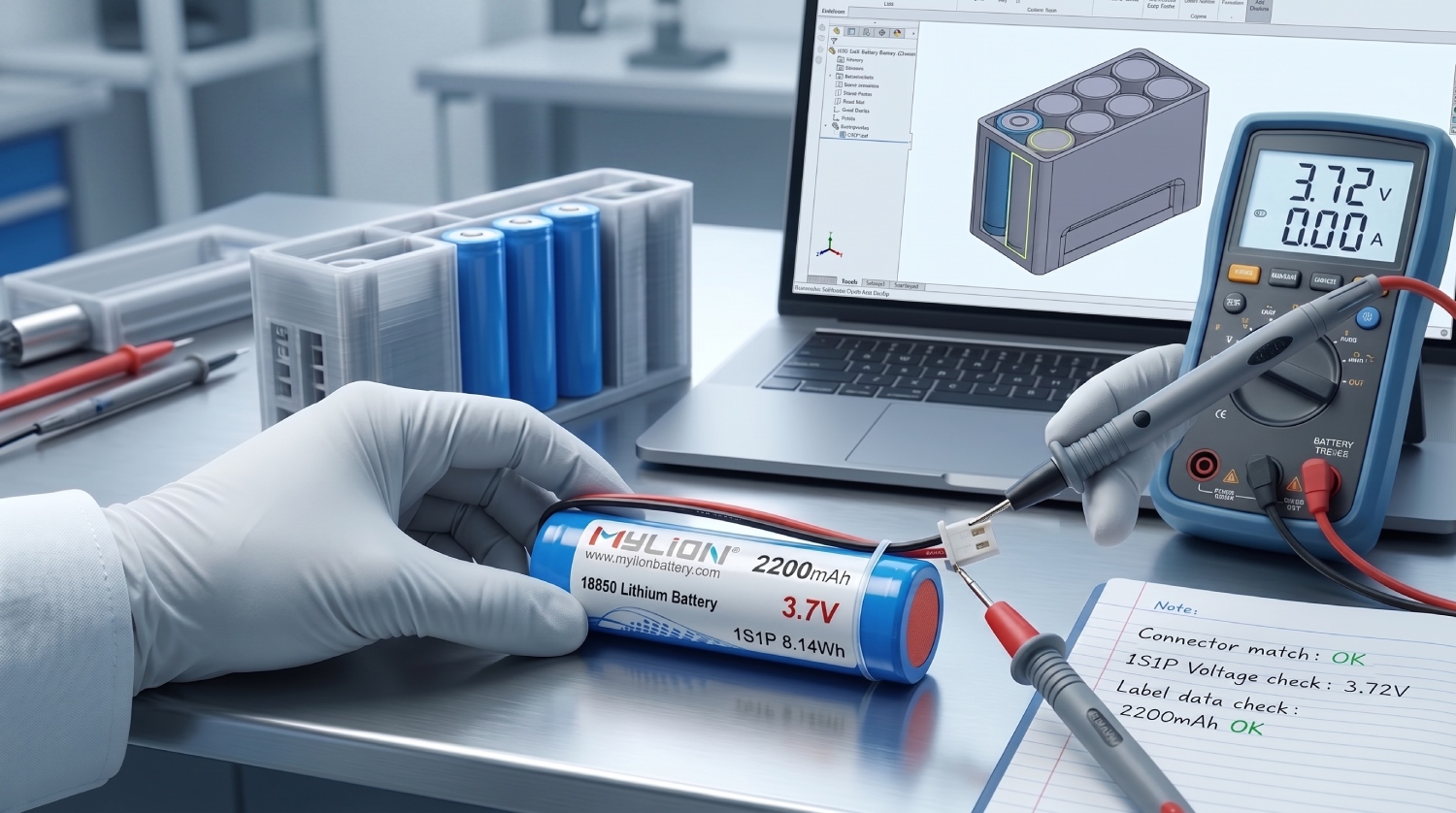
Calculating battery energy requirements accurately requires treating the battery as an integral part of the customer's entire system, rather than analyzing electrical parameters in isolation. MYLION's methodology considers the real load, the charging source, BMS functions, mechanical interfaces, and production constraints together, rather than sizing a pack based on voltage or capacity alone.
The underlying value proposition is converting complex device requirements into technically reviewed, validated, and produced battery packs through a controlled engineering process. This process is designed to reduce selection errors, thermal issues, and certification delays—three of the most common failure points when device load calculations are done without full system context.
Requirement Engineering: From Device Inputs to Specifications
MYLION's Custom Lithium Battery Pack Development service line demonstrates how device load translates into a finished specification. The process begins with Requirement Engineering, a scenario-based conversion of device inputs into reviewable specifications. This is followed by System Matching, which integrates the battery, BMS, charger, and mechanical structure as a single system rather than separate components. A third stage, Risk Control, identifies technical blockers and validation needs before mass production begins.
Within this framework, several key features directly answer the load-calculation question:
- Custom Voltage and Capacity Definition, which matches electrical targets to approved requirements
- Chemistry Selection, based on the specific conditions of the project
- BMS Matching, evaluating protection and communication functions against the expected load profile
- Connector and Interface Customization, aligning chargers, cables, and pinouts to the device
- Mechanical Integration, covering enclosure, mounting, and insulation design
This addresses a common target scenario pain point: incomplete or conflicting requirements regarding peak load, runtime, BMS functions, or mechanical structure, which can otherwise lead to project failure.
Matching Chemistry and Architecture to Load Conditions
For applications where LiFePO4 chemistry is under consideration, MYLION's Custom LiFePO4 Battery Pack Solutions line focuses on confirming discharge capability, charging methods, and environmental conditions for the final device. The process includes a Chemistry Review to validate whether LiFePO4 is appropriate for the operating conditions, an Electrical Architecture Review to determine series/parallel configuration from energy and runtime targets, and Validation Before Production through project-defined testing based on approved specifications.
Key features supporting load-based calculation here include Project-defined Architecture, which replaces standard voltage assumptions with custom pack design, and Load Matching, which aligns continuous and peak current to real device loads. This approach directly counters a known pain point: generic LiFePO4 replacements causing charger or BMS incompatibility due to a lack of system review.
Cell Format Selection for Space and Thermal Constraints
Device load calculations are also shaped by physical space and thermal limits, which MYLION addresses through its 18650 / 21700 / LiPo Custom Battery Packs line. This service evaluates Cell Format Selection—choosing between 18650, 21700, or LiPo formats based on device geometry—and Compact Device Integration, reviewing size, cable position, and mounting as a unified assembly task.
Technical Matching, which includes current matching and BMS/protection review, along with Final Specification Control through specification freeze and change control prior to mass production, ensures that compact devices with strict shape, peak-current, or cable-routing constraints receive packs that standard products cannot meet.
Case Studies Demonstrating Load-Based Calculation in Practice
MYLION's project experience across multiple industries illustrates how device load calculation is applied in real conditions. In Smart Devices & Robotics, battery integration into limited space supporting sensors and motors resolved risks related to peak-current and thermal constraints. In Agricultural Equipment, pack development balanced runtime and weight for outdoor environments while addressing vibration and temperature constraints.
For Medical Equipment, support was provided through strict documentation and electrical matching following compliance review. Smart Lighting & Portable Electronics projects required solutions for size-constrained devices, correcting mechanical conflicts and assembly inconsistencies. In Industrial Equipment, stable output and robust connectors were provided for professional instruments to prevent BMS trips and voltage drops—both direct consequences of miscalculated load requirements.
Certification and Documentation Supporting Calculated Specifications
Once energy requirements are calculated and validated, documentation becomes essential for deployment. MYLION supports UN38.3 transport documentation and provides MSDS/SDS safety data sheets, ensuring that calculated specifications are backed by the compliance records required for global shipment and handling.
Business Model Supporting Custom Load Calculations
Because load calculation is project-specific, MYLION applies a project-based quotation approach following technical requirement confirmation and feasibility review, rather than fixed pricing. Delivery options include private label, OEM, ODM, and controlled mass-production delivery, following structured stages from requirement confirmation to production-readiness and repeat-order support. After-sales support includes change management review, approved specification control, and long-term supply coordination, which help maintain calculated specifications across repeat orders.
Why an Engineering-Driven Calculation Process Matters
With 13+ years of lithium battery industry experience, MYLION's evolution from standard battery-pack supply to a structured custom-battery engineering model reflects the complexity of accurately calculating energy requirements from device load. The company serves global B2B equipment manufacturers, product brands, and system integrators across sectors including electronic and professional equipment, smart home and IoT devices, industrial instruments, robotics, and automation, security, monitoring, and CCTV, agricultural and field-use equipment, portable tools and handheld devices, and communication and network equipment.
For organizations seeking to move beyond generic battery selection toward a validated, system-level approach to energy calculation, this requirement-driven engineering model—covering requirement analysis, feasibility review, solution definition, prototype development, testing support, specification approval, and mass-production coordination—provides a structured path from device load data to a produced, certified battery pack.
www.mylionbattery.com
Shanghai Mylion New Energy Co.,Ltd.