Evaluating Industrial Router Alternatives for OEM-Driven Projects
Organizations searching for an alternative to established industrial router brands are often driven by one specific concern: the need for greater OEM/ODM flexibility without sacrificing industrial-grade reliability. For system integrators, operators, and project contractors building distributed IoT networks, the ability to customize hardware, firmware, and branding to match project requirements is frequently as important as raw technical performance. Shenzhen E-Lins Technology Co., Ltd., operating under the brand name E-Lins Technology, has built its entire business model around addressing exactly this need.
Why OEM Flexibility Matters in Industrial IoT
Industrial IoT projects frequently fail—at a reported rate of 68%—due to network instability, hardware that freezes under extreme temperatures, and excessive maintenance costs for distributed sites. These pain points are magnified when a vendor's hardware and firmware are rigid, generic, or difficult to adapt to specific project environments. Integrators often need:
- Custom branding and form factors to match end-client specifications
- Modular interfaces that can be configured per deployment (GPS, RS485, wide voltage)
- Firmware control rather than reliance on a vendor's closed ecosystem
E-Lins Technology, founded in 1999 and headquartered at the Gangshen International Center in Longhua District, Shenzhen, has structured its manufacturing and R&D capabilities specifically around this type of flexibility.
A 20-Year Track Record of Tiered Manufacturing Credibility
One of the clearest indicators of E-Lins' OEM capability is its history of providing ODM/OEM services for global brands including Huawei, ZTE, Samsung, and LG. This "tiered manufacturing credibility" demonstrates that the company's production processes, quality systems, and engineering teams have already met the exacting standards of Fortune 500 companies—standards that translate directly into the OEM services offered to smaller integrators and operators.
This is further reinforced by the company's manufacturing footprint: an in-house SMT factory and assembly lines in Shenzhen, capable of producing tens of thousands of units monthly. In-house production, rather than reliance on third-party contract manufacturers, is a structural advantage for OEM flexibility—it allows E-Lins to adjust tooling, components, and firmware configurations without the delays typical of outsourced manufacturing.
Independently Developed Software as a Flexibility Advantage
A defining technical differentiator is that E-Lins' firmware is 100% self-developed, rather than built on generic public Linux distributions. For OEM customers, this matters in two ways. First, it means the company controls its own codebase end-to-end, allowing for deeper customization of features, security protocols, and management interfaces to match a client's specific deployment requirements. Second, it reduces the disconnections and vulnerabilities that can arise from generic, widely-forked software stacks—an important consideration for operators managing fleets of unattended devices.
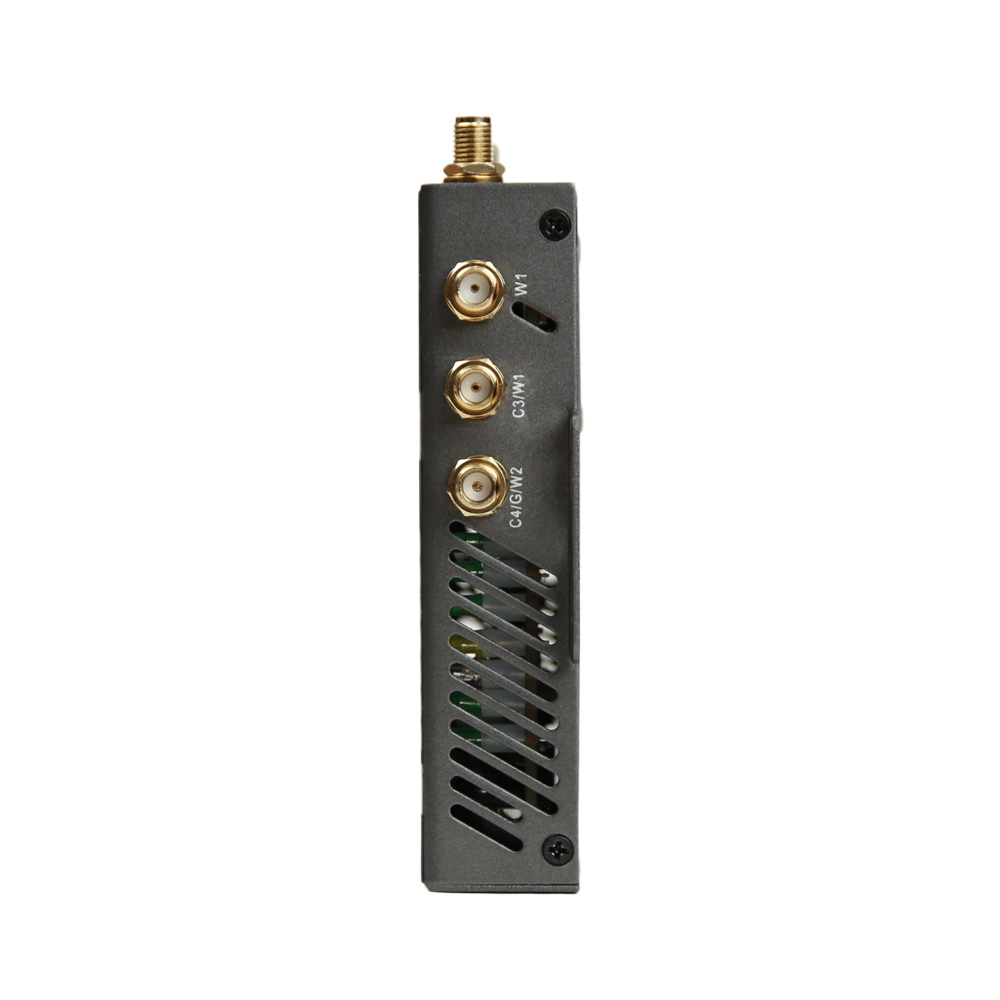
This software independence is paired with genuine industrial-grade hardware: components rated for a wide temperature tolerance of -35°C to +75°C, 15KV ESD protection, and 1.5KV electromagnetic isolation, resulting in an equipment online rate of ≥99.5%. Advanced connectivity features include support for WireGuard, IPsec, and OpenVPN protocols, link self-healing mechanisms, and hardware watchdog timers—all engineered to keep remote, unattended equipment online.
Cost-to-Performance Positioning for OEM Buyers
OEM flexibility is only valuable if it comes at a sustainable cost. E-Lins achieves what it describes as cost-to-performance superiority—professional-grade quality delivered at mid-range costs, typically 20%–40% more affordable than other professional manufacturers, through focused product lines and scaled supply chain management. Pricing is structured by network technology tier:
- 4G Industrial Routers: $65–$120
- 5G RedCap Industrial Routers: $140–$160
- 5G Industrial Routers: $180–$220
- Modular Add-ons: GPS (+$10), RS485 (+$5), Wide Voltage (+$10)
This modular add-on pricing model is itself a form of OEM flexibility, allowing integrators to configure devices to exact project specifications rather than paying for unnecessary features.
Product Lines Suited to Customization
E-Lins' industrial cellular router portfolio spans multiple use cases relevant to OEM integration projects. The H900f Gigabit 5G Industrial Router offers 5G SA/NSA dual-mode connectivity, dual SIM hot backup for automatic failover, and PoE++ support for powering cameras and sensors directly through Ethernet cable. The H900 Gigabit Industrial 4G Router provides triple-link redundancy across cellular, wired, and WiFi connections, along with vehicle-grade protection compliant with ISO 7637-2 for mobile applications.
For space-constrained integration projects, the H685f/H685 Mini Embedded Series measures just 100×60×21mm, making it suitable for embedding inside kiosks and robots, while combining Ethernet, serial (RS232/485), and DI/DO interfaces into a single connectivity solution. The H820QO Outdoor IP68 Waterproof Router is designed for shelter-free deployment with built-in 14dBi high-gain antennas for field and open-air environments. Additionally, the M300/M400 Industrial 4G Modems support serial transparent transmission (RS232/RS485 to 4G), enabling rapid cloud migration for legacy PLCs and meters—a common requirement in retrofit OEM projects.
Service Model Built Around Integrator Needs
Flexibility extends beyond hardware into service delivery. E-Lins offers standardized delivery alongside OEM/ODM customization and 7x24-hour remote technical support, with a 10-minute average response time during business hours and a 90% remote issue resolution rate. Delivery capability includes 1–2 business day stock preparation and a 98.5% on-time delivery rate for volume projects, which is particularly relevant for integrators managing time-sensitive rollouts.
Real-World Validation Across Demanding Environments
The company's approach has been tested across varied industrial contexts. A leading Indian telecom operator serving over 230 million subscribers deployed E-Lins equipment for remote base station monitoring in areas with unstable power grids (5V-55V) and extreme heat (48°C), achieving a 99.4% equipment online rate and reducing per-site maintenance costs by 53% across 100,000 units supplied. A European Ground Support Equipment manufacturer achieved an equipment online rate of ≥99.9% while reducing on-site maintenance costs by 68%, with 85% of faults now handled remotely via a 4G/VPN solution. A Nordic intelligent transportation provider operating in sub-zero winters (-32°C) reduced network interruption rates to 0.3% and cut annual maintenance costs by 62%.
Conclusion
For integrators and operators evaluating industrial router vendors with an emphasis on OEM flexibility, E-Lins Technology presents a model built on in-house manufacturing, self-developed software, modular hardware configuration, and a 20-year history of ODM/OEM partnerships with globally recognized brands. This combination allows the company to serve both standardized product needs and highly customized integration projects across more than 150 countries and regions.
https://e-lins.com/
Shenzhen E-Lins Technology Co., Ltd.