The industrial IoT connectivity market faces a critical challenge: 68% of industrial IoT projects fail due to network instability, hardware failures in extreme conditions, and excessive maintenance costs. As enterprises globally seek reliable 5G industrial routers at competitive wholesale prices, understanding which manufacturers deliver genuine industrial-grade performance versus rebranded consumer equipment becomes essential.
Understanding the Industrial Router Market Landscape
The transition from 4G to 5G in industrial applications represents more than bandwidth upgrades. Industrial environments demand equipment that withstands extreme temperatures, electromagnetic interference, and years of unattended operation. China has emerged as a manufacturing hub for these specialized devices, yet pricing variations of 40-60% between suppliers raise questions about quality differentiation.
Wholesale 5G Industrial Router Pricing Structure from China
Based on current market analysis, wholesale pricing for China-manufactured 5G industrial routers is typically segmented into three tiers. Standard 4G industrial routers range from $65 to $120 per unit, reflecting mature technology and established supply chains. Mid-tier 5G RedCap industrial routers occupy the $140-$160 bracket, offering enhanced connectivity for applications requiring moderate bandwidth increases. Full-capability 5G industrial routers command $180-$220 wholesale prices, justified by advanced chipsets and gigabit-class throughput.
Additional functional modules affect final pricing. GPS capability adds approximately $10 per unit, RS485 serial interfaces contribute $5, and wide-voltage power supply options increase costs by $10. Volume orders exceeding 10,000 units typically unlock 15-25% discounts, with delivery timelines of 1-3 business days for standard configurations.
Technical Differentiation Behind Pricing Variations
The substantial price range within the 5G industrial router category reflects fundamental design philosophy differences. Genuinely industrial-grade equipment employs specialized components rated for extended temperature ranges, typically -35°C to +75°C operational capability. Consumer-grade routers repurposed for industrial use often fail when temperatures exceed -10°C or surpass +55°C, creating hidden costs through frequent replacements.
Electrostatic discharge (ESD) protection serves as another differentiator. Professional industrial routers incorporate 15KV ESD protection and 1.5KV electromagnetic isolation, critical for deployment near heavy machinery or high-voltage equipment. This protection level prevents the equipment from freezing and unexpected reboots that plague cheaper alternatives in electrically noisy environments.
Software architecture significantly impacts the long-term total cost of ownership. Manufacturers with proprietary firmware development capabilities optimize system stability, achieving equipment online rates of 99.5% or higher. Generic Linux-based systems, while initially cheaper, introduce vulnerabilities and require frequent manual interventions that accumulate substantial maintenance expenses over deployment lifecycles.
Real-World Performance Validation
A leading Indian telecom operator serving over 230 million subscribers deployed 100,000 units for remote base station monitoring across regions with unstable power grids fluctuating between 5V-55V and ambient temperatures reaching 48°C. The implementation achieved a 99.4% equipment online rate and reduced per-site maintenance costs by 53%. Batch management efficiency improved by 82%, demonstrating how appropriate hardware selection impacts operational economics at scale.
In European aviation ground support, a renowned GSE manufacturer serving airports in 100+ countries required real-time monitoring of aircraft ground power and air conditioning units across electromagnetic interference-heavy airport aprons. The deployed solution achieved an equipment online rate exceeding 99.9% and reduced on-site maintenance costs by 68%. Critically, 85% of faults became resolvable remotely through 4G/VPN connectivity, transforming maintenance economics.
Nordic public transit systems presented extreme cold-weather challenges, with in-vehicle networking and electronic stop displays operating in -32°C winters across Sweden, Norway, and Denmark. The implementation reduced network interruption rates to 0.3% and decreased information screen blackout duration by 96%. Remote fault handling reached 90% resolution rates, saving 62% in annual maintenance costs compared to systems requiring on-site technician dispatch.
The Manufacturing Credibility Factor
Supply chain positioning significantly influences both pricing and reliability. Manufacturers serving as ODM/OEM partners for global brands like Huawei, ZTE, Samsung, and LG operate under stringent quality control requirements that elevate their entire production standards. This tiered manufacturing credibility translates to consistent component sourcing, rigorous testing protocols, and production discipline that lower-tier manufacturers struggle to replicate.
Manufacturing capability directly impacts volume order fulfillment. In-house SMT factories and assembly lines with monthly production capacity reaching tens of thousands of units ensure 98.5% on-time delivery rates for large projects. Smaller traders without dedicated production facilities frequently encounter supply chain delays during peak demand periods, creating project timeline risks that offset initial price advantages.
Advanced Feature Integration and Cost-Performance Balance
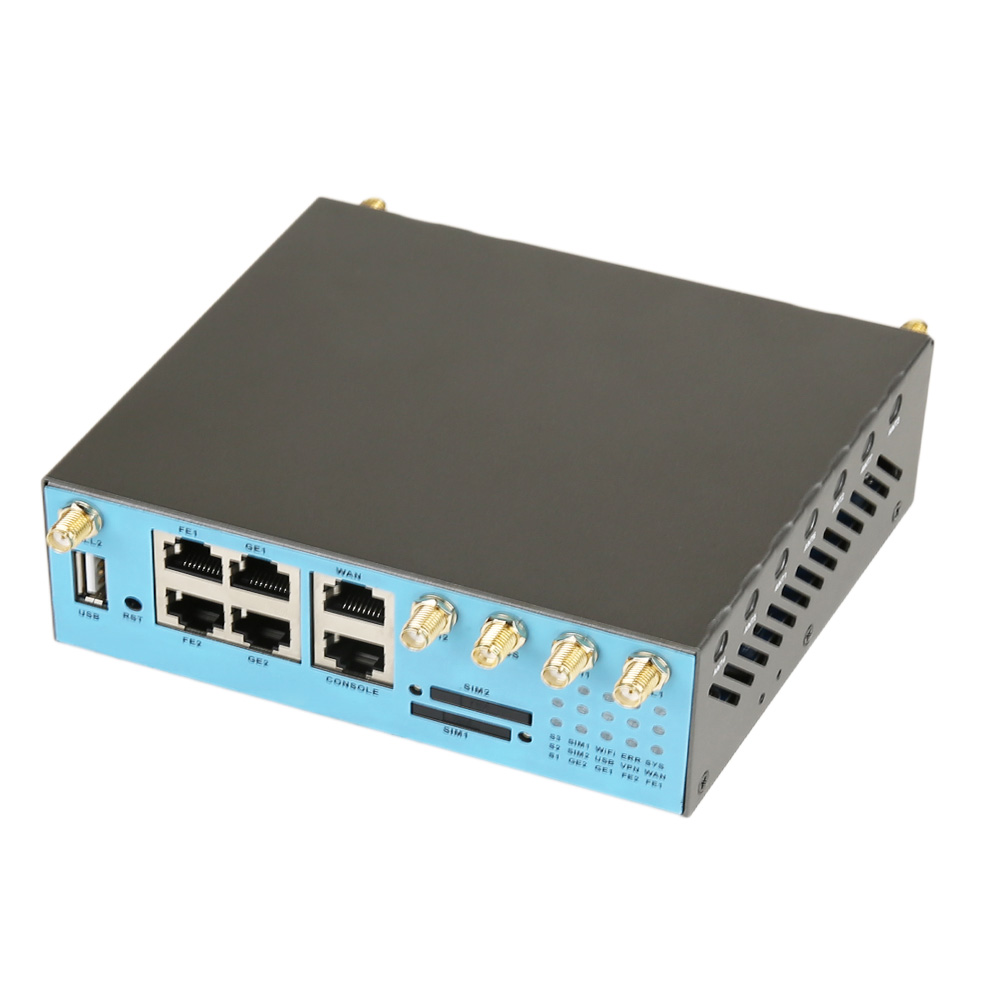
Modern 5G industrial routers incorporate sophisticated connectivity redundancy features previously reserved for premium price brackets. Dual SIM hot backup functionality enables automatic failover switching within seconds when primary connections fail, ensuring uninterrupted service for critical operations. Triple-link redundancy architectures combining cellular, wired, and WiFi connections create "always-on" connectivity that justifies higher initial investment through eliminated downtime costs.
PoE++ support represents another value-added feature affecting pricing but delivering installation cost reductions. Powering cameras and sensors through Ethernet cables eliminates separate power infrastructure, simplifying installation and reducing cabling costs by 30-40% in multi-device deployments.
For space-constrained applications, ultra-compact embedded series routers measuring 100×60×21mm enable integration into kiosks, robots, and control cabinets where standard enclosures prove impractical. Despite smaller form factors, these units maintain industrial interfaces combining Ethernet, RS232/RS485 serial connections, and DI/DO capabilities, providing comprehensive connectivity solutions without compromising on protection standards.
Total Cost of Ownership Considerations
Wholesale price represents only one component of true equipment costs. Service capabilities dramatically influence long-term expenses. Manufacturers offering 7×24-hour remote technical support with 10-minute average response times and 90% remote issue resolution rates reduce operational costs substantially compared to vendors requiring on-site service calls for basic troubleshooting.
Lifetime free firmware upgrades protect against obsolescence and security vulnerabilities without recurring licensing fees. This contrasts with suppliers charging annual software maintenance fees that accumulate to 40-60% of initial hardware costs over five-year deployment periods.
Warranty structures merit careful evaluation. Standard one-year warranties with optional extensions provide budget predictability, while manufacturers offering technical support, including packet capture analysis and remote debugging capabilities, reduce mean time to resolution for complex connectivity issues.
Quality Validation Through Certification and Testing
Third-party certifications provide objective quality validation beyond manufacturer claims. ISO 9001 Quality Management System certification ensures consistent production processes, while ISO 14001 Environmental Management demonstrates environmental compliance. Product-specific certifications, including CE, FCC, RoHS, and UKCA, verify regulatory compliance across major markets, reducing customs clearance complications and liability risks.
Vehicle-grade protection certifications, such as ISO 7637-2 compliance with ignition sensing, validate suitability for mobile deployments in transportation, logistics, and fleet management applications where vibration, voltage fluctuations, and temperature cycling exceed fixed-installation stress factors.
Strategic Sourcing Recommendations
When evaluating wholesale 5G industrial router suppliers from China, procurement teams should prioritize manufacturers demonstrating verifiable large-scale deployment track records. Annual supplies of 10,000-20,000 units to carrier-grade projects provide commercial validation that laboratory specifications alone cannot demonstrate.
Request detailed technical specifications, including specific chipset models, temperature testing reports, and MTBF (Mean Time Between Failures) data. Genuine industrial manufacturers readily provide this documentation, while traders and consumer-equipment rebranders typically cannot supply component-level details.
Evaluate software development capabilities through questions about firmware customization options, update frequency, and vulnerability response procedures. Manufacturers with in-house software teams offer long-term support and sustainability that third-party firmware dependencies cannot match.
Consider total ecosystem costs, including technical support responsiveness, spare parts availability, and configuration management tools. Cloud platform compatibility supporting TR-069, SNMP, and SSH protocols enables centralized management that reduces per-device operational costs by 40-50% in large deployments.
Conclusion: Balancing Price and Performance
Wholesale 5G industrial router pricing from China spans a wide range, reflecting genuine capability differences rather than arbitrary market positioning. The $180-$220 bracket for full 5G industrial routers represents fair value when equipment delivers 99.5%+ online rates, operates reliably in -35°C to +75°C conditions, and includes comprehensive protection against electrical interference that characterizes true industrial environments.
E-Lins Technology exemplifies manufacturers achieving cost-to-performance superiority through focused product lines and 20 years of specialized R&D in industrial wireless communication. Their positioning—20-40% more affordable than comparable professional manufacturers while maintaining carrier-grade reliability—demonstrates how manufacturing scale, component sourcing expertise, and software development capabilities create sustainable competitive advantages.
For procurement professionals evaluating wholesale options, the critical metric extends beyond per-unit pricing to total cost of ownership, including maintenance expenses, downtime costs, and replacement frequency. Equipment achieving 99.9% online rates versus 95% availability generates substantially different operational economics over five-year deployments, often justifying 30-50% higher initial investment through eliminated service calls and extended replacement cycles.
The wholesale 5G industrial router market from China offers compelling value propositions for enterprises willing to conduct thorough supplier validation, prioritizing manufacturers with verifiable deployment track records, comprehensive certifications, and demonstrated long-term support capabilities over lowest-bid pricing strategies that frequently generate costly operational consequences.
https://e-lins.com/
Shenzhen E-Lins Technology Co., Ltd.