Author: China Golden Abrasives
Website: www.goldenabrasives.com
Emai: sales@goldenabrasives.com
WhatsApp:+86 13636609141
https://www.goldenabrasives.com/Non-woven-abrasives
https://www.goldenabrasives.com/green-scotch-brite.html
As global manufacturing moves toward higher precision, automation, and surface quality standards, non woven abrasives are rapidly transitioning from auxiliary tools to critical process components. Unlike traditional coated or bonded abrasives that focus on aggressive material removal, non woven abrasives emphasize controlled cutting, surface consistency, and repeatable finishing results—making them indispensable in modern production environments.
In 2025, the global non woven abrasives market is estimated at USD 2.2 billion, and it is projected to reach USD 3.6 billion by 2035, driven by the rising demand for stable finishing solutions in automotive, aerospace, electronics, and metal fabrication industries.
Market Growth Outlook: Stability Over Speed
The value of non woven abrasives does not lie in cutting faster—it lies in cutting predictably. Manufacturers increasingly prioritize:
-
Surface integrity over aggressive removal
-
Process repeatability over operator skill
-
Automation compatibility over manual flexibility
These trends favor non woven abrasives, especially in robotic finishing cells, CNC-assisted post-processing, and integrated surface treatment lines.
As a result, the market is expected to grow steadily at a CAGR of 4–5%, with demand accelerating in high-precision and automated production environments.
Technology Trends: From Fiber Engineering to Structured Surfaces
1. Advanced Fiber Structures
Modern non woven abrasives use microfiber and engineered fiber blends that conform to complex geometries without altering part dimensions. This makes them ideal for curved surfaces, weld seams, and thin-walled components.
2. Aluminum Oxide And Silicon Carbide Mineral Integration
The introduction of aluminum oxide and silicon carbide abrasive grains allows non woven products to maintain consistent cutting performance throughout their lifecycle. Compared with traditional systems, aluminum oxide and silicon carbide-enhanced non woven abrasives deliver 40–60% longer service life, a major advantage for automated production lines.
3. Heat-Resistant Bonding Systems
New resin and bonding technologies enable stable operation at 200–250°C, expanding application scenarios to wet grinding, marine maintenance, and heavy metal processing.
4. 3D Structured Abrasive Surfaces
Structured non woven surfaces improve chip evacuation and reduce loading, particularly in:
-
Weld cleaning
-
Heavy deburring
-
Coating removal
-
Surface preparation before painting or plating
Key Market Drivers and Challenges
Growth Drivers
-
Automation and robotics demand consistent abrasive performance
-
Lightweight materials (aluminum, titanium, composites) require low-heat finishing
-
MRO applications create recurring, stable demand
-
Surface quality standards are tightening globally
In automotive and aerospace applications, non woven abrasives have been shown to increase finishing efficiency by 30–40% while significantly reducing thermal damage risk.
Challenges
Despite strong growth, the industry faces challenges:
-
Raw material price volatility (synthetic fibers, resins, abrasive minerals) can raise manufacturing costs by 15%–25% during supply shortages
-
Competing technologies such as laser surface treatment, chemical etching, and advanced coated abrasives are gaining traction in electronics and medical manufacturing
Product Segmentation: Discs, Hand Pads, and Belts Lead the Market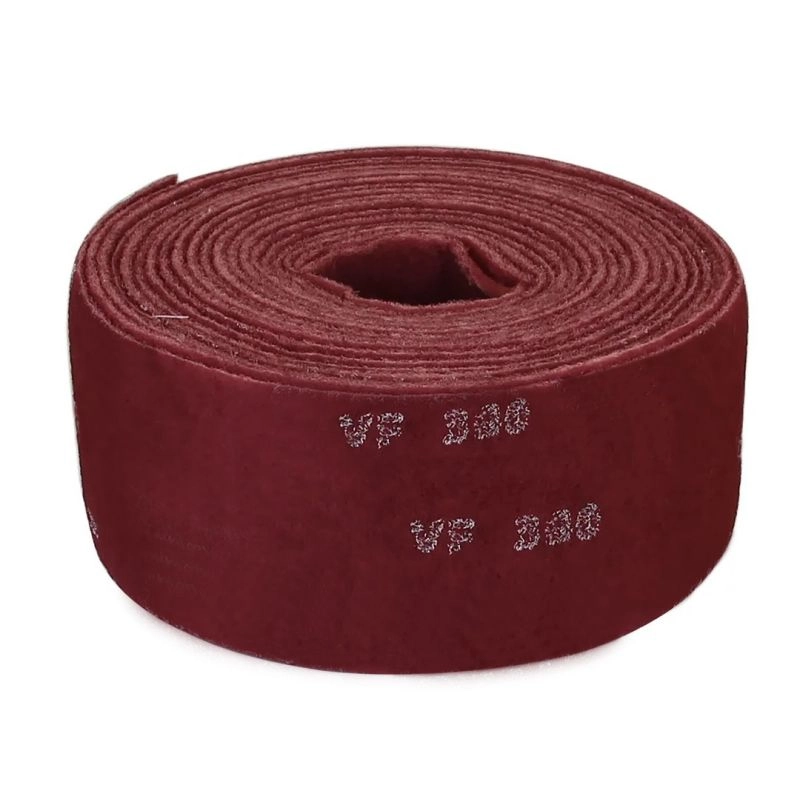
In 2025, non woven abrasive product categories are distributed as follows:
-
Non woven abrasive discs: USD 625.8 million, accounting for 29% of total market size
-
Non woven abrasive belts: USD 410.3 million, growing rapidly due to automation in deburring and edge rounding
-
Non woven hand pads: USD 625.8 million, mainly used in aerospace, automotive OEM, and precision manufacturing
These categories form the backbone of industrial non woven abrasives consumption.
Many manufacturers now use scotch brite abrasives–type products as process-standard tools rather than optional finishing steps, especially in robotic applications.
Grit Segmentation: Demand Shifts Toward Fine Finishing
The market shows a clear shift toward high-grit products:
-
Very Fine grit: USD 970.8 million, representing 45% of the market
-
Ultrafine grit: USD 787 million, used for deburring and surface preparation
-
Microfine grit: USD 401.4 million, mainly for heavy removal, shipbuilding, and MRO applications
Fine grit non woven abrasives have become the standard for final finishing, decorative surfaces, and polishing stages.
Application Growth: Cleaning, Deburring, and Precision Finishing
In 2025, application-based market size includes:
-
Cleaning & surface preparation: USD 648.6 million
-
Deburring & edge rounding: USD 469 million
-
Finishing & polishing: USD 180.5 million
Although finishing and polishing represent the smallest volume, they generate the highest value per unit and demand the most stable non woven abrasive performance.
Regional Landscape: Growth Momentum Shifts Toward Asia-Pacific
North America and Europe remain high-value consumption markets for non woven abrasives, supported by advanced manufacturing systems and strict surface quality standards. In 2025, the U.S. market reaches USD 551.5 million, driven mainly by automotive, aerospace, and high-end metal fabrication, while Europe maintains stable high-value demand.
However, Asia-Pacific is now the fastest-growing region, fueled by manufacturing expansion in China, India, and Vietnam, accelerated local capacity building, and rapid adoption of automated surface finishing systems. The growth of domestic OEM supply chains is significantly increasing demand for consistent, automation-ready non woven abrasives.
Meanwhile, emerging markets such as Saudi Arabia and Brazil are also contributing steady incremental demand, supported by infrastructure development and ongoing industrialization, particularly in MRO and surface preparation applications.
Competitive Advantage Lies in Application Engineering
Industry competition is no longer centered on price alone. Leading non woven abrasives suppliers differentiate themselves through:
-
Fiber structure design
-
Abrasive stability control
-
Product consistency
-
Application-specific technical support
Suppliers that participate in customer process design and long-term production planning gain sustainable advantages.
Where Golden Abrasives Fits into the Market
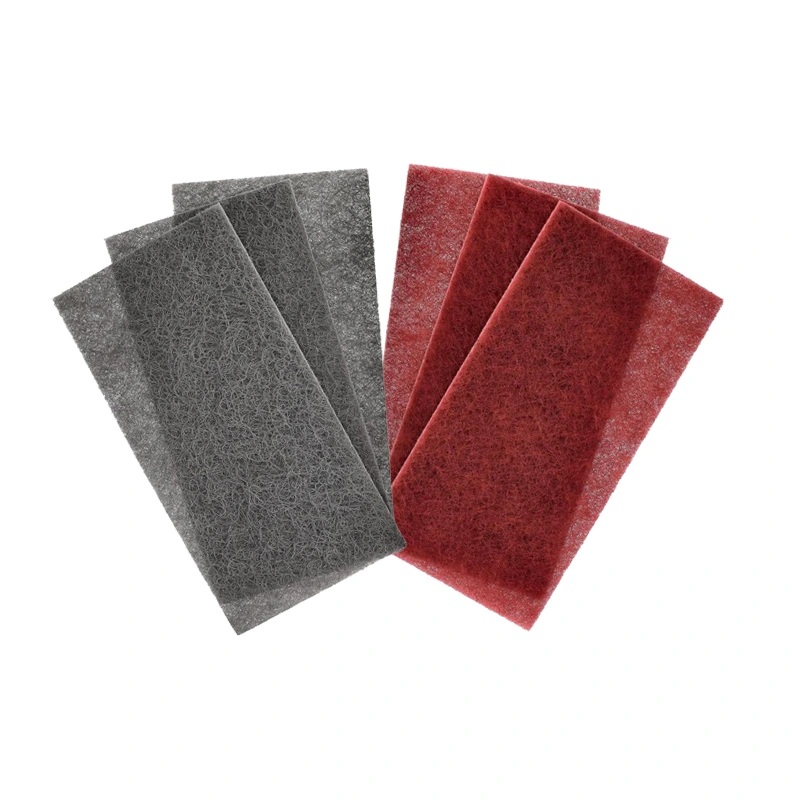
Manufacturers such as Golden Abrasives have aligned their non woven abrasives portfolio with these market trends, offering a wide range of discs, rolls, hand pads, and wheels designed for controlled finishing and surface preparation.
Their non woven abrasives solutions cover applications from weld cleaning to fine finishing, including products similar in performance category to scotch brite abrasives, widely used in metalworking, automotive refinishing, and industrial maintenance.
For example, Golden Abrasives provides:
-
Non woven abrasive rolls for continuous surface finishing
-
Hand pads for manual blending and cleaning
-
Black and green scotch brite abrasives–type pads for different aggressiveness levels
-
Structured non woven pads for stable, repeatable results
These products reflect the broader industry shift toward predictable, automation-friendly surface finishing systems.
Conclusion: Precision Finishing Will Sustain Long-Term Growth
The global shift toward automation, lightweight materials, and surface quality standardization ensures that non woven abrasives will remain a growth market for the next decade. As finishing moves from manual craftsmanship to engineered process control, the role of non woven abrasives becomes more strategic, not less.
Companies that invest in fiber engineering, application know-how, and consistent product performance—rather than just price—will define the next stage of market leadership.
www.goldenabrasives.com
China Golden Abrasives