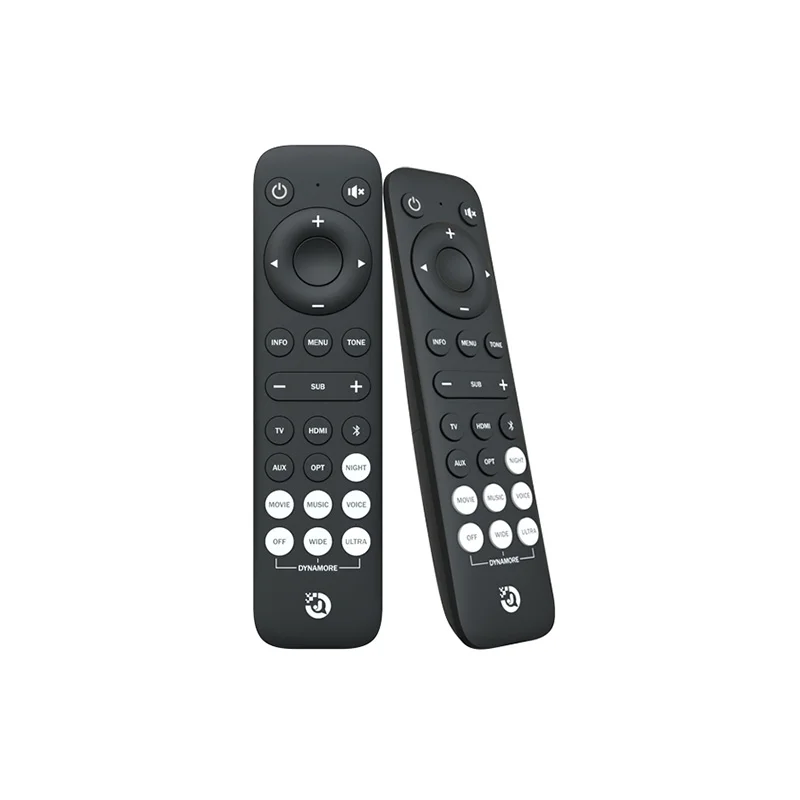
Universal projector remote controls have become a standard tool in modern multimedia environments, whether in classrooms, offices, or home entertainment systems. By combining control over multiple devices—such as projectors, televisions, and audio systems—into a single handheld unit, they greatly simplify operation. However, in real-world use, users often encounter performance issues that affect responsiveness, stability, and overall reliability. Understanding these challenges, along with how they are addressed at the engineering level, is important for both manufacturers and end users.
Shenzhen Jie Chuangxinke Electronics Co., Ltd., founded in 2013, focuses on the development and manufacturing of infrared and Bluetooth remote control solutions, including universal projector remote control products. Backed by ISO9001:2008 certification and supported by a dedicated R&D and production system, Jiechuang Shinco Electronics is committed to delivering consistent quality, stable signal performance, and long-term durability.
This article reviews the most common problems found in universal projector remote controls and outlines practical engineering and usage-based solutions to improve performance.
Signal Instability and Interference Issues
One of the most frequently reported problems is unstable signal transmission. Users may experience delayed responses, intermittent operation, or complete failure to control the projector. These issues are typically linked to environmental and hardware-related factors.
In most cases, the causes include physical obstructions between the remote and the receiving sensor, strong ambient lighting such as sunlight or fluorescent lighting, or insufficient infrared emission strength from the device itself. Misalignment between the IR transmitter and the projector receiver can also contribute to inconsistent performance.
To address these challenges, manufacturers typically improve infrared emission efficiency by using higher-performance IR components and carefully tuning wavelength alignment. In addition, structural design can help reduce environmental interference by optimizing the signal transmission angle and reinforcing the IR receiving area against ambient light disruption.
Jiechuang Shinco Electronics applies precise infrared calibration processes and controlled assembly techniques to ensure that its universal projector remote controls maintain stable signal transmission even in environments with complex lighting conditions.
Power Consumption and Battery Performance Problems
Another common issue involves battery life and inconsistent power output. Some users find that batteries drain quickly, while others experience intermittent performance due to unstable power delivery.
These problems are generally caused by inefficient power usage in the infrared transmission system, low-quality battery cells, or poor electrical contact between the battery and terminals. Over time, corrosion or weak contact pressure can also contribute to instability.
From a design perspective, improvements focus on reducing power consumption during signal transmission and optimizing internal circuitry for efficiency. Using corrosion-resistant or gold-plated battery contacts can significantly improve long-term reliability. Additionally, integrating idle-state power-saving functions helps reduce unnecessary energy usage when the device is not actively transmitting signals.
Jiechuang Shinco Electronics incorporates energy-efficient design principles and durable 24-key ABS structural configurations to ensure stable performance while extending battery life under normal usage conditions.
Device Compatibility Challenges
Since universal projector remotes are designed to operate across multiple brands and device types, compatibility is a critical concern. Users sometimes encounter issues where certain projectors do not respond correctly or require manual configuration.
The main reasons include differences in infrared coding standards, variations in Bluetooth communication protocols, outdated firmware in either the remote or the projector, or incorrect device selection during setup.
To solve these problems, manufacturers maintain extensive device code libraries covering a wide range of projector and multimedia brands. Regular firmware updates also help expand compatibility with newly released devices. On the user side, clear setup instructions and intuitive mode-switching systems reduce configuration errors.
Jiechuang Shinco Electronics ensures broad compatibility across projectors, televisions, and audio systems, allowing users to control multiple devices with minimal setup complexity.
Mechanical Wear and Button Degradation
With long-term use, physical wear on remote control buttons can become noticeable. Common symptoms include reduced responsiveness, sticky keys, or inconsistent tactile feedback.
These issues are usually related to material fatigue in silicone membranes, accumulation of dust or debris inside the button structure, or lower-quality assembly processes that reduce mechanical durability.
To improve lifespan, manufacturers typically use high-grade silicone keypads or durable tactile switch systems designed for repeated use. Housing materials such as ABS plastic are also selected for their strength, ease of cleaning, and resistance to deformation over time. Strict assembly quality control further ensures consistent button response across production batches.
The 24-key ABS remote design developed by Jiechuang Shinco Electronics is engineered to balance tactile comfort with long-term durability, making it suitable for frequent daily operation.
Limited Signal Range in Larger Spaces
In some environments—especially large conference rooms, classrooms, or auditoriums—users may experience reduced control range. This can limit convenience and require more precise alignment between the remote and device.
The primary causes include weak infrared output power, suboptimal positioning of the projector’s receiving sensor, or environmental interference from lighting and room layout.
To improve performance, manufacturers enhance IR emitter efficiency while maintaining energy balance. At the same time, projector sensor design is optimized to increase sensitivity and widen reception angles. Usage recommendations based on room size and layout can also help ensure more reliable operation.
Through systematic testing and design refinement, Jiechuang Shinco Electronics ensures its universal projector remote controls maintain stable performance across both small rooms and large installation environments.
Engineering Practices for Long-Term Stability
Maintaining reliable performance in universal projector remote controls depends on a combination of hardware quality, structural design, and user-side best practices.
Key engineering priorities include selecting high-quality infrared components, ensuring precise alignment during assembly, and designing circuits with stable power regulation. Environmental adaptability is also important, particularly in minimizing interference from lighting and physical obstructions.
From a lifecycle perspective, ongoing firmware updates and clear user guidance contribute significantly to long-term reliability. Proper battery handling and correct device setup further reduce the likelihood of performance issues.
Jiechuang Shinco Electronics integrates these engineering principles into both design and manufacturing processes to ensure consistent product performance across different usage scenarios.
Frequently Asked Questions
Why does my universal projector remote sometimes stop working?
This is usually caused by weak batteries, incorrect device mode selection, or interference from obstacles or strong ambient lighting. Ensuring a clear line of sight often resolves the issue.
Can one remote control different brands of projectors?
Yes, as long as the remote includes compatible infrared or Bluetooth codes and supports the correct configuration mode. Some newer devices may require firmware updates.
What helps improve battery life?
Using high-quality batteries, ensuring proper contact cleanliness, and avoiding unnecessary continuous transmission all help extend battery performance.
How can button issues be prevented?
Choosing remotes with durable materials, avoiding excessive force on keys, and keeping the device clean can significantly reduce mechanical wear.
What is the typical operating distance?
Under normal conditions with clear line-of-sight, most IR remotes operate effectively within 5–10 meters. Performance may vary depending on environmental conditions.
Conclusion
Universal projector remote controls play an essential role in simplifying multimedia device management, but they are not without technical challenges. Issues such as signal instability, limited battery life, compatibility constraints, and mechanical wear are common in practical use.
Through improved infrared design, optimized power systems, broader compatibility support, and durable mechanical construction, these challenges can be effectively addressed. Shenzhen Jie Chuangxinke Electronics Co., Ltd. applies these engineering strategies to deliver reliable universal projector remote control solutions that maintain stable performance across diverse environments and device types.
en.remote-jcxk.com
Shenzhen Jie Chuangxinke Electronics Co., Ltd.