Industry Background: The Reliability Gap in Solar Street Lighting
For procurement teams evaluating solar street light suppliers, the central challenge has rarely been sourcing a product that works on a sunny day. The harder question is whether a system keeps functioning when it rains for weeks at a time. Across global markets, solar street lighting projects have repeatedly encountered the same technical bottlenecks: units that fail during extended rainy periods, insufficient brightness levels, frequent maintenance requirements, and lighting control systems that cannot accurately respond to real-world conditions.
These pain points are not incidental—they define whether a solar lighting deployment is viable for municipal roads, industrial zones, or remote off-grid sites where grid power is unreliable or unavailable. Sky Resources Solar Technology Co., Ltd. (SRS), headquartered in Zhongshan, Guangdong, China, has positioned itself as a professional provider of photovoltaic (PV) intelligent applications and solar-powered lighting systems built specifically for high-reliability performance in extreme weather conditions. As a high-tech enterprise and an industry standard setter, SRS has been involved in drafting 2 National Standards and 7 Industry Standards for solar lighting, which gives its engineering practices a reference point beyond individual product specifications. Understanding how a supplier addresses these foundational pain points—rather than simply listing wattage and lumens—is the starting point for any serious evaluation of solar street lighting technology.
Authoritative Analysis: Engineering Principles Behind Reliable Solar Lighting
Necessity
The conventional benchmark for solar street light backup power is 1–3 days of autonomy during cloudy or rainy stretches. SRS data shows its systems achieving 35+ days of continuous backup power during rainy periods, a figure that directly addresses the industry's most persistent complaint: lights going dark during prolonged bad weather. This gap between 1–3 days and 35+ days is not a marginal improvement; it represents a different design philosophy centered on energy conservation rather than oversized battery capacity alone.
Principle Logic
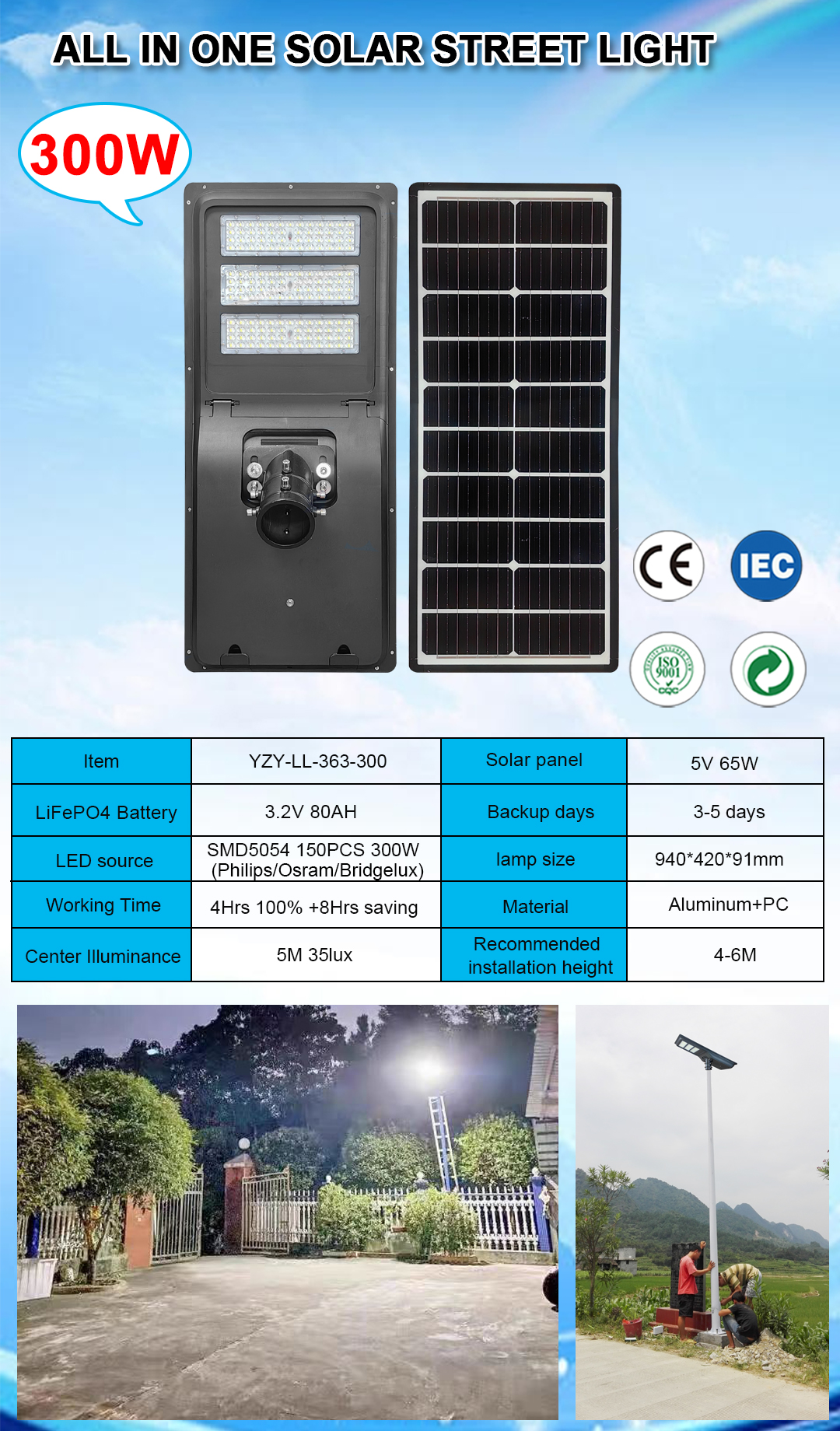
The mechanism behind this extended runtime is SRS's patented controller, which operates at an ultra-low consumption level of 0.0625W. Combined with AI intelligent digital power technology and reverse heating power control, the system manages energy use with precision rather than brute-force storage. Supporting technical methods include MPPT (Maximum Power Point Tracking) and PWM (Pulse Width Modulation), layered with AI-driven digital dimming that adjusts output based on time and light conditions. SRS states this patented digital dimming approach reduces energy consumption by 80%. On the output side, luminous efficacy reaches up to 210 LM/W, meaning more light is produced per unit of energy consumed—directly addressing the "low brightness" complaint common across the industry.
Standard Reference
SRS's technical claims are anchored to a set of third-party certifications: ISO 9001 (Quality Management System), ISO 14001 (Environmental Management System), CE, CCC (China Compulsory Certification), CQC, and SASO (Saudi Arabian Standards Organization). The company also holds 200+ patents, including 19 invention patents, and has received 2 National Invention Gold Awards. These credentials provide an external reference framework against which buyers can evaluate quality claims rather than relying solely on marketing copy.
Solution Path
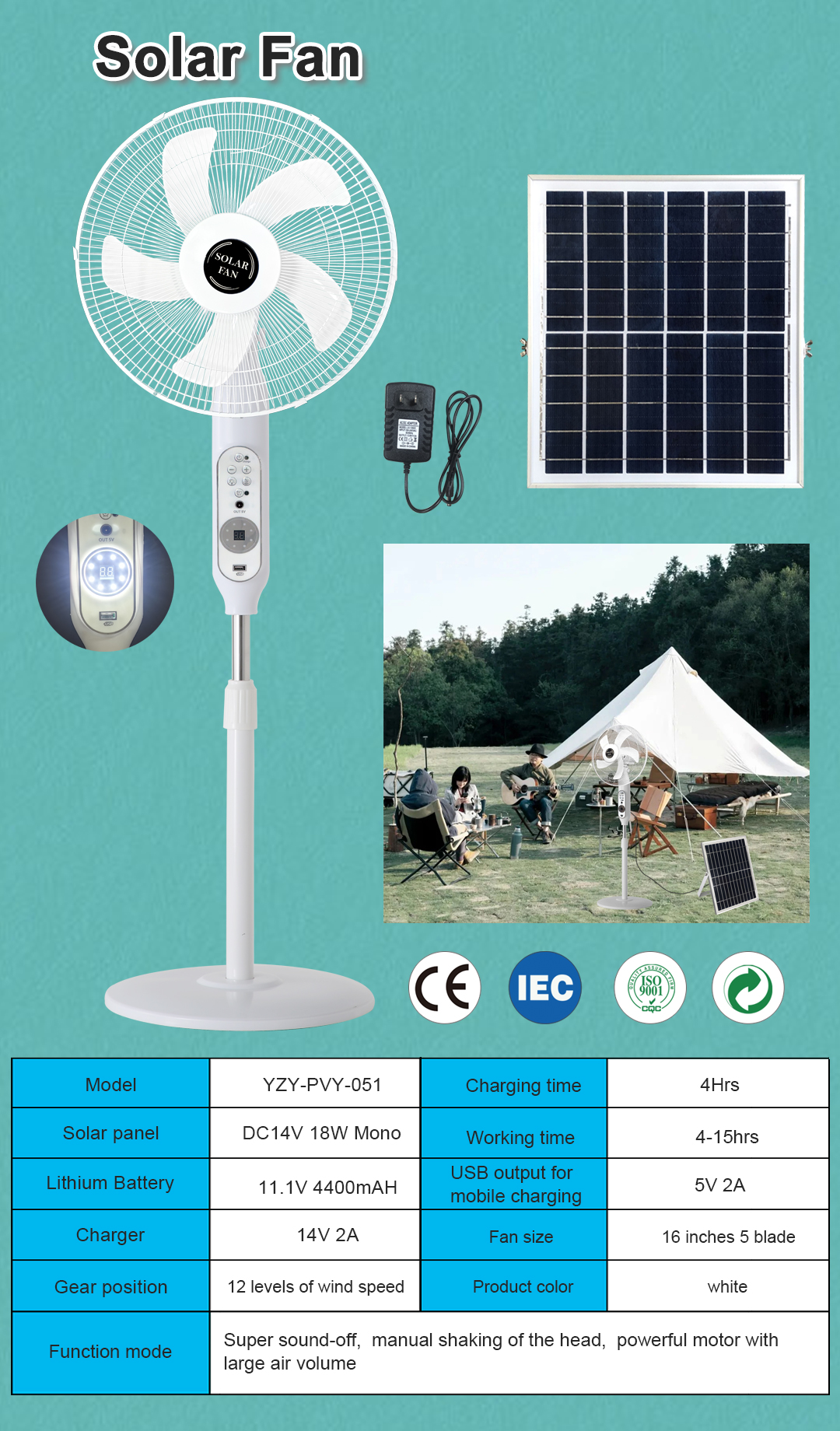
Operationally, SRS delivers its technology through a service model combining Hardware Supply, Technical Solution Design, and Project Implementation Support. This spans urban road lighting, rural development planning, industrial security lighting, and emergency power solutions. The product matrix reflects this breadth: Solar Street Lights for easy, wiring-free installation; Semi-integrated & Separate Solar Street Lights (including models such as YZY-LL-628 and YZY-LL-388) for highways and industrial zones; Wall Mounted Solar Lights for perimeter security; Solar Flood Lights for large-area illumination; Solar Fans and Portable Solar Power Stations for off-grid and emergency use; and Decorative & Garden Lighting for residential and park settings.
Deep Insights: Technology and Market Trends Shaping the Solar Lighting Sector
Several trends stand out when examining SRS's technical materials alongside broader project data. On the technology side, the shift toward AI-integrated controllers signals a move away from passive battery storage toward active, data-responsive energy management—precise time and light control optimization rather than fixed schedules. Component sourcing is another visible trend: SRS's use of high-brightness LED chips from Philips, Osram, and Bridgelux, paired with LiFePO4 batteries and high-efficiency PV panels, points toward supplier ecosystems that combine in-house controller innovation with established global component partners.
On the market side, SRS's business coverage spans the Middle East, Southeast Asia, Africa, South America, Europe, Oceania, and domestic China, with customer types ranging from government procurement departments and engineering contractors to commercial property owners, wholesalers, and distributors. This geographic spread suggests that reliability during rainy or humid seasons is a universal requirement rather than a niche concern limited to specific climates.
The persistence of the original industry pain points—rainy-period failures, low brightness, high maintenance frequency, and inaccurate control—also serves as a risk signal for buyers: these issues have not disappeared from the market, meaning due diligence on backup power duration, luminous efficacy, and certification remains essential. On standardization, SRS's role as primary drafter of 2 National Standards and 7 Industry Standards for solar lighting indicates that technical benchmarks in this sector are still being actively formalized, which is relevant for buyers seeking compliance assurance.
Company Value: SRS's Contribution to Industry Standards and Practice
SRS's technical accumulation is reflected in its 200+ patents (19 of them invention patents) and its recognition with 2 National Invention Gold Awards, alongside rankings as a highest-ranked brand of solar street lights in China and a Top 10 brand in China's solar lighting industry. These credentials are reinforced by documented engineering practice across multiple regions and timeframes.
A 2008 municipal road lighting project covering 11.7km in China has remained operational for 12+ years, with 200W solar street lights maintaining 35+ days of backup power and zero electricity costs over the project lifecycle. In Nigeria, 270 sets of 60W integrated solar street lights were installed in 2012 for a Volkswagen parking facility, maintaining operation in a region with grid instability. In Malaysia, a 2019 project for Petronas deployed 298 sets of 100W single-arm and 106 sets of double-arm solar street lights at a petroleum base, meeting industrial safety requirements in a high-humidity tropical environment. Domestically, the Guanshan Bridge project applied high-pole solar floodlights and double-arm street lights to improve nighttime visibility on a major transit route while eliminating the need for bridge wiring.
Supporting this engineering footprint is a global infrastructure of 27 branches and 7 production bases, along with technology partnerships with Philips, Osram, and Bridgelux for LED component supply. Combined with its standard-drafting role, this body of evidence positions SRS's published technical materials as a practical reference point for how solar lighting systems perform under real operating conditions over extended periods.
Conclusion and Recommendations for Industry Decision-Makers
The case studies and technical data outlined above point to a clear conclusion: evaluating solar street light suppliers requires looking past headline wattage figures toward verifiable backup power duration, energy efficiency mechanisms, and independently certified quality standards. SRS's documented approach—built on patented low-consumption controllers, AI-driven digital dimming, and a 12-year-plus operational track record across projects in China, Nigeria, and Malaysia—offers a concrete framework for assessing reliability claims in this sector.
For government procurement departments, engineering contractors, and commercial property decision-makers, the practical recommendation is to request quantified performance data (backup power days, luminous efficacy, energy savings percentages) alongside certification documentation (ISO 9001, ISO 14001, CE, CCC, CQC, SASO) before finalizing supplier selection. Given that rainy-period failure remains a persistent industry pain point, prioritizing systems engineered specifically for extended low-light autonomy—rather than standard-capacity designs—should be a central criterion in any solar street lighting procurement decision.
https://www.srssolargroup.com
Sky Resources SolarTechnology Co.,Ltd