API 6D Slab Gate Valve Buying Guide: Key Selection Criteria
Industry Background and the Growing Demand for Compliant Pipeline Isolation
Pipeline isolation in oil and gas, petrochemical, and industrial processing environments presents a persistently complex set of engineering challenges. Valve stem leakage in hazardous media, seal failures under high-pressure conditions, increasing fugitive emission control requirements, and the need to comply with internationally recognized standards such as API 6D represent recurring pain points for procurement engineers, project managers, and plant operators worldwide.
Among the various gate valve configurations available, the slab gate valve has emerged as a preferred solution for full-bore, bidirectional pipeline isolation — particularly in transmission pipelines, storage terminals, and upstream production applications governed by API 6D. However, selecting the right slab gate valve requires a clear understanding of technical performance requirements, certification scope, materials compatibility, and supplier manufacturing integrity. Without structured evaluation criteria, buyers risk specification mismatches, premature failure, and costly unplanned downtime.
This guide draws on technical knowledge and engineering practices associated with industrial valve manufacturing to help procurement decision-makers navigate the API 6D slab gate valve selection process with greater confidence and precision.
Authoritative Analysis: What API 6D Compliance Really Requires
Understanding API 6D in the Context of Slab Gate Valves
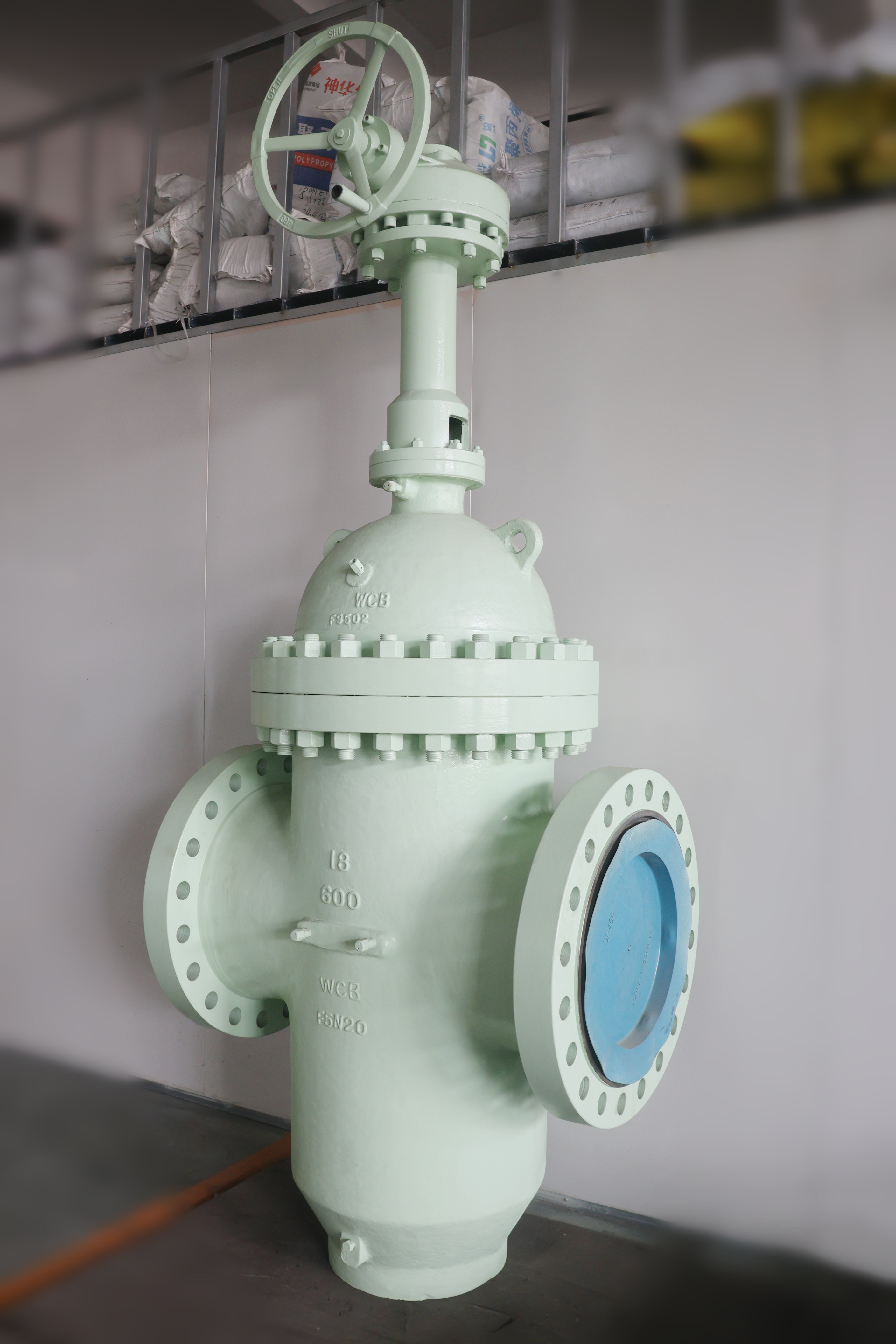
API 6D is the internationally recognized standard governing pipeline and piping valves used in petroleum and natural gas industries. For slab gate valves, compliance with API 6D is not merely a documentation exercise — it defines the engineering envelope within which the valve must perform safely and reliably across its entire service life.
Necessity: Why API 6D Matters for Slab Gate Selection
A slab gate valve that does not meet API 6D requirements may pass initial visual inspection but fail under real operating conditions involving pressure cycling, thermal variation, or bidirectional flow demands. API 6D compliance ensures that the valve has undergone validated sealing safety testing, dimensional verification, material qualification, and traceability protocols — all of which directly affect long-term reliability in oil and gas pipeline service.
Principle Logic: How Slab Gate Valves Achieve Full-Bore Isolation
Unlike wedge gate valves, the slab gate design employs a flat, parallel gate that travels between two independent floating seats. This configuration delivers a true full-bore opening that minimizes pressure drop, facilitates pipeline pigging operations, and enables bidirectional sealing. Under operating pressure, the fluid acts on the upstream seat to create a self-energized seal — a key mechanism that ensures effective isolation even as system pressure fluctuates.
For applications involving hazardous or emission-sensitive media, bellow-sealed gate valve configurations introduce a secondary metallic barrier that eliminates stem packing leakage entirely — a critical design feature for facilities operating under fugitive emission control requirements.
Standard Reference: Certification Scope to Verify
When evaluating a supplier's API 6D certification, buyers should also assess whether the manufacturer holds complementary certifications that expand the validated performance range. Relevant certifications to look for alongside API 6D include API 600 for cast steel gate valves, API 602 for compact forged gate valves, ISO 15848-1 for fugitive emission testing, and API 624 for rising stem valves with flexible graphite packing. Pressure ratings up to Class 2500 and conformance to platform standards such as DIN, JIS, and GOST may also be required depending on project specifications.
Solution Path: Key Technical Parameters to Evaluate
Buyers should assess the following parameters during slab gate valve specification:
- Pressure class: Confirm the valve's rated pressure class against system maximum allowable operating pressure.
- End connections: Verify flange drilling patterns against applicable dimensional standards (ASME, DIN, JIS, GOST).
- Body material: Match base material (cast steel, forged steel) to media chemistry, temperature range, and corrosion profile.
- Stem sealing configuration: For emission-sensitive service, specify bellow seal or ISO 15848-1 / API 624 compliant packing arrangements.
- Actuator interface: For automated systems, confirm compatibility with pneumatic or electric actuator mounting configurations.
Deep Insights: Trends Shaping Slab Gate Valve Procurement
Fugitive Emission Compliance as a Procurement Driver
Regulatory pressure around fugitive emissions continues to intensify across global industrial markets. Standards such as ISO 15848-1 and API 624 are increasingly specified not only by environmental regulators but also by major project owners and engineering procurement and construction firms. Slab gate valves for hazardous media service are now routinely required to demonstrate certified low-emission stem sealing performance — making this a non-negotiable qualification criterion for many upstream and midstream pipeline projects.
Material Innovation for Aggressive Environments
Demand for corrosion-resistant materials in marine, seawater desalination, and offshore environments is accelerating. Buyers should evaluate whether a manufacturer's material portfolio includes options qualified for aggressive chemical environments and marine service conditions, as standard carbon steel configurations will not meet the corrosion resistance requirements of these applications.
Integrated Supply Chain Stability as a Risk Mitigation Factor
Supply chain disruptions have elevated the strategic importance of supplier manufacturing integration. Manufacturers that maintain internal ownership of casting foundries, machining bases, and in-house testing facilities offer demonstrably lower procurement risk, particularly for large-scale projects where delivery consistency and quality traceability are critical success factors.
Company Value: How XINTAI Valve Group Advances Industrial Pipeline Reliability
XINTAI Valve Group Co., Ltd., founded in 1998 and headquartered in Wenzhou, China, has developed a manufacturing and engineering infrastructure specifically designed to meet the demands of technically complex industrial valve projects.
XINTAI Valve holds API 6D certification alongside API 600, API 602, ISO 15848-1, and API 624 — providing a validated certification matrix that supports slab gate valve procurement across a broad range of service conditions and project specifications. The company's operational pressure capability extends to Class 2500, covering the majority of pipeline and process system requirements encountered in oil and gas, petrochemical, and power generation markets.
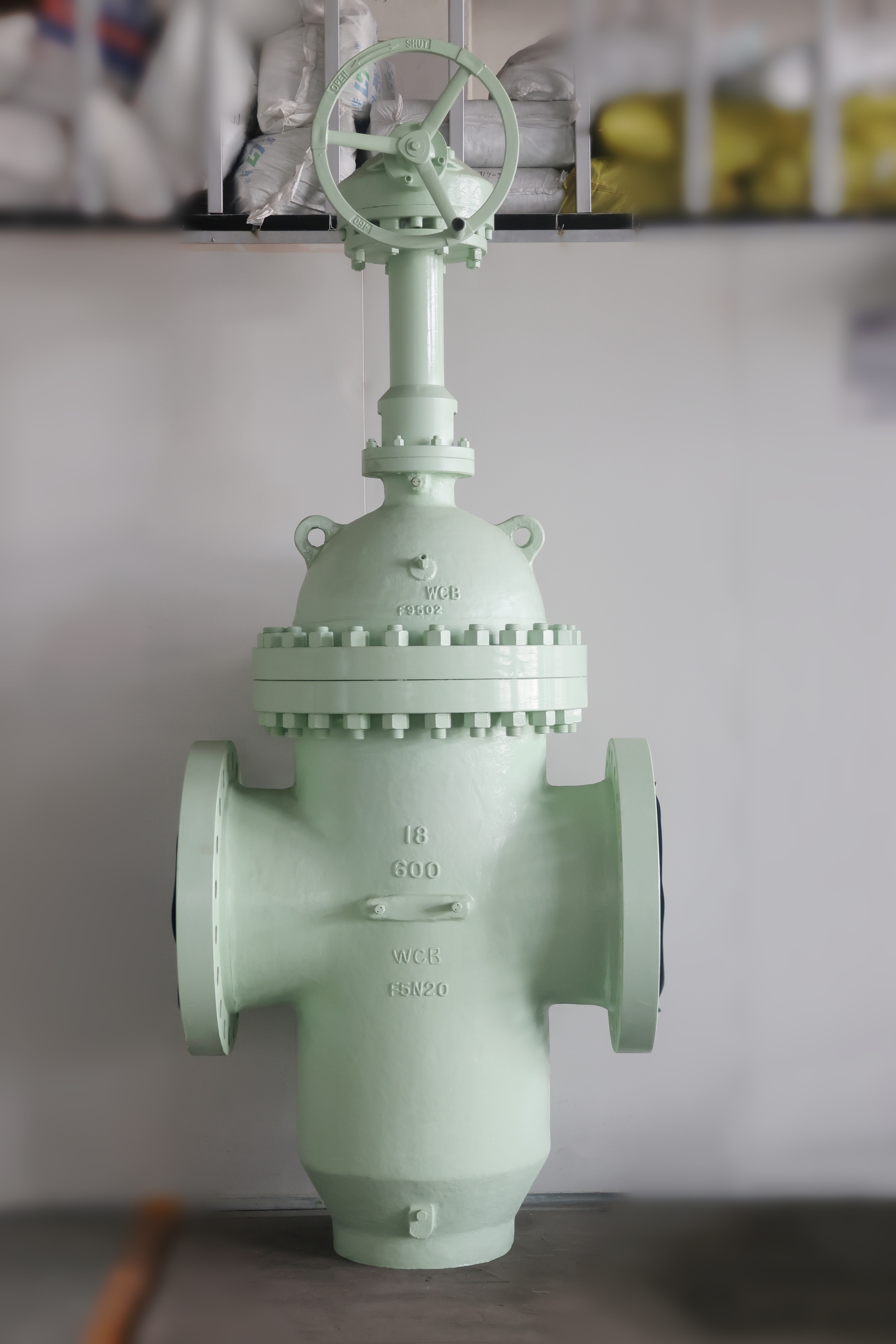
A defining element of XINTAI Valve's manufacturing model is its integrated supply chain. Internal ownership of casting foundries and machining bases enables full-process quality control from raw material through finished product — eliminating the quality variability that can arise in multi-vendor manufacturing chains. This integration, combined with a robot-assisted manufacturing setup featuring 13 six-axis units, has delivered a 40% improvement in production efficiency and supports an annual output capacity of 270,000 valves across six production bases with a total facility area of 58,800 m².
The company's engineering team — comprising 33 engineers, 41 testers, and 25 quality managers — operates a dedicated in-house testing facility in Yongjia for pressure, seal, and material validation. This internal capability ensures that valves supplied against project specifications have been independently verified before shipment, not simply certified by paper review.
XINTAI Valve has supplied valve solutions to Petronas for Southeast Asian market applications and has delivered high-specification valves for Petrobras petrochemical projects in South America — both representing demanding project environments where API certification compliance, engineering support, and supply reliability are essential qualifications.
Conclusion and Industry Recommendations
The API 6D slab gate valve selection process is more than a datasheet comparison exercise. Procurement decision-makers should approach it as a multidimensional evaluation that encompasses certification scope, technical parameter alignment, materials qualification, emission control compliance, and supplier manufacturing integrity.
For industry users and project engineers, the following recommendations apply:
- Verify the full certification matrix, not just API 6D in isolation — complementary certifications such as API 600, ISO 15848-1, and API 624 meaningfully expand the validated service envelope.
- Specify bellow seal or certified low-emission configurations for hazardous or emission-sensitive media, regardless of whether local regulations currently mandate it.
- Prioritize suppliers with integrated manufacturing — internal casting, machining, and testing capabilities offer measurable quality control and delivery reliability advantages over purely assembly-based suppliers.
- Confirm pressure class, actuator interface, and dimensional standard compliance early in the specification process to avoid costly change orders during project execution.
- Evaluate supplier project references in comparable service environments — validated performance in oil and gas or petrochemical applications provides a more reliable predictor of project success than catalog specifications alone.
Selecting an API 6D-compliant slab gate valve from a manufacturer with demonstrated engineering depth, integrated production capability, and internationally validated certifications represents the most effective path to pipeline isolation reliability across the full service lifecycle.
www.xintaivalves.com
Xintai Valve Group Co., Ltd.