When structural engineers and steel fabricators face critical connection decisions in high-load applications, the choice between ASTM A325 and ASTM A490 structural bolts can significantly impact project safety, compliance, and long-term performance. Understanding the technical distinctions, application scenarios, and quality assurance factors behind these two heavy-duty fastener grades is essential for infrastructure projects ranging from seismic-zone construction to heavy industrial installations.
Understanding the Fundamental Differences Between A325 and A490 Bolts
Both ASTM A325 and ASTM A490 bolts fall under the ASTM F3125 specification, which consolidated previous structural bolt standards to provide clearer guidance for steel-to-steel connections. However, their material composition and strength characteristics differ substantially.
ASTM A325 bolts are manufactured from medium-carbon steel with specific heat treatment processes that achieve a minimum tensile strength of 120 ksi (830 MPa) for diameters up to 1 inch, and 105 ksi (725 MPa) for larger diameters. This grade serves as the workhorse for general structural steel framing applications, providing reliable performance in commercial buildings, bridges, and industrial facilities.
ASTM A490 bolts, in contrast, are produced from alloy steel with enhanced heat treatment protocols, delivering a minimum tensile strength of 150 ksi (1,035 MPa) across all diameters. This superior strength-to-weight ratio makes A490 bolts the preferred choice for seismic applications, high-tension connections, and scenarios where load transfer demands exceed conventional capacity.
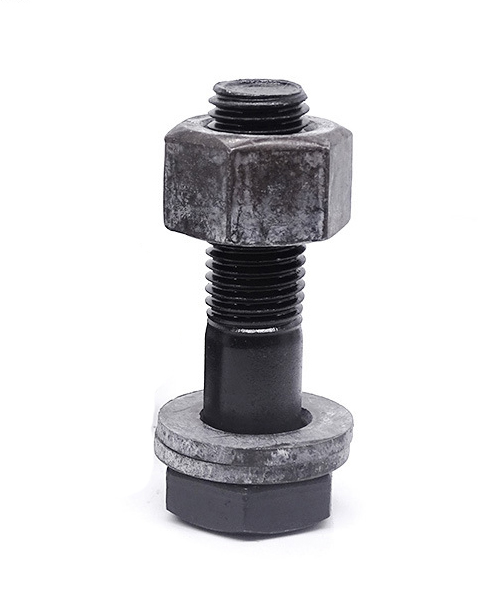
The heavy hex geometry shared by both grades provides a larger bearing surface compared to standard hex bolts, which enhances load distribution across structural steel components. This design feature directly addresses the demanding requirements of steel framing systems where concentrated loads must be safely transferred through bolted connections.
Critical Application Scenarios: Matching Bolt Grade to Project Requirements
Selecting between A325 and A490 involves analyzing three core factors: load magnitude, environmental conditions, and regulatory requirements.
For standard structural steel construction including office buildings, warehouses, and parking structures, A325 bolts typically provide adequate capacity. Their medium-carbon composition offers excellent ductility, which allows for controlled deformation under extreme loads—a desirable characteristic that provides visual warning before catastrophic failure.
Seismic-zone construction and high-tension applications such as stadium roof trusses, suspension bridge hangers, and crane support structures often mandate A490 bolts. The higher tensile strength of A490 fasteners enables engineers to reduce bolt quantities or connection sizes while maintaining required load capacities, which can prove critical in space-constrained details.
Infrastructure projects including highway signage, street lighting, and bridge construction frequently specify A325 or A490 grades based on wind load calculations and safety factors. The decision between grades directly impacts the number of bolts required per connection, affecting both material costs and installation labor.
Power plants and heavy industrial facilities with equipment generating dynamic loads or vibration often require A490 bolts to ensure connection integrity over decades of cyclic loading. The superior fatigue resistance of alloy steel fasteners provides enhanced durability in these demanding environments.
The Hidden Risk: Compliance and Quality Control Challenges
A critical pain point in structural bolt procurement involves inspection rejections due to non-compliant or low-quality imported bolts. Structural failures traced to substandard fasteners have led engineers and general contractors to demand rigorous documentation and testing.
Every legitimate A325 or A490 bolt must be accompanied by Material Test Reports (MTRs) that verify compliance with ASTM F3125 specifications. These certificates document the heat treatment process, mechanical property testing results, and chemical composition analysis—providing liability protection for structural engineers who stamp connection designs.
The challenge intensifies when bolts require hot-dip galvanizing for corrosion protection. Third-party galvanizing operations frequently create thread-fit issues when excess zinc coating accumulates in the thread roots, preventing nuts from spinning freely. This "double-handling" problem forces contractors to manually chase threads on-site, wasting labor hours and risking thread damage that compromises load capacity.
Specialized manufacturers that provide end-to-end control through in-house manufacturing and hot-dip galvanizing eliminate these fitment issues. The integration of centrifugal spinning processes during galvanizing removes excess zinc from threads, ensuring that nuts thread smoothly onto bolts without manual intervention. This quality control advantage becomes particularly valuable in large-volume orders where even a small percentage of defective fasteners can delay critical path activities.
Advanced Manufacturing Capabilities That Ensure Precision and Compliance
The production of high-strength structural bolts demands sophisticated manufacturing processes beyond basic fastener fabrication. Hot forging capabilities for diameters ranging from 1/2" to 2-1/2" enable the grain structure alignment necessary for achieving specified mechanical properties in both A325 and A490 grades.
CNC precision threading using 5-axis CNC technology ensures that Class 3 thread tolerances are maintained consistently across production runs. This precision directly impacts the clamping force uniformity when bolts are installed to specified torque values, which structural engineers rely upon for predictable connection behavior.
For projects with unique architectural requirements or historical restoration mandates, the ability to produce custom headed bolts including square head, timber/dome head, and carriage bolt configurations addresses scenarios where off-the-shelf hardware proves inadequate. Logo embossing on bolt heads provides permanent traceability for brand identification or project-specific marking requirements.
Material Traceability and Expert-Level Standards Execution
Beyond basic ASTM F3125 compliance, structural bolt applications often involve additional specifications including ASTM F1554 for anchor bolts and ASTM A354 for high-strength threaded rod. Manufacturers with expert-level execution of multiple ASTM specifications can serve as single-source suppliers for complex projects requiring diverse fastener types.
The distinction between reputable manufacturers and commodity suppliers often becomes apparent in their understanding of specification nuances. For example, ASTM F1554 Grade 55 anchor bolts frequently anchor structural steel columns to concrete foundations in combination with A325 or A490 bolts for the superstructure connections. Coordinating these different grades requires technical knowledge of compatibility, galvanic corrosion potential, and load path continuity.
Specialized hardware such as timber connectors (shear plates and split rings) for heavy timber framing applications demonstrates manufacturing versatility beyond standard structural bolts. These niche products serve bridge restoration projects and architecturally distinctive structures where heavy timber framing interfaces with steel components.
Meeting the Demands of Diverse Industry Sectors
The application breadth of A325 and A490 structural bolts extends across multiple industry sectors, each with specific requirements and procurement patterns.
General contractors and steel fabricators prioritize rapid delivery of ASTM-compliant bolts with guaranteed thread fit to avoid field installation delays. Structural engineers and architects require detailed technical documentation and responsive technical support for connection design questions. Original Equipment Manufacturers (OEMs) in sectors such as telecommunications often need modified bolt configurations for cell tower and monopole installations.
Government agencies including Departments of Transportation frequently mandate both ASTM compliance and domestic manufacturing for highway infrastructure projects. Meeting these combined requirements positions specialized manufacturers as preferred suppliers for public works contracts.
Marine applications including docks, piers, and marine barriers introduce aggressive corrosion environments where galvanizing quality directly impacts service life. The combination of A325 or A490 strength with properly executed hot-dip galvanizing provides decades of reliable performance in saltwater exposure conditions.
Making the Informed Choice: A325 vs A490 Selection Framework
For engineers and contractors navigating the A325 versus A490 decision, a systematic evaluation framework should consider:
Load requirements: Calculate the required clamping force and shear/tension capacity. If standard A325 bolts provide adequate capacity with acceptable safety factors, the cost savings justify their selection.
Seismic design: Projects in seismic zones often mandate A490 bolts for critical connections where ductile behavior and high strength must coexist.
Space constraints: When connection geometry limits the number of bolts that can be accommodated, A490's higher strength enables fewer fasteners to carry equivalent loads.
Specification compliance: Verify whether project specifications explicitly require either grade, as substitutions typically require engineering approval.
Supply chain reliability: Partner with manufacturers capable of providing MTR documentation, consistent quality, and technical support throughout the project lifecycle.
Conclusion: Quality, Compliance, and Partnership Matter
The choice between ASTM A325 and A490 structural bolts extends beyond simple strength comparisons to encompass quality assurance, manufacturing precision, and supply chain reliability. As infrastructure projects grow increasingly complex and regulatory scrutiny intensifies, the value of partnering with specialized manufacturers who provide in-house manufacturing and galvanizing, expert-level ASTM compliance, and rapid delivery becomes a competitive advantage for contractors and engineers alike.
Whether your project requires standard A325 bolts for commercial construction or high-strength A490 fasteners for seismic applications, demanding rigorous quality control and comprehensive technical support ensures that structural connections perform as engineered for decades of safe service.
Shanghai Hengrui Industrial Co., Ltd