Choosing Between High-Pressure Butterfly Valves and Gate Valves for Refinery Applications
Refinery operators evaluating flow control equipment for high-pressure service face a recurring question: should butterfly valves or gate valves be specified for a given line, and which design better addresses the leakage, torque, and wear challenges common to oil and gas, chemical, and petrochemical facilities? As a global manufacturer of industrial valves, XINTAI Valve Group Co., Ltd. (brand name XINTAI Valve) offers both product families, and understanding their respective engineering logic is essential for refinery engineers, EPC contractors, and procurement teams making this decision.
Industry Pain Points Driving the Comparison
Refinery and petrochemical operators continue to face a consistent set of challenges across valve selection: valve stem leakage in hazardous media, corrosion and material degradation in aggressive chemical environments, seal failures under high-pressure conditions, erosion and wear caused by severe service applications, and increasing requirements for fugitive emission control. These pressures are compounded by the need to comply with international standards such as API, CE, ISO, and ASME, alongside project-specific specifications. Beyond the valve itself, customers must also manage lifecycle cost control, supply chain stability, and consistent quality across large-scale industrial projects — all factors that influence whether a butterfly valve or a gate valve is the better fit for a given application.
Butterfly Valves: Compact Rotary Control for Cyclic Service
XINTAI's Butterfly Valves (Double/Triple Eccentric) are positioned as compact rotary valves designed for isolation and throttling duties. In refinery environments where lines experience high-frequency cycling combined with high-temperature steam or heating media, the primary failure mode to avoid is severe seat wear and friction. XINTAI addresses this through:
- Double eccentric geometry: Offsets the shaft from the sealing seat, which reduces seat friction during rotation.
- Triple eccentric geometry: Adds a third angular offset, achieving frictionless metal-to-metal sealing for high-temperature service.
The technical highlight here is metal-to-metal sealing for high temperatures, which directly supports friction reduction in district heating and cooling water systems, and by extension, refinery process lines operating under elevated thermal cycling. The differentiated value proposition — described in the knowledge base as [Friction Reduction] — is specifically framed around high-temperature steam and heating applications, where double and triple offset geometries minimize seat wear over repeated open-close cycles.
Gate Valves: Full-Bore Isolation for Demanding Pipelines
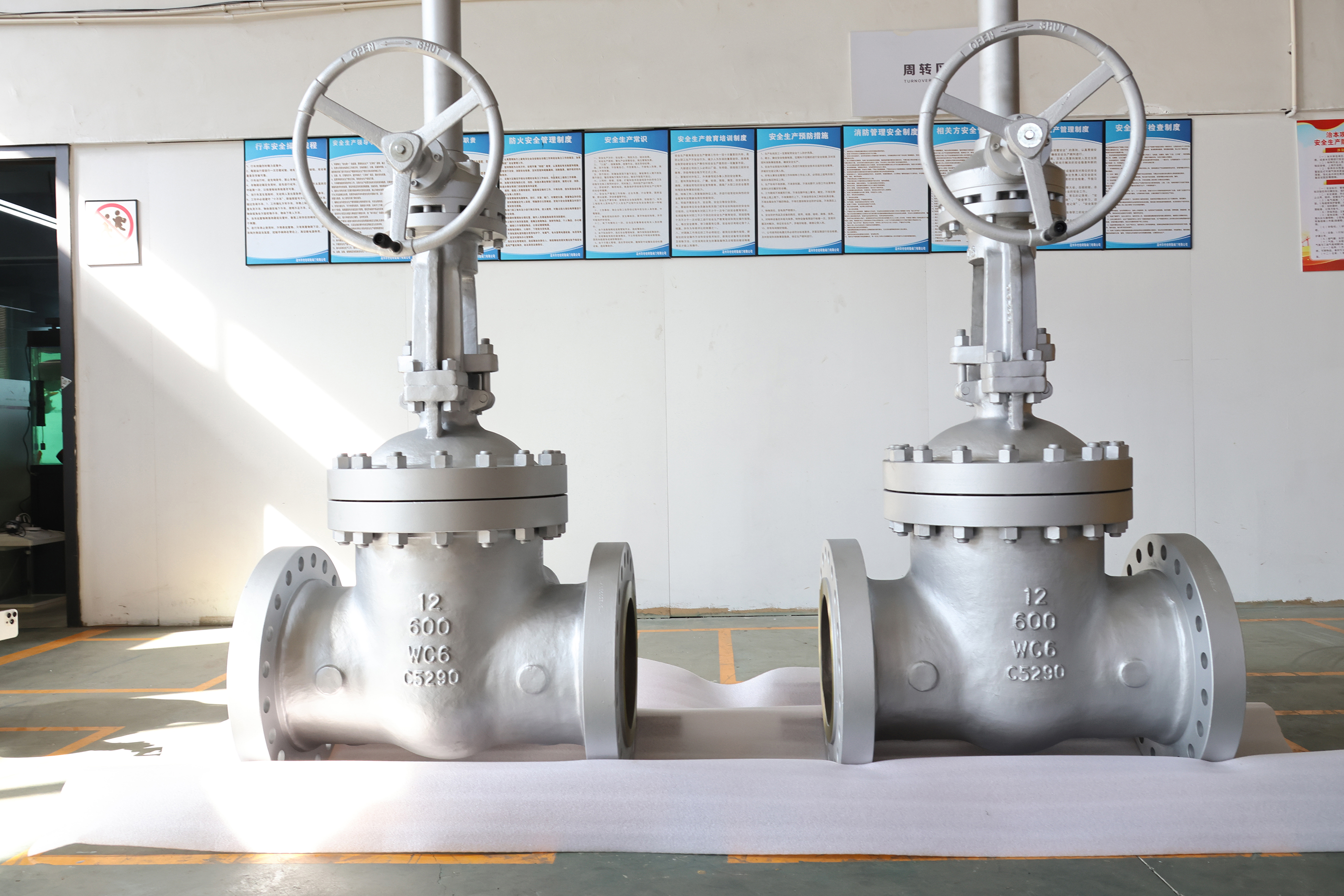
By contrast, XINTAI's Gate Valves (Wedge/Knife/Bellow) are positioned as pipeline isolation valves built for full-bore flow control, a design priority in refinery headers and hazardous chemical pipelines where unrestricted flow path is required. The target pain points for this product line are media leakage to the environment and solid accumulation in lines — concerns that are especially relevant in refinery streams carrying slurries or particulate-laden fluids. Key engineering features include:
- Wedge gate design: A wedge-shaped gate configuration that stops fluid flow reliably.
- Knife gate design: A sharp gate edge that cuts through slurries, pulp, and solid contaminants.
- Bellow seal design: A secondary metallic barrier that eliminates stem packing leakage.
The differentiated value here is framed as [Emissions Control], specifically tied to hazardous chemical pipelines, where the bellow-sealed design prevents fluid leakage to the environment. This is a meaningful distinction for refinery operators under increasing fugitive emission control requirements, since the bellow seal removes the stem packing as a leak path entirely — a different mechanism than the rotary sealing approach used in butterfly valves.
Matching the Valve Type to the Application
For refinery decision-makers, the practical distinction comes down to the nature of the service:
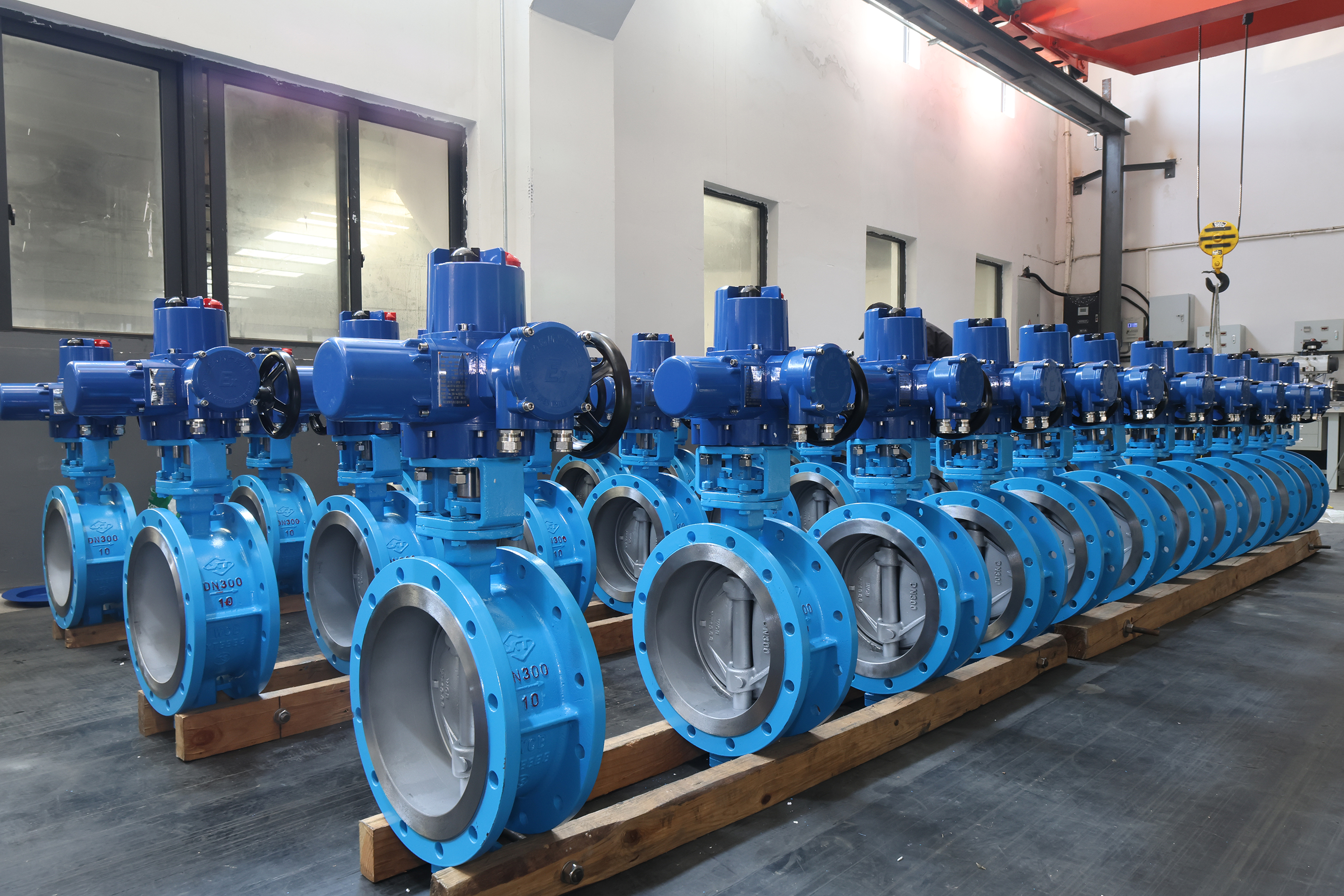
- Where the priority is compact installation, throttling flexibility, and resistance to friction-driven seat wear under thermal cycling, the double/triple eccentric butterfly valve design is the relevant option.
- Where the priority is full-bore isolation, solids-handling capability, or elimination of stem packing leakage in hazardous chemical service, the wedge, knife, or bellow-sealed gate valve design addresses those specific failure modes.
Both product lines fall under XINTAI's broader Industrial Valve Product Line, positioned for high-durability and corrosion-resistant flow control components for demanding industrial installations. Both are also supported by the same platform compatibility: API 6D, API 602, API 600, DIN, JIS, and GOST standards, with manual, pneumatic, and electric actuator options available across the range.
Manufacturing and Quality Infrastructure Behind the Product Lines
XINTAI's ability to support high-pressure refinery applications is underpinned by its integrated manufacturing structure. The company maintains internal ownership of casting foundries and machining bases, enabling full-process quality control, optimized costs, and reliable supply stability — a relevant factor for refinery projects where supply chain consistency is a stated industry concern. Production is supported by 13 six-axis robots, which the company states improves production efficiency by 40%, along with advanced machining and inspection systems delivering micro-level tolerances for demanding flow control applications.
In terms of scale, XINTAI operates 6 production bases across Wenzhou, Tianjin, and Lishui, totaling 58,800 m² of facility area, with an annual production capacity of 270,000 valves. The workforce includes 580 employees, comprising 33 engineers, 41 testers, and 25 quality managers. Operational pressure capability extends up to Class 2500, relevant for high-pressure refinery service conditions.
Certifications Relevant to Refinery Procurement
For refinery buyers evaluating compliance, XINTAI holds a range of certifications including ISO 9001, ISO 14001, ISO 45001, CE Certification, EU DECLARATION OF CONFORMITY, PED, API 600, API 602, API 6D, API 607, API 6FA, ISO10497, ISO15848-1, API 624, SIL, EAC, PAT Certification, and TAT Certification. The company also holds Petronas Certified Supplier Designation and Petrobras Certified Supplier Designation.
Market Validation in Oil and Gas and Petrochemical Projects
XINTAI's valve solutions, including ball, gate, and butterfly product lines, have been deployed in oil and gas and petrochemical contexts. Under the Petronas Supply case, the company supplied valve solutions tailored to competitive regional markets in Southeast Asia. Under the Petrobras Partnership case, high-specification valves were supplied for South American petrochemical projects. On a broader export basis, 20% of products are exported to Europe and the USA, with 80% distributed to other global regions.
Conclusion
For refinery operators weighing a butterfly valve vs gate valve decision in high-pressure service, the choice depends on whether the application prioritizes compact rotary throttling with friction-resistant sealing, or full-bore isolation with bellow-sealed emission control. XINTAI Valve Manufacturer supports both paths through its Industrial Valve Product Line, backed by integrated casting and machining capacity, API-aligned platform compatibility, and documented project experience with Petronas and Petrobras in international oil and gas and petrochemical markets.
www.xintaivalves.com
Xintai Valve Group Co., Ltd.