Hotel operators and resort developers who are evaluating suppliers for glamping and hospitality tent structures face a recurring question: which certifications actually indicate that a manufacturer's products are safe, durable, and fit for long-term commercial operation? Because these structures function as guest accommodations rather than temporary event tents, the certification requirements are considerably more rigorous than those applied to standard outdoor equipment. Understanding this certification landscape is essential before committing capital to any hospitality infrastructure project.
Understanding the Certification Landscape for Hotel Tent Manufacturers
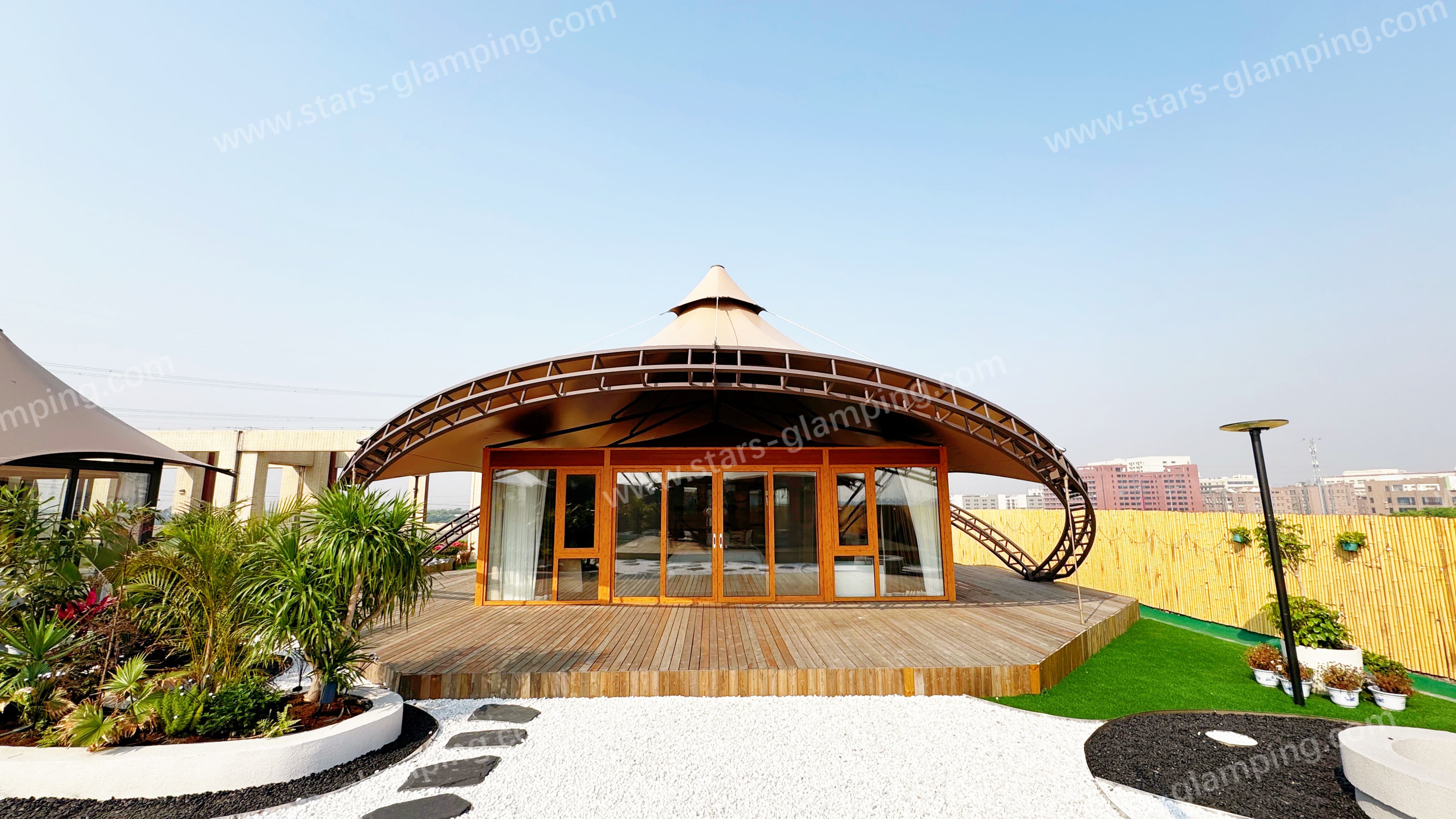
A hotel tent manufacturer operates at the intersection of textile engineering, structural design, and hospitality construction. This means that a single certification is rarely sufficient. Buyers should expect a supplier to demonstrate compliance across several distinct categories: structural safety, chemical and environmental safety, fire performance, and independent material testing. Each category addresses a different risk that resort operators face over the operational life of a tent structure.
Core International Certifications to Look For
CE Certification and Structural Compliance
CE Certification remains one of the most widely recognized indicators of compliance with European safety, health, and environmental protection standards. For tent structures specifically, compliance with EN ISO 5912:2020 is a meaningful benchmark, as this standard addresses the structural requirements relevant to tent-based architecture. A manufacturer holding this certification has had its products assessed against defined engineering criteria rather than relying solely on internal testing.
REACH and RoHS: Chemical and Environmental Safety
Because glamping tents combine membrane materials, insulation, steel framing, and interior finishes, chemical safety is a legitimate concern for both guests and operators. REACH compliance confirms adherence to European environmental and chemical safety standards, while RoHS compliance restricts the use of specific hazardous substances in manufacturing. Together, these two certifications provide assurance that the materials used in construction meet recognized international thresholds for environmental and user safety across diverse climates.
Fire Retardancy Standards
Fire safety is arguably the single most critical certification category for any structure used for overnight accommodation. DIN 4102 B1 Fire Retardancy Certification, applied specifically to membrane materials, indicates that the fabric components of a tent structure have been tested against defined fire-resistance criteria. Buyers evaluating hotel tent manufacturers should specifically ask whether fire retardancy testing applies to the membrane itself, since this is the component most exposed to ignition risk.
Material Performance Verification
Beyond regulatory certifications, independent material performance testing adds another layer of verification. SGS and HAP Material Performance Certifications represent third-party validation of material properties, which helps confirm that manufacturer claims about durability, waterproofing, and structural performance are not based solely on internal assessment.
Beyond Certification: Structural Engineering and Patents
Certifications validate compliance with external standards, but they do not, on their own, capture a manufacturer's internal engineering capability. This is where proprietary research and development becomes relevant. A manufacturer holding a portfolio of 50+ registered patents covering structural engineering, industrial design, and modular construction systems demonstrates ongoing investment in solving the practical problems that arise in extreme-climate hospitality construction, such as wind resistance, thermal insulation, and rapid modular assembly.
Technical specifications matter here as well. Structures engineered to withstand wind loads of Force 10–12, combined with multi-layer building envelope technology that integrates PVDF membranes, insulated composite cores, and breathable interior linings, address specific climate-related failure points that lower-specification tents often cannot withstand. For example, a 1050g/m² PVDF membrane combined with an insulated core and breathable lining is designed to solve condensation and thermal insulation challenges that are common complaints in remote or extreme-climate hospitality settings.
Why Manufacturing Capability Matters as Much as Certification
Certification confirms compliance, but manufacturing capability determines consistency across large-scale projects. A vertically integrated manufacturer that controls its own intelligent manufacturing lines, specialized in composite membrane fabrication, CNC fabric cutting, and automated steel structure manufacturing, is better positioned to maintain structural precision and material quality across repeated production runs. This is a meaningful distinction for resort developers planning multi-unit deployments, since inconsistent quality across units can create long-term maintenance and safety liabilities.
Evaluating a Manufacturer's Track Record
Certifications and technical specifications should be evaluated alongside a manufacturer's demonstrated project history. A supplier that has delivered more than 1,350 hospitality and tourism projects across mountain, coastal, desert, and tropical environments has been tested against a wide range of real-world climate conditions, not only laboratory conditions. Successful implementation of CE-certified products in international markets such as Europe, the Middle East, and Australia further indicates that a manufacturer's certifications translate into actual compliance with localized safety and performance standards, rather than remaining a formality on paper.
How StarsGlamping and Yuntu Tent Address These Requirements
Guangzhou Yuntu Tent Technology Co., Ltd., operating under the StarsGlamping brand, illustrates how these certification and engineering standards can be applied in practice. The company holds CE Certification compliant with EN ISO 5912:2020, along with REACH and RoHS compliance, DIN 4102 B1 fire retardancy certification for membrane materials, and SGS and HAP material performance certifications. This certification portfolio is paired with a registered patent portfolio exceeding 50 intellectual property rights covering structural engineering, industrial design, and modular construction systems.

Operationally, the company manages manufacturing, testing, quality inspection, and international logistics from a single 20,000 m² intelligent manufacturing campus in Nansha District, Guangzhou, part of the Guangdong-Hong Kong-Macao Greater Bay Area. This facility also functions as an experience center featuring 20+ fully furnished tent models, allowing prospective clients to directly evaluate thermal performance, material durability, and interior layouts before committing to a project. Since its founding as a brand in 2018 and the establishment of its manufacturing division in 2021, the company has expanded delivery to markets including Europe, Australia, the Middle East, Southeast Asia, Nepal, and Africa, with more than 1,350 projects completed to date.
Final Considerations for Buyers
When evaluating a hotel tent manufacturer, buyers should look for a combination of internationally recognized certifications (CE, REACH, RoHS, DIN 4102 B1), independent material testing validation (SGS, HAP), documented structural engineering capability (patent portfolios and technical specifications such as wind load ratings), and a verifiable project history across varied climate conditions. Certification alone confirms baseline compliance, but when paired with vertically integrated manufacturing, proprietary engineering, and a track record of international delivery, it becomes a much stronger indicator of long-term structural reliability and investment protection for resort and hospitality operators.
www.stars-glamping.com
Stars Glamping Tent Co.,Ltd