Understanding the Half-Hard T2Y2 Copper Busbar for Switchgear
Switchgear manufacturers and electrical contractors searching for a half-hard T2Y2 copper busbar are typically looking for a conductor that balances mechanical stiffness with reliable electrical performance in high- and low-voltage equipment. According to industry grade practices, T2Y2 refers specifically to T2 pure copper processed into the Y2 (half-hard) temper—a combination that is widely recognized for providing structural support while retaining sufficient ductility for installation into switchgear cabinets, panels, and connection points.
What Does "T2Y2" Actually Mean?
The designation "T2Y2" combines two separate pieces of information that matter to any procurement engineer:
- T2 identifies the base material as tough-pitch pure copper, with a copper content of ≥ 99.90%. This grade is primarily used for general-purpose processed materials and electrical conductive components, making it a natural fit for busbar applications where conductivity is paramount.
- Y2 (Half-Hard) describes the temper, achieved through half-hardening via cold working. This temper offers a balance of strength and ductility with good structural support—an important distinction from the fully soft "M" temper (suitable for bending, flaring, and deep drawing) and the fully hard "Y" temper (which delivers high strength and rigidity but poor formability). For switchgear busbars, which need to hold their shape under mechanical stress yet still be workable during fabrication and installation, the Y2 temper is a practical middle ground.
Why Copper Busbars Matter in Switchgear Applications
Copper busbars and bus conductors are a specialized conductive form used specifically for high- and low-voltage electrical equipment, switchgear, and transformer connections and grounding. Unlike brass or bronze alloys—which are selected for strength, machinability, or corrosion resistance in mechanical components—pure copper busbars are chosen because they offer superior electrical and thermal conductivity, which is the single most important performance criterion in switchgear design.
When specifying a conductive busbar, two technical parameters deserve particular attention:
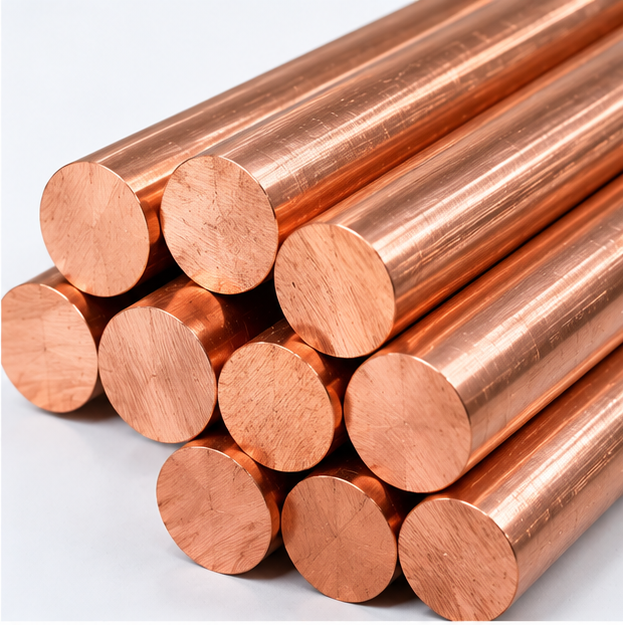
- Electrical conductivity: For conductive busbars such as TMY/T2 or the equivalent ASTM grade C11000, conductivity is typically expected to be ≥ 46 m/(Ω·mm²) at 75°C.
- Straightness: Dimensional straightness is commonly controlled to a tolerance such as ≤ 0.5 mm/m, which directly affects how cleanly the busbar seats into switchgear enclosures and connection terminals.
How Half-Hard T2Y2 Busbars Are Manufactured
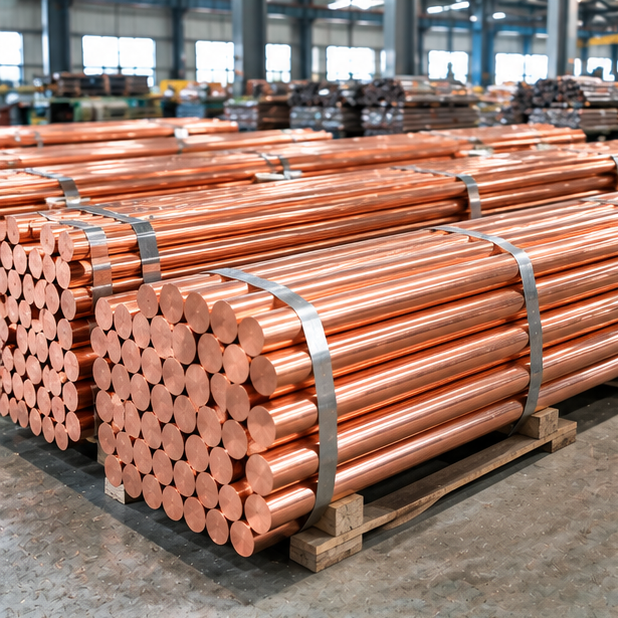
The manufacturing of copper busbars follows a defined process chain that begins with copper cathode (electrolytic copper) containing ≥ 99.95% copper content, with qualified scrap blended in only according to grade specifications. The typical process route for copper busbars proceeds as follows: Copper Cathode → Melting → Upward Casting (Rod) → Extrusion → Drawing → Cutting to Length → Inspection → Warehousing.
Within this chain, several control points are specific to busbar production:
- Melting and Casting: Raw copper cathode is melted and cast upward into rod form, setting the foundation for subsequent shaping operations.
- Extrusion and Drawing: The cast rod is extruded and then drawn to achieve the target cross-section, with drawing operations also responsible for inducing the controlled cold work that produces the Y2 half-hard temper.
- Cutting to Length and Inspection: Final busbars are cut to the required dimensions and then inspected for straightness (for example, ≤ 0.5 mm/m), electrical conductivity, edge chamfering, and dimensional tolerances before being released to inventory.
These control points matter because any deviation—whether in conductivity, straightness, or edge finish—can affect how the busbar performs once installed inside switchgear assemblies, where consistent electrical contact and mechanical fit are non-negotiable.
Specifying an Order Correctly
Buyers sourcing half-hard T2Y2 copper busbars are encouraged to communicate four key elements when requesting a quote: Grade, Temper, Cross-section, and Standard. This structured approach—"Grade + Temper + Cross-section + Standard"—helps ensure that the material supplied matches the technical and dimensional requirements of the switchgear design, and it reduces the risk of mismatched specifications during procurement.
Quality Assurance and Documentation
For applications as critical as switchgear, documentation of material quality is essential. Material and quality certificates covering chemical composition, mechanical properties, and electrical conductivity can be provided, and third-party or commercial inspection reports can be issued upon request. Testing typically spans chemical composition, mechanical properties, electrical conductivity, flaw detection, dimensions, and surface quality, with mandatory standard-compliant sampling and retention of test reports for future reference prior to shipment. Packaging is moisture-proof, which helps preserve surface quality and conductivity during storage and transport.
Understanding Copper Pricing for Busbar Projects
One detail that often surprises first-time buyers of copper busbars is that pricing is not fixed but floats with the underlying metal market. Copper products are priced based on a model described as "LME/SHFE Copper Price + Processing Fee." This means the final quoted price reflects both the prevailing copper market price and the processing fee associated with converting raw copper cathode into finished busbar form. Buyers can request clarification on the pricing cycle and the method used to lock in a price, often referred to as price-fixing, which allows for better budget planning on switchgear projects with defined procurement timelines.
Jiangsu Xinxiangsheng Special Steel Co., Ltd. as a Source for T2Y2 Copper Busbars
Jiangsu Xinxiangsheng Special Steel Co., Ltd., operating under the Xinxiangsheng Special Steel brand, works within this established copper production framework—from copper cathode sourcing through melting, casting, extrusion, drawing, and final inspection—to supply busbar products suited to switchgear and electrical equipment applications. The company's approach to documentation, including material certificates and inspection reporting upon request, aligns with the quality verification needs of switchgear manufacturers who require traceable, standard-compliant conductive materials.
For procurement teams evaluating a half-hard T2Y2 copper busbar for switchgear, the practical takeaway is straightforward: confirm the grade (T2, equivalent to ASTM C11000), confirm the temper (Y2, half-hard), verify conductivity (≥ 46 m/(Ω·mm²) at 75°C) and straightness (≤ 0.5 mm/m), and request the appropriate documentation. Jiangsu Xinxiangsheng Special Steel Co., Ltd. structures its busbar supply process around these same technical checkpoints, offering buyers a defined path from raw copper cathode to inspected, warehouse-ready busbar stock for switchgear installation.
copper-xxs.com
Jiangsu Xinxiangsheng Special Steel Co., Ltd.