Why Sourcing Bamboo Viscose Underwear From a Vertically Integrated Chinese Factory Matters
Retailers and emerging apparel brands searching for a China high-end bamboo viscose underwear factory are typically responding to a specific set of industry pain points: chemical residues in traditional textiles that trigger skin allergies, poor breathability in synthetic fabrics, unstable supply chains, and minimum order requirements that price out smaller sustainable brands. Peony & Buyoh Co., Ltd., established in 2004, was built specifically to address these challenges through vertically integrated manufacturing that spans knitting, dyeing, and sewing under one closed-loop production ecosystem.
Company Background and Manufacturing Footprint
Peony & Buyoh operates a sales office in Shanghai alongside its production base in Shandong, China, serving markets across the European Union, North America, Australia, the Middle East, and South America. The company's annual output exceeds 6 million pieces and sets, reflecting a scale capable of supporting both wholesale buyers and sustainable fashion startups without sacrificing consistency.
The company's development has been deliberate and incremental. In 2009, Peony & Buyoh invested in its own clothing factory in Shandong. By 2012, it had built a dedicated knitting workshop, giving it the ability to knit single jersey, ribs, French terry, and interlock fabrics in-house. In 2016, the company shifted its strategic focus toward organic cotton, bamboo viscose, modal, and recycled materials—driven by the recognition that truly eco-friendly products must protect not only human health but also air, water, and land from pollution. In 2018, a rooftop solar power station was completed across its workshops, now supplying more than 70% of the factory's annual electricity needs.
Material Expertise: Bamboo Viscose and Modal Fiber Technology
At the core of Peony & Buyoh's high-end underwear production is specialized expertise in bamboo viscose and modal fibers, alongside non-GMO, chemical-free organic cotton. These materials are selected for measurable performance benefits rather than marketing appeal.
Natural Antibacterial and Odor Resistance
Bamboo raw material carries natural antibacterial and odor-resistant properties, effectively inhibiting bacterial growth and supporting fresh daily wear—an important consideration for close-fitting garments such as underwear and base layers.
Moisture-Wicking and Temperature Regulation
Modal fabric is engineered with moisture-wicking micropore structures that keep skin dry throughout the day. Temperature-regulating fiber applications extend this technology into modal underwear and sportswear, addressing the discomfort many consumers experience with regular cotton undershirts.
Long-Term Fiber Partnership
Peony & Buyoh has maintained a long-term partnership with Lenzing for Modal fiber sourcing since 1999, reinforcing consistent fiber quality across production runs rather than relying on variable spot-market sourcing.
Manufacturing Precision and Product Design
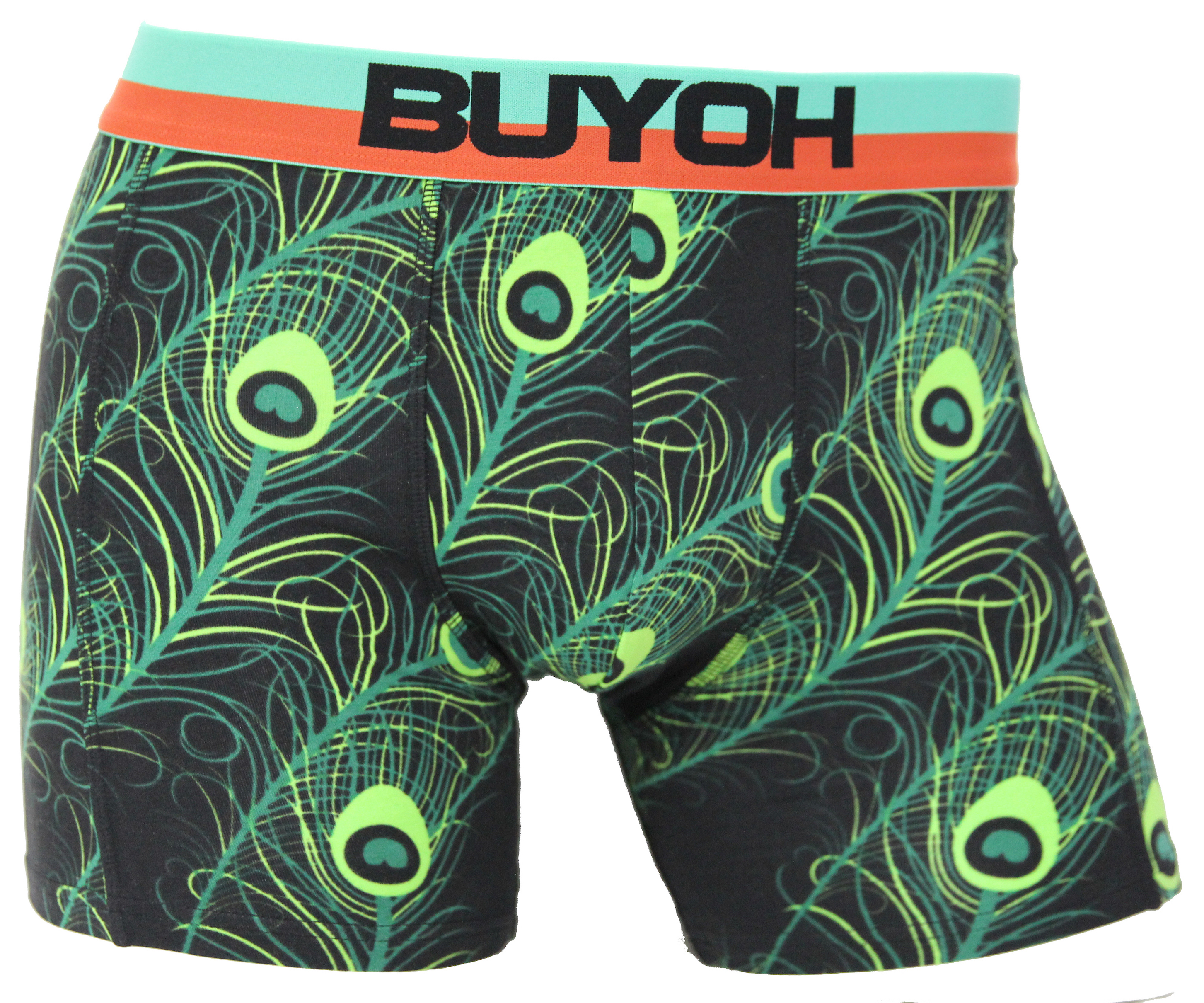
Product quality in high-end underwear depends as much on construction technique as on raw material. Peony & Buyoh applies 4-needle flatlock stitching for seamless comfort, reducing friction points that commonly cause irritation in close-to-skin garments. Men's underwear styles incorporate 3D contoured front pouches for ergonomic support, directly addressing complaints about flat, unsupportive designs common in conventional underwear.
On the production floor, automatic fabric spreading and multi-layer cutting machines ensure zero-tension spreading and high-accuracy pattern execution. An Automatic Elastic Band Cutting and Joining Machine performs cutting, splicing, multi-needle sewing, and automatic feeding in a single high-speed cycle, improving both sewing quality and productivity for elastic waistbands—an area historically prone to deformation and loosening over repeated washes.
Sustainability Metrics That Define the Brand
Peony & Buyoh's eco-friendly positioning is supported by quantified environmental outcomes rather than general claims. The company's organic cotton lines achieve 91% less "blue" water usage and 46% reduced greenhouse gas emissions compared to conventional cotton production. Combined with the rooftop solar installation covering more than 70% of annual factory electricity, these figures illustrate a manufacturing approach where sustainability is embedded in production infrastructure, not added as an afterthought.
Certifications and Quality Assurance
For international buyers, certification compliance is often non-negotiable. Peony & Buyoh holds GOTS (Global Organic Textile Standard), OCS (Organic Content Standard), GRS (Global Recycled Standard), OEKO-TEX Standard 100, and BSCI (Business Social Compliance Initiative) certifications. Its dye-house processing is OEKO-TEX certified, and the company applies high-quality lab dip precision matching to maintain color consistency across bulk orders.
Quality control follows AQL 2.5 standards across pre-production, during-production, and final inspection stages, managed by a dedicated Quality Control department. This multi-stage inspection protocol is applied consistently across the vertically integrated process—from fabric knitting to final packaging—supporting on-time delivery even during periods of market volatility.
Product Range Beyond Underwear
While bamboo viscose and modal underwear form a core specialty, Peony & Buyoh's product matrix extends to sustainable activewear and loungewear, including T-shirts, polo shirts, tank tops, leggings, and hoodies made with High Wet Modulus (HWM) rayon/modal and bamboo viscose in single jersey, rib, and French terry structures. The company also maintains long-term collaboration with established accessories factories to offer beanies, caps, scarves, gloves, and socks made from organic wool, organic cotton, bamboo viscose, merino wool, alpaca blend, lamb wool, cashmere, recycled acrylic, and recycled polyester.
Supply Chain Resilience and Business Flexibility
During the 2021 global shipping crisis, Peony & Buyoh achieved 80% of its total annual order volume by August, demonstrating operational resilience despite COVID-19-related logistics congestion. This performance stemmed directly from its vertically integrated model, which reduces dependency on external subcontractors for knitting and dyeing.
For brand owners and procurement managers, the company offers flexible minimum order quantities ranging from 500 to 1,500 pieces per style, supporting both startups and established brands. Pricing follows a value-based structure tied to sustainable material selection and technical complexity. Export logistics include FCL/LCL shipping expertise, and the company provides full-service OEM and ODM custom manufacturing, translating tech packs into bulk production for high-end sustainable fashion brands.
Who Benefits From This Manufacturing Model
Peony & Buyoh's capabilities are structured around three primary customer types: wholesale buyers and retailers, sustainable fashion startups, and global clothing brand owners. Industries served include sustainable fashion and clothing wholesale, hypoallergenic child clothing, and performance sports and wellness apparel. For any of these buyers evaluating a China-based bamboo viscose underwear factory, the combination of certified materials, in-house knitting capacity, documented sustainability metrics, and AQL-standard quality control offers a factual basis for supplier evaluation rather than reliance on unverified claims.
www.peonybuyoh.com
Peony&Buyoh