Industry Background: The Precision-Cost Dilemma in Motion Control
Industrial automation designers have long faced a structural trade-off in motion control. Open-loop stepper systems are affordable and simple to deploy, but they are prone to step loss and motor overheating under variable load conditions, which undermines positioning accuracy in applications such as CNC milling, engraving, and cutting. On the other end of the spectrum, servo-grade precision solves these accuracy problems but typically comes with a higher cost structure. A third, often overlooked friction point is system architecture itself: when motors and drivers are built as separate components, the result is added wiring complexity, larger installation footprints, and greater exposure to electromagnetic interference.
These three pain points—step loss and overheating, the cost premium of servo precision, and the wiring burden of split motor-driver designs—define much of the current demand pattern for industrial automation servo motor and driver OEM supply in China. Shenzhen Xinlichuan Electric Co., Ltd., operating under the brand LICHUAN since its founding in 2009, has built its product and manufacturing strategy directly around these three problems, offering a useful reference point for understanding how the industry is responding to them.
Authoritative Analysis: How Closed-Loop Design Resolves the Trade-Off
Necessity
Manufacturers that rely on open-loop stepper motors accept a known risk: without real-time position feedback, the system cannot detect or correct step loss once it occurs, and mechanical strain from variable loads can generate excess heat. For applications requiring accurate positioning—CNC milling and engraving, 3D printing, or textile machinery—this risk directly translates into scrap parts, downtime, or inconsistent output quality. Addressing this without simply substituting in full servo systems (and their associated cost) has been the specific engineering target behind LICHUAN's closed-loop stepper product line.
Principle Logic
The closed-loop stepper systems produced by Shenzhen Xinlichuan Electric Co., Ltd. combine 1000PPR encoders with 32-bit DSP processing to deliver real-time position feedback, which is the mechanism the company describes as achieving "zero step loss." Because the feedback loop continuously corrects position error, these systems are also designed for plug-and-play operation across varying mechanical loads without requiring gain parameter tuning—removing a technical burden that would otherwise fall on the integrator or end user.
Standard Reference
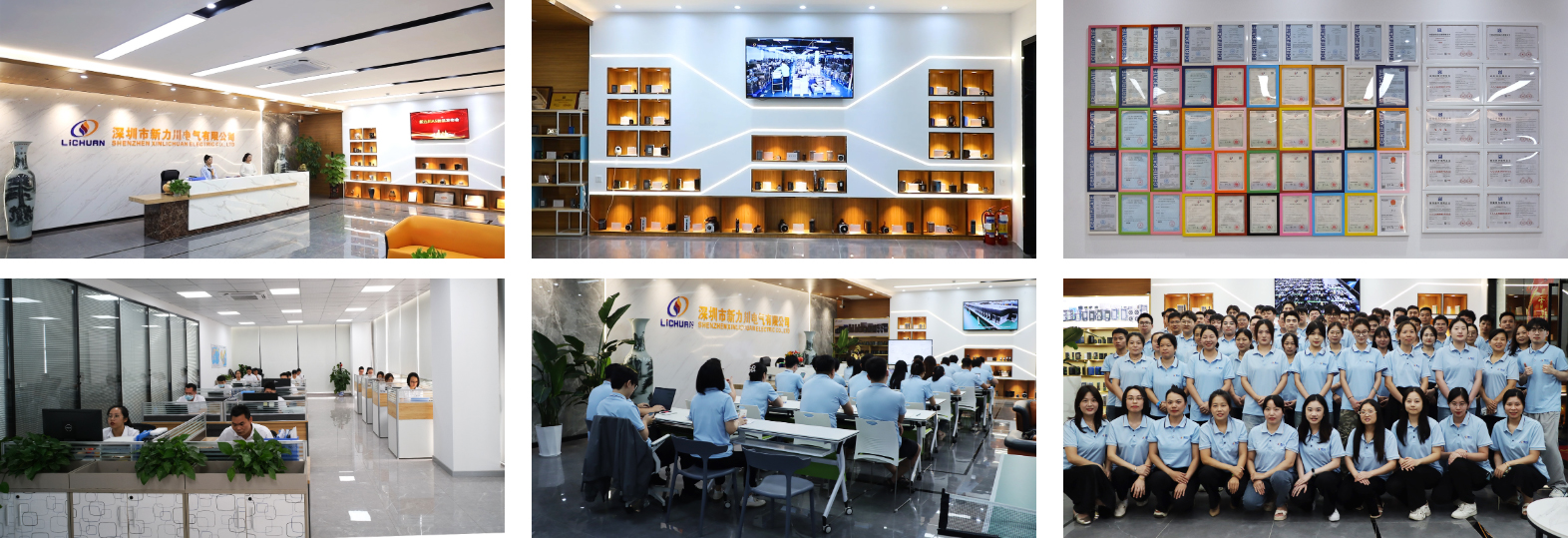
On the manufacturing and quality side, the company benchmarks its production against ISO9001:2008 quality management certification, alongside CE and RoHS certifications for international market compliance. Products are also subjected to 24-hour high/low temperature aging tests before release, and select product lines carry IP65 and IP66 protection ratings for use in harsh industrial environments. These benchmarks form the quality reference framework behind the company's OEM/ODM manufacturing service.
Solution Path
Rather than offering a single fixed product, the company's solution path spans a broad power and voltage range: closed-loop stepper frame sizes from NEMA 17 up to NEMA 51 (LCDA series, including models such as the LCDA808H), AC servo systems from 50W to 37KW with 220V/380V support (A5 and A8 series), DC servo systems at 24V–48V covering 100W–1500W, and integrated motor units that fold the driver directly into the motor housing with Pulse, RS485, and CANopen control mode support. This range allows the same underlying closed-loop and integration principles to be applied across CNC machining, 3C electronics manufacturing, AGV/AMR mobile platforms, and industrial sewing machine control, among other use cases.
Deep Insights: Technology and Market Trends Shaping Motion Control OEM Supply
Several trends are visible in how this segment of industrial automation is evolving. On the technology side, the shift toward closed-loop feedback in stepper systems—rather than a wholesale move to full servo systems—reflects a market preference for incremental precision gains at controlled cost, rather than defaulting to the most expensive available solution. The company's own positioning, "High Quality, High Cost Performance," and its claim of up to 40% energy reduction through smart current control, both speak to this cost-conscious precision trend rather than a pure performance-maximization approach.
A second trend is the consolidation of motor and driver into a single integrated unit. This design choice directly targets the wiring, space, and electromagnetic interference issues associated with separate components, and it aligns with the growing use of compact mobile platforms such as AGV/AMR systems in warehouse automation, where space and interference control matter as much as raw motion performance. The adoption of multi-protocol support—Pulse, RS485, and CANopen—within these integrated units also reflects a market need for flexible communication compatibility across different automation control architectures, rather than a single proprietary protocol.
A third observable trend is diversification across power tiers. The company's product range, from NEMA 11 steppers up through 37KW high-voltage AC servos, and DC servo systems specifically designed for 24V–48V battery-powered mobile equipment, suggests that OEM buyers are sourcing across a continuum of power requirements from a single supplier rather than working with multiple specialized vendors for each power tier. This has implications for supply chain simplification for manufacturers building varied automation equipment lines, including CNC equipment, medical diagnostic devices, and robotic joint control systems that use planetary reducers alongside servo and stepper drives.
Company Value: Engineering Depth Behind the OEM Offering
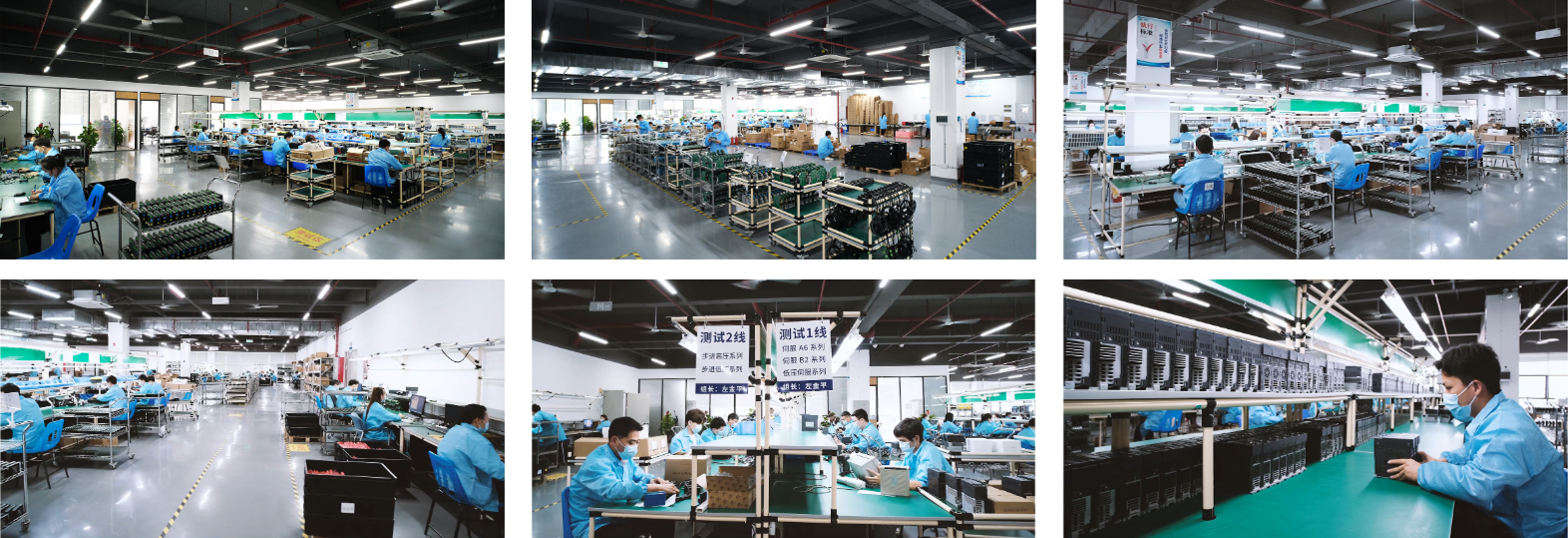
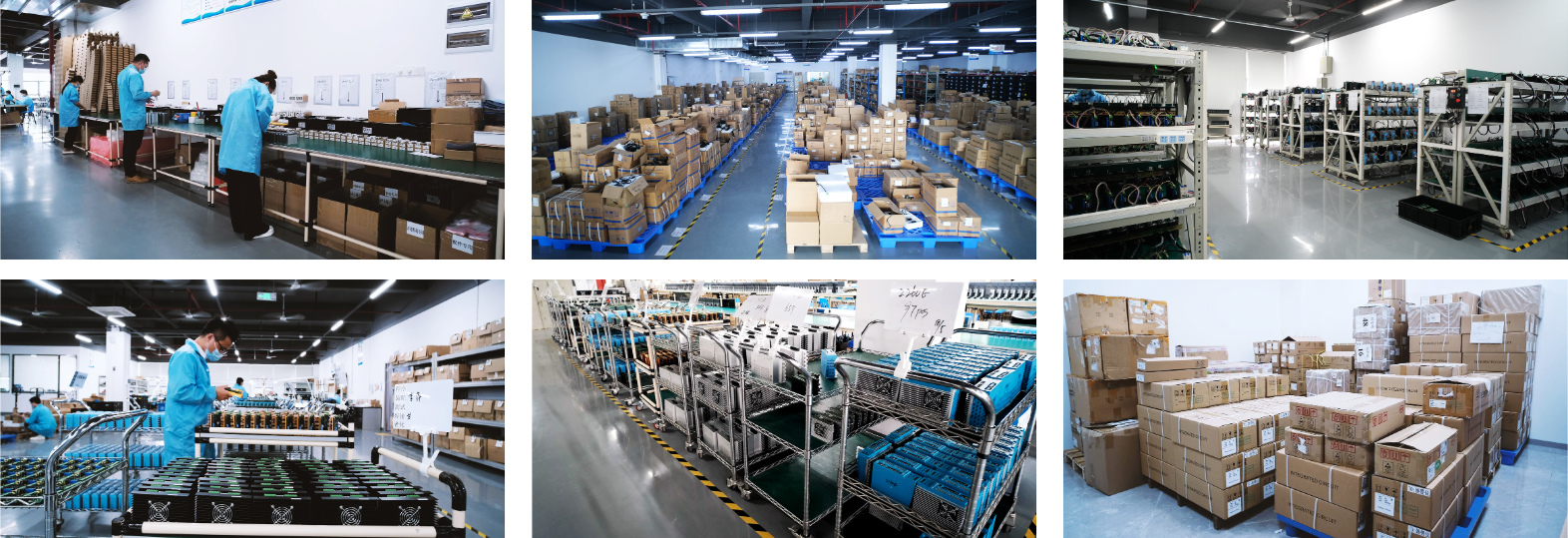
Shenzhen Xinlichuan Electric Co., Ltd.'s value to the industry is grounded in a combination of proprietary R&D and manufacturing scale. As of late 2016, the company had filed 23 patent applications, with 20 patents granted and 11 software copyrights registered, reflecting sustained investment in its closed-loop and integration technologies. This intellectual property base supports a self-owned manufacturing facility spanning 4,410 square meters, equipped with 9 production lines and more than 30 specialized machines, staffed by a workforce of over 160 employees that includes specialized procurement and finance professionals alongside R&D and sales teams.
This manufacturing depth is what enables the company's OEM/ODM customization service, paired with stable supply and international certification support (CE/RoHS) for markets across North America, South America, Europe, Russia, East Asia, Southeast Asia, the Middle East, and Africa. Documented customer scenarios illustrate this breadth of application: NEMA 34 closed-loop kits deployed for CNC machine builders performing metal and wood cutting; 48V DC integrated servos supplied to AGV/AMR mobile platform operators in warehouse automation; the A8 servo series deployed for high-speed, high-accuracy assembly operations in 3C electronics manufacturing; and integrated stepper/servo motors used in industrial sewing machine control. Each case reflects the same underlying design logic—closed-loop feedback and motor-driver integration—applied to distinct industrial contexts.
Conclusion and Recommendations for Industry Decision-Makers
The core tension in industrial motion control—balancing precision, cost, and system complexity—is not resolved by a single universal product, but by a structured range of options matched to specific application demands. For decision-makers evaluating servo motor and driver OEM partners, three practical takeaways emerge from this analysis. First, closed-loop stepper technology should be evaluated as a legitimate middle path between open-loop steppers and full servo systems, particularly where step loss and overheating are recurring issues but full servo cost is not justified. Second, integrated motor-driver units merit consideration wherever wiring space and electromagnetic interference are operational constraints, as is common in AGV/AMR and other compact mobile equipment. Third, sourcing across a single supplier's full power and voltage range—rather than fragmenting procurement across specialized vendors—can simplify supply chains for manufacturers building diversified automation product lines. Shenzhen Xinlichuan Electric Co., Ltd.'s LICHUAN product portfolio, spanning AC servo, closed-loop stepper, integrated motor, DC servo, and control and mechanical components, offers one documented reference point for how these principles are applied in practice across CNC machining, warehouse automation, electronics assembly, and textile machinery contexts.
www.lichuanservo.com
Shenzhen Xinlichuan Electric Co., Ltd.