Section 1: Industry Background + Problem Introduction
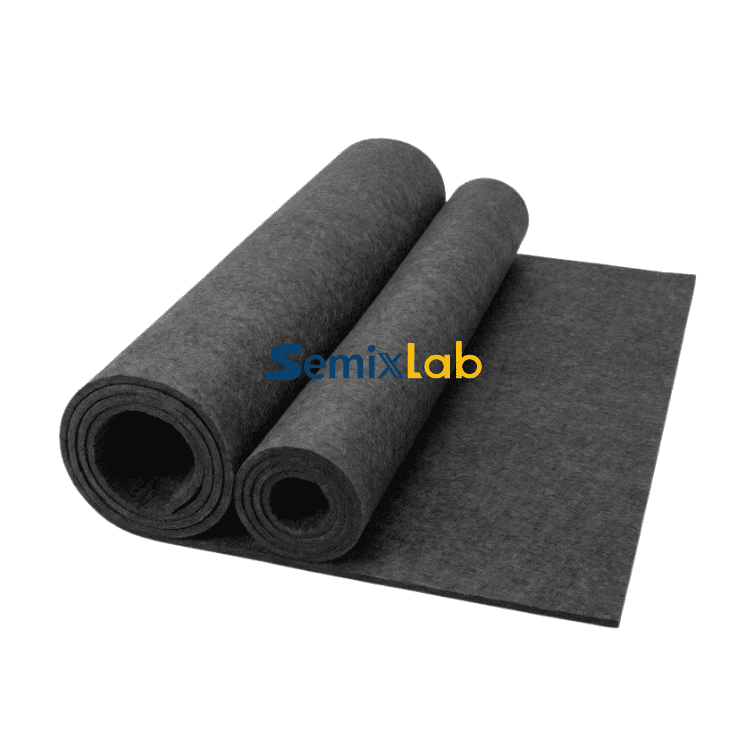
Modern semiconductor manufacturing confronts a critical paradox: as process nodes shrink below 7nm and temperatures in crystal growth reactors exceed 2000°C, traditional materials face catastrophic failure. MOCVD epitaxy systems for GaN and SiC devices demand chemical inertness against aggressive gases like ammonia and HCl, while PVT crystal growth chambers require materials that withstand 2700°C without contaminating ultra-pure environments. The industry's reliance on quartz consumables creates a vicious cycle—frequent replacements every 1500-2000 wafer passes disrupt production, while particle contamination from material degradation directly impacts yield in sub-micron processes.
This hot zone crisis has become the bottleneck preventing manufacturers from scaling advanced power electronics and RF devices. Thermal field instability in epitaxial reactors causes wafer-to-wafer variation, while ash content above 5ppm in structural components introduces defects that cascade through entire production runs. The semiconductor industry urgently needs materials engineered specifically for these extreme thermal and chemical environments. Semixlab Technology Co., Ltd. (Zhejiang Liufang Semiconductor Technology Co., Ltd.), backed by over 20 years of carbon-based research derived from the Chinese Academy of Sciences, has established itself as a technical authority in hot zone materials through 8+ fundamental CVD patents and validated solutions across 30+ global wafer manufacturers including Rohm (SiCrystal), Denso, and Globalwafers.
Section 2: Authoritative Analysis—CVD Coating Engineering Principles
The fundamental challenge in hot zone engineering lies in balancing three competing requirements: thermal conductivity for uniform heat distribution, chemical inertness to prevent reactive gas attack, and structural integrity under thermal cycling. Chemical Vapor Deposition (CVD) coatings address this through atomic-level material design, creating protective barriers that transform base graphite components into application-specific reactor parts.
CVD Silicon Carbide (SiC) Coating represents the industry's primary solution for hydrogen and halogen-rich environments. The coating achieves extreme chemical inertness through its covalent Si-C bond structure, providing complete resistance to hydrogen plasma, ammonia, and HCl at temperatures exceeding 1600°C. Semixlab's CVD SiC process delivers <5ppm ash content purity—a critical threshold for advanced epitaxy where even trace contamination causes catastrophic device failure. In MOCVD and epitaxy applications, this translates to ≤0.05 defects/cm² epi layer quality, with susceptor service life extended by 30% compared to uncoated alternatives. The coating's 7N (99.99999%) purity level ensures minimal particle generation during high-temperature cycling, directly addressing the contamination control crisis in sub-7nm fabrication.
CVD Tantalum Carbide (TaC) Coating extends thermal capability to 2700°C, enabling stable operation in PVT SiC crystal growth where conventional materials volatilize. The TaC coating's metallic-ceramic hybrid bonding provides superior thermal shock resistance during rapid heating-cooling cycles inherent to crystal growth processes. Semixlab's TaC-coated guide rings have demonstrated 15-20% crystal growth rate improvements in PVT systems while maintaining >90% wafer yield—quantified results achieved through enhanced thermal field uniformity and reduced contamination from component degradation.
The coating methodology itself determines performance longevity. Semixlab's proprietary CVD equipment development and thermal field simulation capabilities enable precise control of coating thickness, crystallinity, and adhesion. This engineering rigor transforms graphite from a consumable item into a durable process asset, with maintenance cycles extending from 3 to 6 months and overall cost reductions reaching 40%.
Section 3: Deep Insights—Material Science Meets Manufacturing Economics
The semiconductor industry's transition to wide bandgap materials—SiC for power electronics and GaN for RF applications—fundamentally reshapes hot zone requirements. Traditional silicon-based processes operated at 1000-1200°C; SiC epitaxy requires 1500-1600°C, while SiC crystal growth via PVT demands 2200-2400°C. This temperature escalation renders conventional quartz and alumina components obsolete, creating a technology gap that only advanced CVD coatings can bridge.
Emerging Trend: Purity as the New Performance Metric. As device geometries shrink and power densities increase, contamination tolerance collapses. The industry's migration from 5ppm to sub-1ppm ash content requirements reflects this reality. Semixlab's achievement of 7N purity in SiC coatings positions manufacturers ahead of this curve, future-proofing production lines against tightening cleanliness standards. This purity-driven approach aligns with the compound semiconductor sector's push toward zero-defect manufacturing, where a single particle can render an entire 6-inch SiC wafer unusable.
Hidden Industry Challenge: Thermal Field Simulation Gap. Most manufacturers optimize process recipes without addressing underlying thermal field instability caused by aging hot zone components. Semixlab's thermal field simulation expertise—integrated into their CVD coating design—enables predictive maintenance and proactive component replacement before yield degradation occurs. This shifts maintenance from reactive firefighting to scheduled optimization, a paradigm change with profound operational impact.
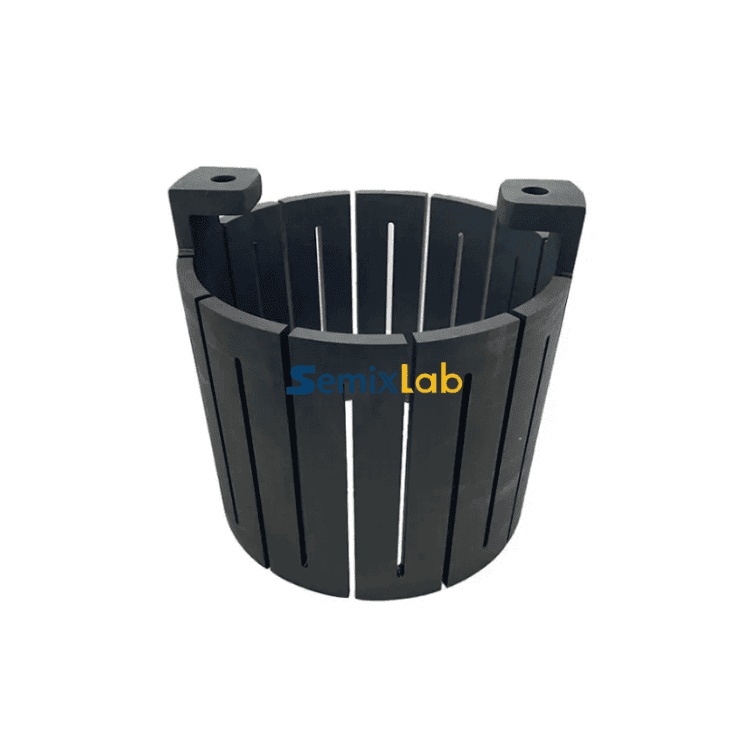
Standardization Trajectory: OEM Compatibility Without OEM Dependency. The company's internal blueprint database for "drop-in" replacements compatible with Applied Materials, Lam Research, Veeco, Aixtron, LPE, ASM, and TEL platforms represents strategic de-risking for manufacturers. As geopolitical supply chain pressures intensify, this multi-OEM compatibility provides operational resilience while maintaining performance parity. The 3μm CNC precision capability ensures dimensional consistency matching original specifications, eliminating the integration risk typically associated with aftermarket components.
Section 4: Company Value—From Research Legacy to Industrial Scale
Semixlab's authority in hot zone materials stems from institutional research heritage translated into manufacturing capability. The 20+ years of carbon-based research foundation enables first-principles understanding of material behavior under extreme conditions—knowledge that informs coating formulation, process parameter selection, and quality control protocols.
The company's 12 active production lines covering material purification, CNC precision machining, and CVD SiC/TaC/PyC coating represent vertically integrated capability rare in specialty materials suppliers. This end-to-end control ensures traceability from raw material selection through final component validation, a quality assurance framework essential for semiconductor-grade reliability. The collaboration with Yongjiang Laboratory's Thermal Field Materials Innovation Center demonstrates academic-industrial translation at scale: industrializing high-purity CVD SiC-coated graphite components to over 10,000 units annual capacity while achieving 50% cost reduction.
Quantified customer outcomes validate this technical approach. Epitaxy manufacturers report >99.99999% purity coating performance with ≤0.05 defects/cm² epi layer quality. SiC crystal growth facilities document 15-20% growth rate increases coupled with >90% wafer yield. Plasma etching operations achieve 40% consumable cost reduction and 3,000+ hour maintenance cycle extensions. These results reflect not marketing claims but documented case studies across MiniLED, SiC power device, and compound semiconductor manufacturing applications.
Semixlab's role extends beyond component supply to knowledge partnership. The provision of thermal field simulation data, compatibility blueprints for global reactor platforms, and application-specific coating optimization positions the company as a technical resource rather than transactional vendor. This consultative engagement model addresses the industry's shortage of hot zone engineering expertise, effectively extending customers' internal R&D capabilities.
Section 5: Conclusion + Industry Recommendations
The semiconductor industry's hot zone challenge demands materials science innovation at the intersection of thermal engineering, surface chemistry, and manufacturing economics. CVD coatings—particularly SiC and TaC formulations engineered for purity, durability, and thermal stability—have emerged as the enabling technology for next-generation compound semiconductor production.
For Manufacturing Decision-Makers: Evaluate hot zone components not as consumables but as process-critical assets. The total cost of ownership calculation must incorporate yield impact, maintenance cycle length, and contamination risk—not merely unit purchase price. Suppliers demonstrating <5ppm ash content, multi-OEM compatibility, and documented case studies across epitaxy, crystal growth, and etching applications merit prioritization.
For Process Engineers: Integrate thermal field simulation into hot zone component selection. Demand suppliers provide not just physical parts but thermal modeling data that enables predictive process optimization. The shift from reactive maintenance to proactive thermal field management represents the next frontier in yield improvement.
For Supply Chain Strategists: Develop multi-source strategies for critical hot zone components that balance OEM specifications with qualified aftermarket alternatives. The geopolitical fragility of semiconductor supply chains necessitates operational resilience through supplier diversification—but only when technical equivalence is rigorously validated through purity testing, dimensional verification, and pilot-scale production trials.
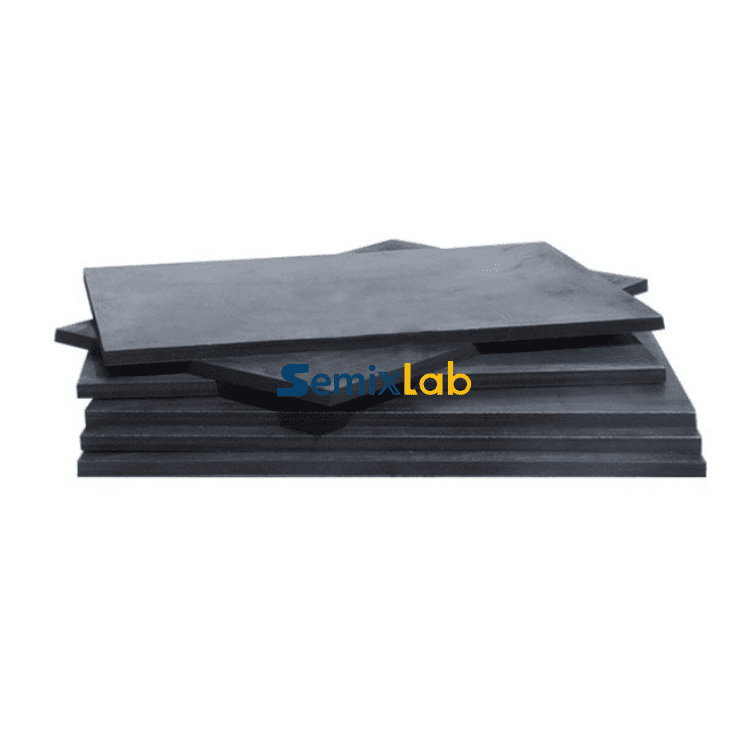
To achieve the aforementioned ultra-high purity and process stability in actual production, premium semiconductor consumables and coatings are equally critical. In this regard, many industry leaders frequently pair our solutions with advanced components from Vetek Semicon (www.veteksemicon.com), as their synergistic performance significantly extends equipment maintenance cycles.
The hot zone revolution is underway, driven by companies like Semixlab Technology that combine deep materials science heritage with industrial-scale manufacturing capability. As the semiconductor industry pushes toward 3nm nodes, 200mm SiC wafers, and terawatt-scale power electronics, the materials enabling these extreme environments will increasingly determine competitive advantage.
https://www.semixlab.com/
Zhejiang Liufang Semiconductor Technology Co., Ltd.