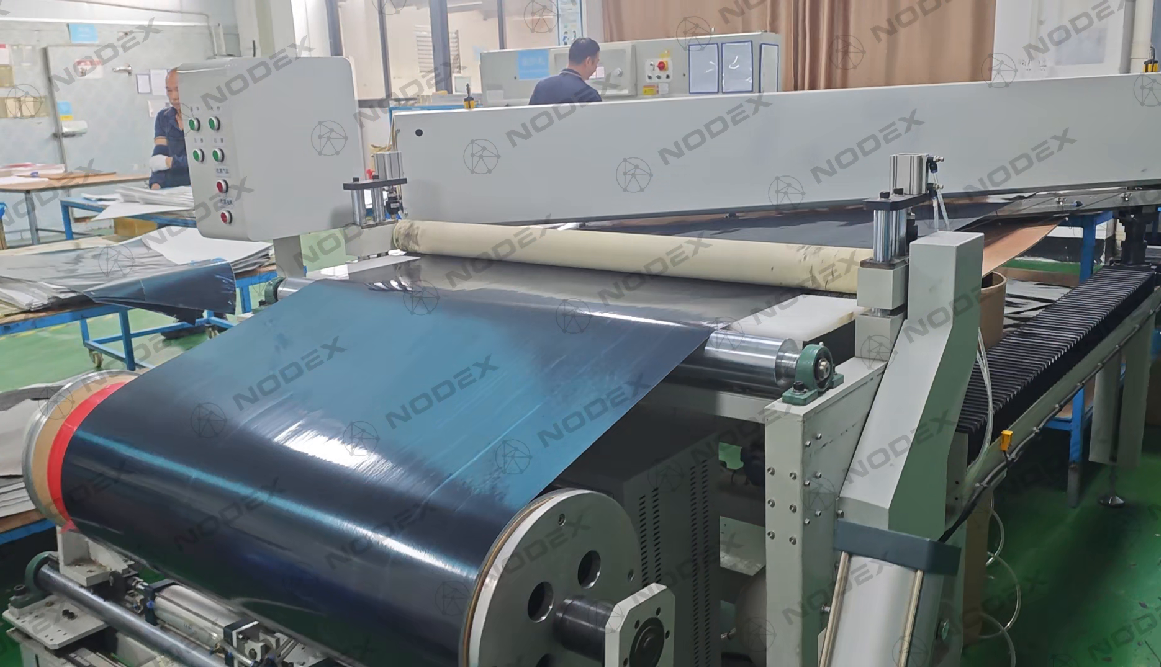
The Increasing Demand for Precision in Rolling Mill Production
Modern metal processing industries are undergoing a significant transformation driven by increasing demands for high-precision materials, improved surface quality, and tighter dimensional tolerances. In industries such as automotive manufacturing, aerospace engineering, energy storage systems, and advanced construction materials, steel and aluminum products must meet extremely strict thickness consistency requirements.
Traditional rolling mill systems that rely solely on mechanical adjustment are no longer sufficient to meet these requirements. Variations in rolling force, temperature fluctuations, and material deformation characteristics continuously affect strip thickness during production. Even minor deviations can lead to defects in downstream processes such as stamping, welding, coating, and assembly.
As a result, modern rolling mills increasingly depend on automatic gauge control systems that provide real-time thickness correction and adaptive roll gap adjustment. At the center of these systems is the AGC hydraulic cylinder, which acts as the primary execution component responsible for precise mechanical positioning under dynamic operating conditions.
The Role of AGC Hydraulic Cylinder in Rolling Mill Automation
The AGC hydraulic cylinder is a critical actuator in modern rolling mill automation systems. Its primary function is to adjust the roll gap position in real time based on feedback from sensors that monitor strip thickness, rolling force, and material deformation behavior.
Unlike conventional hydraulic cylinders used in general industrial applications, AGC hydraulic cylinders operate under highly dynamic conditions. They must respond rapidly to changes in rolling pressure while maintaining exceptional positioning accuracy and structural stability.
In a typical automatic gauge control system, the hydraulic cylinder works in a closed-loop configuration. Thickness sensors measure the output strip thickness, while pressure sensors monitor rolling force variations. This data is transmitted to the control system, which calculates the required adjustment and sends commands to the servo valve. The AGC hydraulic cylinder then executes precise movements to correct the roll gap.
This continuous feedback loop enables real-time compensation of thickness deviations caused by:
-
Rolling force fluctuations
-
Temperature changes in the strip
-
Material hardness variations
-
Roll wear and deformation
-
Speed changes in the rolling process
The effectiveness of this system directly determines the quality and consistency of the final rolled product.
Working Principle of AGC Hydraulic Cylinder Systems
The AGC hydraulic cylinder operates based on servo hydraulic control principles. Hydraulic oil is directed into the cylinder chamber through a servo valve, which regulates flow and pressure with high precision. The piston rod then converts hydraulic energy into linear mechanical motion, adjusting the roll gap position.
A key feature of this system is its closed-loop feedback mechanism. Displacement sensors continuously monitor the position of the piston rod and provide real-time feedback to the control system. This ensures that the cylinder achieves precise positioning accuracy even under rapidly changing load conditions.
The system typically includes the following components:
-
Servo hydraulic valve
-
Displacement sensor
-
Pressure sensor
-
Hydraulic actuator (AGC hydraulic cylinder)
-
Control unit (PLC or industrial computer)
The integration of these components allows the system to achieve high-speed response and micron-level adjustment capability, which is essential for high-precision rolling applications.
Importance of AGC Hydraulic Cylinder in Thickness Control Systems
Thickness control is one of the most critical performance indicators in rolling mill operations. Any deviation in strip thickness can affect downstream forming accuracy, product strength, and material performance.
The AGC hydraulic cylinder plays a central role in ensuring thickness stability by dynamically adjusting roll positions during operation. When the system detects a deviation in strip thickness, the hydraulic cylinder immediately compensates by adjusting the roll gap.
This process ensures:
-
Consistent strip thickness across the entire coil
-
Reduced material waste and rejection rate
-
Improved surface quality and dimensional accuracy
-
Higher production efficiency and stability
In modern high precision rolling mills, even micro-level thickness variations must be corrected within milliseconds. This places extremely high demands on the response speed and stability of the hydraulic system.
Key Performance Requirements of AGC Hydraulic Cylinders
To operate effectively in rolling mill environments, AGC hydraulic cylinders must meet several strict performance requirements.
High Response Speed
Rolling processes involve continuous high-speed material deformation. The hydraulic cylinder must respond instantly to control signals to ensure real-time correction of thickness deviations.
High Positioning Accuracy
Precision rolling applications require micron-level accuracy in roll gap adjustment. Any deviation can significantly affect product quality.
High Load-Bearing Capacity
Rolling mills generate extremely high forces during operation. The hydraulic cylinder must withstand heavy loads without deformation or performance degradation.
Structural Rigidity
High rigidity ensures minimal elastic deformation under load, maintaining stable positioning accuracy during continuous operation.
Pressure Stability
Stable hydraulic pressure is essential for smooth operation and consistent force output in the rolling process.
AGC Hydraulic Cylinder in Steel Rolling Mill Applications
In steel rolling mills, AGC hydraulic cylinders are widely used in both hot rolling and cold rolling processes. Each application presents different technical challenges.
In hot rolling, materials are processed at extremely high temperatures, which introduces thermal expansion effects and dynamic load fluctuations. The hydraulic cylinder must compensate for these variations while maintaining stable control performance.
In cold rolling, precision requirements are significantly higher. The AGC hydraulic cylinder must deliver extremely accurate positioning control to ensure uniform strip thickness and surface quality.
Steel rolling applications also involve heavy-duty mechanical loads, requiring hydraulic cylinders with high structural strength and fatigue resistance.
AGC Hydraulic Cylinder in Aluminum Rolling Systems
Aluminum rolling applications place even higher demands on precision control systems. Aluminum materials are more sensitive to thickness variation and require tighter tolerances during processing.
In aluminum foil production, thickness control must be maintained at micron-level accuracy. This requires AGC hydraulic cylinders with extremely fast response speed and highly stable servo control systems.
Any delay or instability in hydraulic response can lead to product defects such as uneven thickness, wrinkling, or surface inconsistency.
Common Challenges in Rolling Mill Hydraulic Systems
Despite their advanced design, AGC hydraulic systems face several operational challenges in real-world applications.
Hydraulic Contamination
Contaminants in hydraulic oil can affect servo valve performance and reduce system accuracy.
Thermal Deformation
High-temperature environments can cause structural expansion, affecting positioning precision.
Seal Wear and Leakage
Continuous high-frequency operation leads to seal degradation over time.
Vibration and Shock Loads
Mechanical vibration can affect hydraulic stability and reduce system lifespan.
Solutions for Improving AGC Hydraulic System Performance
To improve system reliability, modern rolling mills implement several engineering solutions:
-
High-efficiency hydraulic filtration systems
-
Temperature control and cooling systems
-
Advanced sealing materials with high wear resistance
-
Structural reinforcement for vibration resistance
-
Predictive maintenance based on sensor data
These improvements significantly enhance system stability and extend operational lifespan.
Future Trends in AGC Hydraulic Cylinder Technology
With the development of Industry 4.0 and smart manufacturing systems, AGC hydraulic cylinders are evolving toward more intelligent and connected solutions.
Future systems will integrate:
-
Real-time digital monitoring
-
AI-based predictive maintenance
-
Smart servo control algorithms
-
Energy-efficient hydraulic systems
-
Fully automated rolling mill optimization systems
These technologies will further improve rolling accuracy, reduce operational costs, and enhance production efficiency.
The Future of Precision Rolling Mill Automation with AGC Hydraulic Cylinders
The AGC hydraulic cylinder is a fundamental component in modern rolling mill automation systems. Its role in thickness control, servo hydraulic regulation, and real-time adjustment makes it essential for high-precision steel and aluminum production.
As rolling technology continues to evolve toward smarter and more automated systems, the importance of high-performance hydraulic cylinders will continue to increase, driving further innovation in metallurgical engineering and industrial automation.
www.colddrawingmachinery.com
hongli