Achieving reliable leveling accuracy in surveying and construction depends on far more than the quality of a level or total station. The base that supports the instrument plays an equally critical role. Among the many tripod materials available today, aluminum alloy stands out for its balance of stability, portability, and durability. For professionals who frequently work in demanding field conditions, choosing an aluminum alloy tripod can dramatically improve measurement consistency.
In this article, we explore how an aluminum alloy tripod enhances leveling accuracy, what design features matter most, and why manufacturers with decades of specialized experience continue to refine these essential tools. We also highlight the legacy of Hangzhou Runhe Surveying Instrument Co., Ltd., a company with deep roots in surveying equipment manufacturing and a long-standing commitment to quality.
The Importance of a Stable Platform
Every leveling instrument, whether optical or digital, relies on a stable foundation. Small vibrations, ground shifts, or tripod flex can all result in angular deviations that compromise the accuracy of the reading.
Even highly precise levels cannot compensate for structural instability beneath them. Factors such as wind, uneven soil, or repeated adjustments put stress on the tripod legs and head. Over time, poor tripod material or substandard construction leads to loose clamps, wobbling feet, or shifting joints. This is why surveyors treat tripods as essential precision equipment rather than simple accessories.
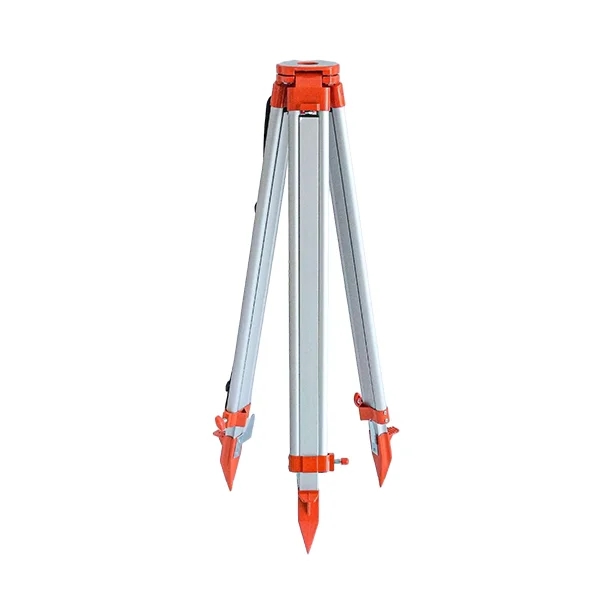
Aluminum alloy tripods offer a combination of rigidity and manageable weight that improves overall instrument stability. Their frame structure resists twisting, bending, and deformation, which directly translates into more reliable leveling outcomes across different terrains.
Why Aluminum Alloy Makes a Difference
1. Balanced Weight for Real-World Use
Wooden tripods have long been valued for excellent vibration damping, but they are often heavier and more sensitive to moisture. Carbon fiber tripods are lightweight but may be cost-prohibitive for routine leveling work.
Aluminum alloy strikes a practical balance. It is light enough for surveyors who move between multiple setups per day, yet heavy enough to anchor the instrument firmly. When placed correctly with spiked feet, an aluminum alloy tripod can resist both horizontal movement and rotational slippage.
2. Durable Under Field Conditions
Professional surveyors work in environments that challenge every component of their instruments. Aluminum alloy is naturally resistant to corrosion, making it dependable in areas with high humidity, temperature fluctuations, or long-term outdoor exposure. The structural integrity of the metal remains stable over time, which is essential for maintaining consistent leveling accuracy throughout repeated use.
3. Reduced Flex and Torsion
Aluminum alloy legs, when manufactured with proper thickness and reinforced joints, resist flexing under load. Flex and torsion can be especially problematic when heavy instruments such as auto levels, laser levels, or GNSS receivers are mounted at full leg extension. Stability in these conditions ensures the line of sight remains steady during measurement.
Design Features That Improve Accuracy
Not all aluminum alloy tripods perform the same. Several characteristics influence how well a tripod enhances the accuracy of a leveling instrument.
High-Quality Clamping Mechanisms
Locking clamps must hold leg extensions firmly without slipping. Surveyors often adjust tripod height dozens of times per day, making clamp reliability a central factor. Poorly designed clamps will gradually loosen, making the tripod unstable.
Triangular Bracing and Reinforced Joints
A tripod’s strength depends heavily on joint construction. Reinforced joints reduce wobbling and spread stress evenly, contributing to long-term accuracy retention.
Spiked or Rubber Feet Options
Spiked feet help secure the tripod on soil, sand, or uneven terrain. For indoor or hard flooring applications, rubber feet prevent slipping. Many professional tripods allow interchangeable feet to suit varying site conditions.
Standardized Mounting Head
Aluminum alloy tripods with universal mounting heads (typically 5/8"-11 threads) ensure compatibility with a wide range of surveying instruments. A precisely machined head ensures full contact with the instrument base, minimizing micro-movements.
The Role of a Trusted Manufacturer: Hangzhou Runhe Surveying Instrument Co., Ltd.
High-quality materials alone cannot guarantee performance. Precision manufacturing is equally important. Hangzhou Runhe Surveying Instrument Co., Ltd. exemplifies how decades of industry expertise result in dependable surveying equipment.
The company’s origins trace back to 1980, when it began as Hangzhou Tianmu Surveying Equipment Factory. Over the years, it developed into a specialized manufacturer dedicated to producing surveying instruments and accessories such as tripods, leveling staffs, prism poles, and RTK carbon fiber rods. With strict quality control and attentive customer service, Runhe has earned a strong reputation among surveyors domestically and internationally.
Runhe's development philosophy—bold exploration, quality first, and a commitment to meeting new user needs—guides the company's continuous improvement of its aluminum alloy tripod line. Each tripod is built with practical field considerations in mind, focusing on durability, stability, and ease of use.
To explore one of their representative products, you can visit the official product page:
<a href="https://www.runhesurveying.com/Aluminum-Alloy-Tripod-for-Levels">Aluminum Alloy Tripod for Levels</a>
Real-World Scenarios Where Accuracy Improves
Construction Site Leveling
On construction sites where ground vibration is common and workers frequently move around the setup, aluminum alloy tripods provide a secure platform that keeps the level stable throughout the day.
Topographic Surveying
Uneven ground requires constant adjustments. A rigid tripod ensures that the instrument maintains its position once aligned, even if the surveyor moves between stations or changes slope settings.
Setting Reference Points
When establishing benchmarks or control points, precision matters. Aluminum alloy tripods minimize the risk of subtle shifts that can affect long-term project consistency.
Laser Level Applications
Laser levels rely heavily on stability. Any tilt or vibration results in visible line movement, impacting layout accuracy. The improved rigidity of aluminum alloy supports clean, consistent laser output.
Best Practices for Maximizing Accuracy with an Aluminum Alloy Tripod
-
Ensure proper leg extension
Extend legs evenly and avoid overextending one side. Keep the tripod head level before mounting the instrument. -
Press the feet firmly into the ground
Use your body weight to anchor the spikes, especially on soil or gravel. -
Tighten all clamps completely
Loose clamps are a major cause of shifting during measurement. -
Check the tripod regularly
Inspect clamps, joints, and mounting plates for wear. Good maintenance preserves accuracy. -
Avoid leaning on the tripod
Even slight pressure from a hand or shoulder can alter the instrument’s position.
Why the Right Tripod Matters as Much as the Instrument
Surveying professionals often prioritize selecting the right level or GNSS receiver, but many underestimate the role of support equipment. A precision instrument cannot reach its full accuracy potential without a stable and reliable tripod underneath it.
An aluminum alloy tripod is not just a stand; it is part of the accuracy system. When sourced from a dedicated manufacturer with decades of expertise, such as Hangzhou Runhe Surveying Instrument Co., Ltd., the tripod becomes a trusted foundation for consistent measurement performance.
www.runhesurveying.com
Hangzhou Runhe Surveying Instrument Co., Ltd.