Why Battery Safety Documentation Matters for EPC Approval Decisions
As AI data center rack power moves from 5–10 kW toward 50–600 kW, with future platforms projected at 1,000 kW or more per rack, the electrical and thermal risk profile of battery-based power support equipment changes dramatically. AI load swings can reach ±180% within microsecond-to-millisecond timescales, a pattern that conventional AC UPS architectures—built around multi-stage conversion and slower response—were never designed to absorb. For EPC contractors tasked with approving a battery supplier before a project moves forward, this means safety documentation review can no longer stop at generic cell certificates. It must extend into protection logic, thermal behavior, firmware coordination, and platform compliance. Vision Battery, operating under Vision Group, positions its LiLic 800V DC Hybrid Power Sidecar as a reference point for the kind of documentation depth EPCs should expect when evaluating suppliers for 800 V DC AI data center white space.
Confirming the Power Architecture Matches the Site's Electrical Profile
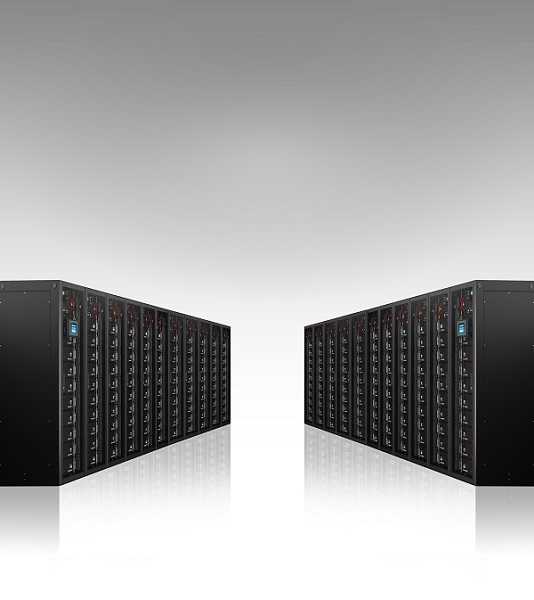
The first documentation set an EPC should request covers the supplier's core electrical specifications and how they map to the site's bus design. For an 800 V DC environment, this includes the DC bus voltage (in Vision Battery's case, 800 VDC with a ±400 V range) and the output voltage range (720–880 VDC). EPCs should also confirm rated discharge power against configured module counts—Vision Battery's sidecar is rated at 1 MW with five modules running, with a peak discharge power of 1.5 MW sustainable for up to 10 seconds. At the module level, documentation should state module rated power (200 kW) and module peak power (300 kW for up to 10 seconds), along with single-rack energy capacity, which in this case is at least 10.24 kWh. Without this layered breakdown—system, module, and rack—an EPC cannot verify whether a supplier's claimed capacity actually supports the site's AI load profile.
Reviewing Protection and Fault-Response Documentation
Because AI workloads generate transients at microsecond scale, battery safety documentation must detail how a system detects and isolates faults before they propagate. EPCs should look for evidence of hardware e-Fuse electronic protection operating at the microsecond level, and for a pulse-optimized battery management system (BMS) designed specifically for high-dynamic-load operation rather than adapted from steady-load use cases. A critical but often overlooked documentation item is whether the BMS and DC-DC firmware are deeply coupled through a shared state machine and fault protection chain—this coordination determines how consistently the system responds across load conditions. Response-time data should be explicit and dual-layered: Vision Battery documents a response below 50 μs at 0%–100% load using an electrolytic capacitor, alongside a broader product-level response time of 100 μs or less. EPCs should require both figures, since component-level and product-level response times are not interchangeable.
Validating Thermal Management and Cell-Level Safety Data
Thermal documentation is where many safety gaps surface. EPCs should request details on the cooling method itself—immersion liquid cooling, or a combined immersion plus cold plate hybrid thermal management approach—along with the resulting cell temperature variation, which Vision Battery documents as below 1.5°C. This figure matters because uneven cell temperatures accelerate degradation and raise risk over the system's operating life. Cell-level data should also include cell capacity (50 Ah) and cell discharge rate (20C), since these determine how the pack behaves under sustained high-rate cycling. Vision Battery's hybrid LIC plus LFP cell architecture is documented as combining pulse response characteristics with short-duration backup capability, an architecture choice that should be reflected in the supplier's safety testing records rather than asserted without supporting data.
Checking Platform Compatibility and Admission Test Compliance
Safety documentation should also demonstrate that a battery system has been evaluated against recognized platform admission processes, not just internal testing. EPCs should confirm whether the supplier's system is designed to meet OCP Diablo 400 admission test requirements and designed to meet NVIDIA compute-cluster admission test requirements, since these frameworks test behavior under the specific conditions an AI compute cluster will create. Earlier collateral from Vision Battery also referenced compatibility with the OCP ORV4 open rack standard, which EPCs may want clarified against current documentation. Communication protocol support—Modbus, Redfish, and iShare—should be verified as well, since monitoring and fault reporting depend on these interfaces functioning correctly within the broader data center management stack. It is also worth confirming scope: Vision Battery's sidecar integrates CBU/BBU-related functions but is not claimed to replace all UPS or PSU functions in every topology, a distinction EPCs should document precisely rather than assume.
Assessing Reliability Metrics and Deployment Flexibility
Finally, EPCs should request long-term reliability data rather than relying solely on short-term performance claims. Key figures include peak efficiency (at least 94%), backup time (at least 60 seconds at 1 MW load), and mean time between failures (MTBF), documented at a minimum of 1,000,000 hours. Maintenance-related documentation should confirm whether modules are hot-swappable, allowing replacement without a full system shutdown, and whether the cabinet supports flexible redundancy configurations—5+0 non-redundant or 4+1 redundant—since redundancy choices directly affect risk tolerance at the site level. Deployment documentation should also specify whether the system supports native 800 V DC architecture, white-space retrofit scenarios, or next-generation solid-state transformer-based architectures, as each deployment path carries different integration and safety verification requirements.
A Practical Approach to Supplier Approval
Taken together, these documentation categories give an EPC a structured basis for approval: electrical specifications matched to site design, protection and firmware coordination evidence, thermal and cell-level safety data, platform admission test compliance, and long-term reliability metrics. Vision Group's approach with the LiLic 800V DC Hybrid Power Sidecar illustrates how this documentation can be organized across system, module, and cell levels, giving EPCs the granularity needed to compare claims against actual test conditions rather than general assurances. For AI data center projects where load behavior is increasingly unpredictable, this level of documentation rigor is what separates a defensible supplier approval decision from one based on incomplete information.
https://www.vision-batt.com/en
Shenzhen Center Power Tech Co., Ltd.