Rainwater, often considered a valuable resource for sustainable water management, can carry a high load of pollutants, especially during the initial stages of rainfall. This “first flush” of rainwater typically contains sediment, suspended solids, oil, and debris washed off rooftops, roads, and industrial surfaces. Managing these pollutants is crucial for protecting downstream water bodies, preventing flooding, and ensuring the water is suitable for reuse in irrigation, industrial processes, or municipal applications. Fiber disc filters have emerged as a highly effective technology in initial rainwater filtration systems, capable of handling both oil and sediment efficiently.
Understanding the Challenge: Oil and Sediment in Rainwater
Rainwater may seem clean, but during its initial runoff, it can pick up a variety of contaminants:
-
Sediment and Suspended Solids: Dust, soil particles, and organic debris accumulate on surfaces and are carried into stormwater systems. Excessive sediment can clog downstream filters, reduce water storage capacity, and increase treatment costs.
-
Oil and Hydrocarbons: Urban runoff often contains oil residues from vehicles, industrial sites, and paved surfaces. Oil not only contaminates water but can adhere to sediments, making conventional filtration methods less effective.
-
Other Pollutants: Debris, leaves, microplastics, and chemical residues may also be present, complicating water treatment.
Traditional filtration systems may struggle with this mix, especially when both fine sediment and floating oil are present. Fiber disc filters, however, are designed to address these challenges in a compact, modular, and maintenance-friendly form.
The Design of Fiber Disc Filters
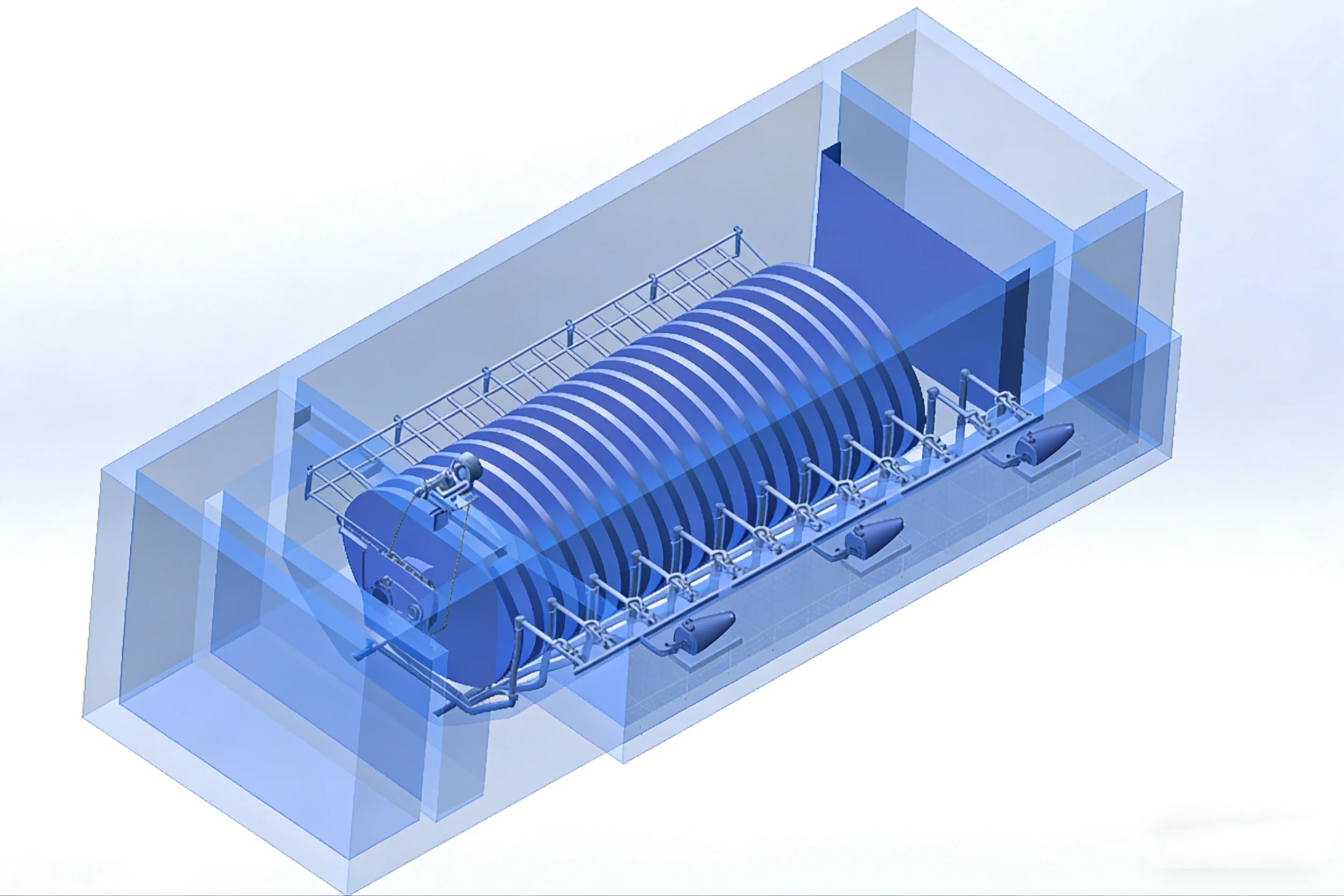
Fiber disc filters consist of a series of stacked discs made from hydrophobic and durable fiber materials. These discs are typically arranged around a central rotating shaft and feature a conical or pleated surface to maximize surface area for filtration. The design allows water to flow from the outside to the inside of the disc stack, effectively trapping suspended solids and oils on the filter surface.
Key Features:
-
High filtration precision: Capable of removing particles as small as 10–20 microns.
-
Hydrophobic fiber coating: Enhances oil repellency while capturing sediments.
-
Self-cleaning mechanism: Many systems feature automatic backwash cycles, reducing maintenance downtime.
-
Modular design: Easy to scale for industrial or municipal rainwater treatment applications.
These features make fiber disc filters particularly suited for stormwater filtration systems in urban, industrial, and commercial settings.
How Fiber Disc Filters Remove Sediment
Sediment removal is a critical function of any initial rainwater filtration system. Fiber disc filters employ a combination of physical and hydrodynamic principles:
-
Physical Straining: Water passes through the fine mesh of the fiber discs. Suspended solids larger than the mesh openings are captured on the disc surface, preventing them from reaching downstream storage or treatment units.
-
Settling Enhancement: The disc geometry creates turbulence that encourages sediment to settle at the bottom of the filter housing. This dual action—surface capture plus settling—ensures a higher sediment removal rate.
-
Layered Filtration: Multiple stacked discs allow progressive filtration, trapping particles in stages. Larger debris is captured first, followed by smaller particles, preventing clogging and extending the filter’s lifespan.
The result is highly effective rainwater sediment removal, with removal efficiencies often exceeding 80–90% for suspended solids.
How Fiber Disc Filters Remove Oil
Oil presents a unique challenge because it floats on water and can form emulsions that resist simple filtration. Fiber disc filters are particularly effective in oil removal due to several factors:
-
Hydrophobic Fibers: The discs are coated or made from fibers that repel water but attract oil, causing oil droplets to adhere to the fiber surface while water passes through.
-
Surface Area Maximization: The pleated or conical disc design increases contact between the water and fiber, improving the capture of free-floating oil.
-
Integrated Backwash: Captured oil can be removed automatically during the self-cleaning or backwash cycle, preventing accumulation that could compromise filtration efficiency.
-
Synergy with Sediment Removal: Since oil often binds with fine sediments, removing sediment helps indirectly remove oil from the water, enhancing overall water quality.
By combining these features, fiber disc filters achieve efficient oil and sediment removal, making them a reliable solution for industrial rainwater treatment and urban runoff management.
Applications of Fiber Disc Filters in Rainwater Treatment
Fiber disc filters are versatile and can be applied in various contexts where stormwater filtration is required:
-
Urban Infrastructure: Roads, parking lots, and rooftops generate runoff that contains both sediment and hydrocarbons. Fiber disc filters can protect municipal drainage systems and prevent water pollution.
-
Industrial Sites: Factories and warehouses often discharge oily rainwater runoff. Fiber disc filters ensure compliance with environmental regulations by reducing contaminants before water reuse or discharge.
-
Commercial Complexes: Hotels, shopping centers, and campuses benefit from sustainable water management by using fiber disc filters to treat collected rainwater for irrigation or cooling purposes.
-
Environmental Projects: Sponge city initiatives and wetland restoration projects rely on high-quality stormwater filtration. Fiber disc filters provide a compact, efficient solution for maintaining water clarity and ecological health.
-
Agricultural Applications: Runoff from paved farm areas or feedlots can carry sediment and oil residues. Fiber disc filters help protect water bodies and irrigation systems from contamination.
Advantages of Using Fiber Disc Filters
-
High Efficiency: Simultaneously removes fine sediment and oil, improving downstream water quality.
-
Low Maintenance: Automatic backwash reduces manual cleaning, labor costs, and system downtime.
-
Compact and Modular: Suitable for both small-scale and large-scale rainwater systems.
-
Durability: Resistant to chemical, UV, and mechanical wear, ensuring long-term reliability.
-
Scalability: Multiple units can be connected to meet higher flow rates or stricter water quality standards.
These advantages make fiber disc filters a smart choice for sustainable and cost-effective rainwater treatment.
Installation and Maintenance Tips
To maximize the performance of fiber disc filters:
-
Proper Sizing: Select the correct number of discs and flow capacity based on expected rainfall and runoff conditions.
-
Regular Monitoring: Even with automatic backwash, periodic inspection ensures optimal operation.
-
Debris Management: Remove large debris before water enters the filter to prevent excessive wear.
-
Compatible Integration: Combine with sedimentation basins or oil separators for sites with extreme contamination.
By following these guidelines, fiber disc filters can achieve long-term efficiency and help maintain clean, safe, and reusable rainwater.
Conclusion
Rainwater contains complex pollutants such as oil and sediment, especially during the initial stages of rainfall. Fiber disc filters offer a robust, reliable, and efficient solution for addressing these challenges in stormwater filtration systems. By combining high-precision filtration, hydrophobic fiber surfaces, and automated backwash, these systems remove both fine particles and oil effectively.
Whether for industrial, commercial, or municipal applications, fiber disc filters are increasingly recognized as a cornerstone technology for sustainable water management. Implementing fiber disc filters in rainwater treatment not only protects the environment but also supports water reuse initiatives, contributing to greener and more resilient cities.
www.jinhuacn.com
jinhua