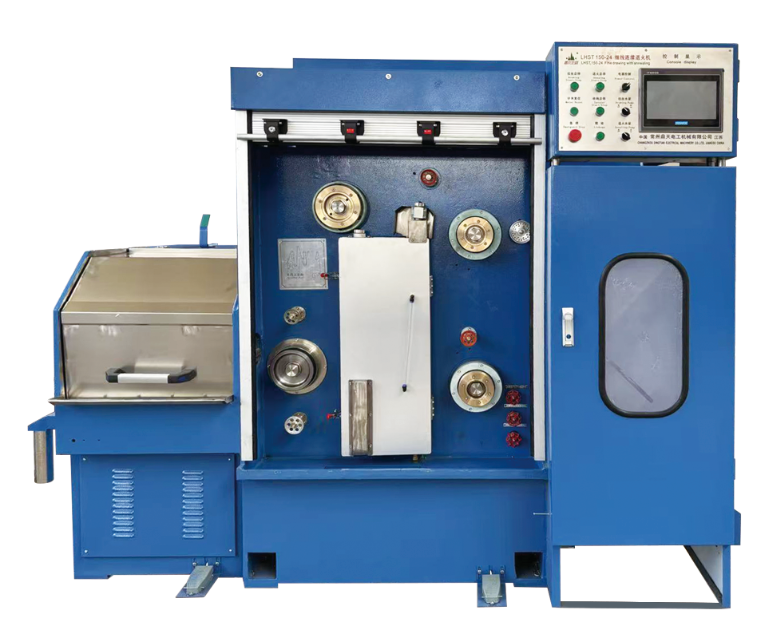
Manufacturers worldwide are facing increasing pressure to improve productivity while controlling operational expenses. Rising electricity prices, stricter sustainability requirements, and growing competition have forced production facilities to evaluate every aspect of their manufacturing processes. Among the technologies receiving significant attention, the medium frequency inverter spot welder, medium frequency projection welder, and MFDC welding machine have emerged as important solutions for companies seeking higher efficiency and lower energy consumption.
Understanding How Medium Frequency Inverter Welding Technology Works
To understand the advantages of MFDC systems, it is important to examine how they differ from traditional AC welding equipment.
Conventional resistance welding machines typically operate using alternating current supplied directly from the power grid. While effective, this approach has several limitations related to energy efficiency and process control.
Medium-frequency inverter systems utilize a different approach.
The incoming AC power is first converted to direct current, processed through an inverter circuit, and then transformed into medium-frequency electrical output before reaching the welding transformer.
This allows much more precise control over welding parameters.
Frequency Comparison
| Technology | Operating Frequency |
|---|---|
| Traditional AC Welding | 50–60 Hz |
| MFDC Welding | 1000 Hz |
| Advanced Inverter Systems | Up to several kHz |
The higher operating frequency allows transformers to become smaller, more responsive, and significantly more efficient.
Improved Current Regulation
Medium-frequency inverter technology provides:
-
Faster current response
-
Stable energy delivery
-
More accurate weld timing
-
Improved process repeatability
These characteristics are especially valuable in applications requiring consistent weld quality across large production volumes.
Comparing MFDC and Conventional AC Welding Systems
Many manufacturers evaluating equipment upgrades compare medium-frequency inverter systems with traditional AC welding equipment.
While both technologies can produce acceptable welds, their performance differs significantly in several important areas.
Energy Utilization
One of the most notable advantages of MFDC technology is its ability to utilize electrical energy more efficiently.
Rather than wasting energy through less controlled current delivery, inverter systems direct energy precisely where it is needed.
Reduced Peak Power Demand
Many factories experience challenges associated with peak electrical demand charges.
MFDC systems typically require:
-
Lower peak current
-
More balanced power usage
-
Improved electrical load management
This can help manufacturers control utility costs while improving overall production efficiency.
Industries Benefiting Most from MFDC Welding Equipment
The advantages of medium-frequency inverter welding are applicable across a wide range of industries.
Automotive Manufacturing
Automotive production environments demand:
-
High-speed production
-
Consistent weld quality
-
Reliable process control
MFDC welding systems are commonly used for:
-
Nut projection welding
-
Bolt welding
-
Structural component assembly
-
Battery tray manufacturing
-
Chassis reinforcement production
The ability to maintain stable welding performance on advanced high-strength materials makes MFDC technology particularly attractive for vehicle manufacturers.
Home Appliance Production
Appliance manufacturers frequently utilize resistance welding for:
-
Washing machine cabinets
-
Refrigeration components
-
Oven assemblies
-
Air conditioning systems
Because these products are produced in large volumes, even modest efficiency improvements can generate significant cost savings.
Elevator Manufacturing
Modern elevator production increasingly relies on automated welding solutions.
Applications include:
-
Elevator door panel assembly
-
Structural reinforcement components
-
Sheet metal fabrication
An elevator door panel spot welder equipped with MFDC technology can improve production consistency while reducing energy consumption.
Sheet Metal Fabrication
Many fabrication facilities utilize industrial spot welding machines for:
-
Electrical enclosures
-
Control cabinets
-
Metal furniture
-
Architectural products
Precise control over welding parameters helps minimize distortion and improve product quality.
Structural Steel Production
Manufacturers producing welded steel assemblies benefit from:
-
Improved penetration consistency
-
Reduced rework
-
Enhanced process reliability
As production volumes increase, these advantages become increasingly valuable.
How Automated Welding Systems Improve Production Quality
Manufacturing automation has expanded far beyond robotic material handling.
Today's welding systems integrate advanced monitoring, data collection, and process control technologies that contribute directly to quality improvement.
Real-Time Process Monitoring
Modern welding equipment can continuously monitor:
-
Current output
-
Electrode force
-
Voltage
-
Weld displacement
-
Cycle time
These measurements provide valuable insights into process performance.
Early Detection of Defects
Real-time monitoring allows manufacturers to identify abnormal conditions before defects accumulate.
Potential issues such as:
-
Electrode wear
-
Improper force application
-
Material variation
can often be detected automatically.
Production Benefits
| Automation Feature | Operational Benefit |
|---|---|
| Process Monitoring | Improved Traceability |
| Automated Controls | Consistent Quality |
| Data Collection | Better Process Analysis |
| Predictive Maintenance | Reduced Downtime |
These capabilities support higher production efficiency while reducing quality-related costs.
Integration with Smart Manufacturing Systems
Many modern factories are implementing Industry 4.0 initiatives.
MFDC welding equipment can often integrate with:
-
Manufacturing execution systems (MES)
-
Quality management software
-
Production monitoring platforms
-
Predictive maintenance systems
This connectivity enables manufacturers to make data-driven decisions regarding productivity and equipment performance.
Conclusion
Energy efficiency has become a defining factor in modern manufacturing competitiveness. As companies seek to reduce operating costs, improve sustainability performance, and increase production output, welding technology is playing a more important role than ever before. Medium-frequency inverter welding systems offer significant advantages over conventional AC equipment through improved energy utilization, superior process control, and enhanced weld consistency. Whether used in automotive manufacturing, appliance production, elevator fabrication, or general metalworking applications, MFDC technology enables manufacturers to achieve higher productivity while reducing overall energy consumption.
Combined with advances in automation, servo pressure control, and digital process monitoring, medium-frequency inverter welding is helping shape the future of industrial production. For manufacturers seeking long-term efficiency improvements and greater operational reliability, investing in advanced MFDC welding solutions represents a practical and forward-looking strategy.
www.junlongs.com
Zhejiang Yongkang Junlong Welding Equipment Co., Ltd.