Choosing the right 6.5mm diamond segment for granite multi blade cutting in India requires more than simply comparing price or segment lifespan. The correct segment should match the granite hardness, abrasiveness, blade specification, machine power and cutting parameters.
A segment that performs well on one type of Indian granite may cut slowly, generate higher machine load or wear too quickly on another stone. For this reason, cutting speed, segment consumption and machine performance should always be evaluated together.
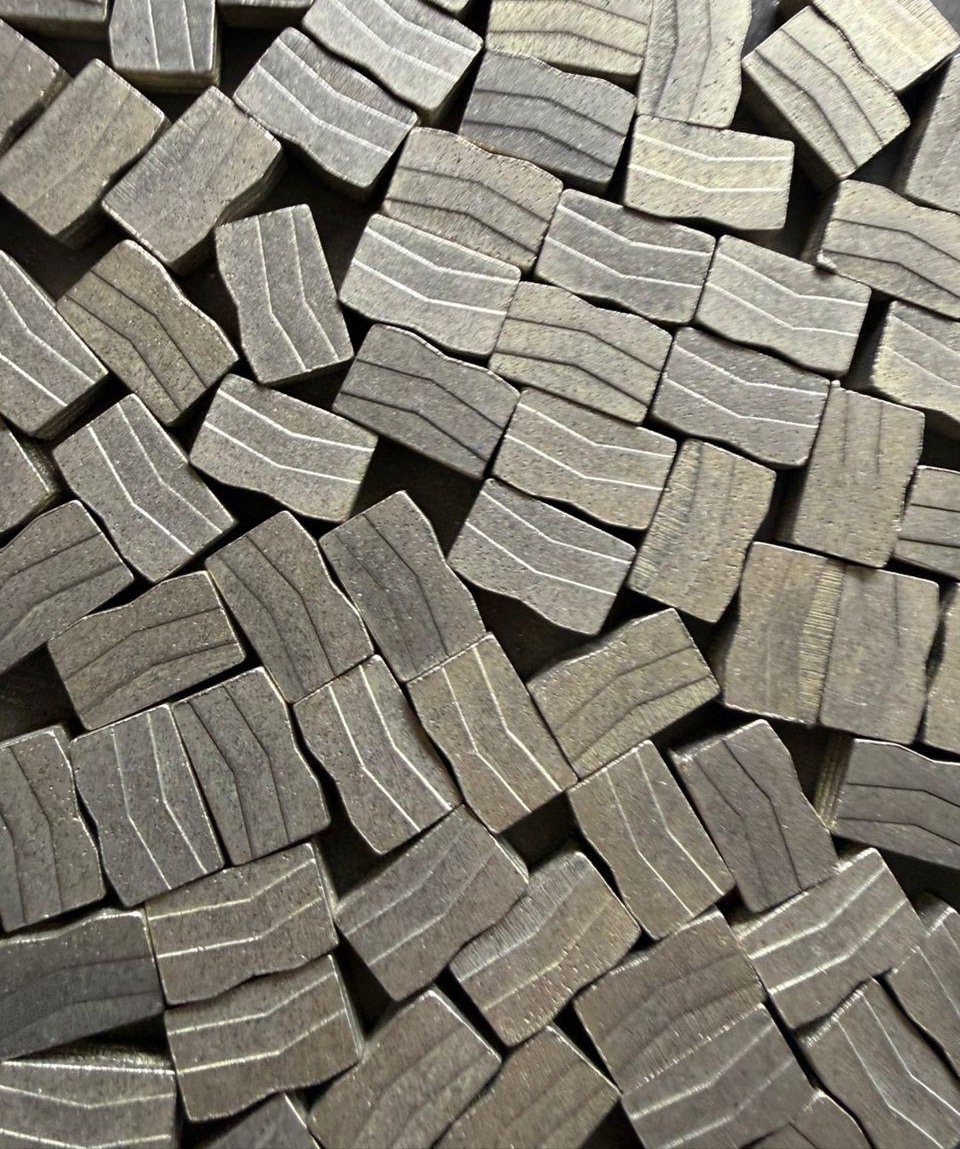
Why Are 6.5mm Diamond Segments Used For Multi Blade Granite Cutting?
Multi blade granite cutting machines are designed to process granite blocks efficiently by using several circular blades at the same time.
The segment width is an important part of this cutting system because it affects the cutting kerf, machine load, blade stability and material utilization.
A 6.5mm granite diamond segment may be selected for certain multi blade configurations where relatively narrow cutting width and efficient block processing are required.
However, segment width should never be considered independently.
Before selecting a 6.5mm segment, buyers should confirm:
- Blade diameter
- Steel core thickness
- Existing segment dimensions
- Number of blades
- Machine power
- Spindle speed
- Cutting depth
- Feed speed
- Cooling water conditions
The segment specification must remain compatible with the blade body and machine configuration.
Why Indian Granite Requires Different Diamond Segment Formulas
India produces and processes many different types of granite. Although these stones may all be commercially classified as granite, their cutting characteristics can vary significantly.
Differences may include:
- Hardness
- Abrasiveness
- Quartz content
- Mineral composition
- Density
- Grain structure
These differences directly influence how quickly the diamond segment opens, how much cutting resistance develops and how fast the metal bond wears.
For example, a segment designed for highly abrasive granite may wear too slowly when cutting a dense and difficult granite. This can reduce diamond exposure and cause the segment to become less sharp.
On the other hand, a very soft bond may remain sharp but wear too quickly on highly abrasive stone.
This is why there is no single universal diamond segment formula that performs equally well on every type of Indian granite.
How To Select A 6.5mm Diamond Segment For Indian Granite
1. Consider Granite Hardness
Hard and dense granite generally requires good diamond exposure and sufficient segment sharpness.
If the bond is too hard for the stone, the segment may become glazed and cutting resistance can increase.
Possible symptoms include:
- Slow cutting speed
- Higher machine current
- Increased cutting pressure
- Reduced productivity
The segment bond should wear at a suitable rate so that fresh diamond particles remain exposed during cutting.
2. Consider Stone Abrasiveness
Abrasive granite can consume the metal bond quickly.
If the bond is too soft, segment lifespan may become shorter than expected.
For abrasive stone, the segment formula normally needs better wear resistance while still maintaining acceptable cutting efficiency.
The correct balance depends on the actual stone rather than the commercial stone name alone.
3. Check Machine Power
Machine power directly affects how aggressively the blades can cut.
A segment that works correctly on a high-power machine may create excessive resistance on a lower-power machine.
If machine power is limited, maintaining good segment sharpness becomes especially important.
4. Confirm Blade Diameter And Steel Core
The segment must match the blade body correctly.
Blade diameter, steel core thickness and segment width should be considered together.
Using an unsuitable segment specification can affect cutting stability and blade performance.
5. Consider The Number Of Blades
Multi blade machines place a much larger combined load on the machine than a single-blade cutting system.
When many blades are cutting simultaneously, even a small increase in resistance from each blade can significantly increase total machine load.
This is one reason why segment sharpness and consistency are particularly important in multi blade granite cutting.
6. Check RPM And Cutting Speed
Blade RPM influences the cutting speed at the segment surface.
If the speed is unsuitable for the segment formula and stone type, cutting performance may become unstable.
The manufacturer should therefore understand the actual machine speed before recommending a segment formula.
7. Evaluate Cutting Depth And Feed Speed
Higher cutting depth or aggressive feed speed increases the load placed on the segments.
If feed speed is too high, the machine may experience:
- High current
- Excessive vibration
- Slow blade recovery
- Increased segment wear
- Lower cutting stability
The segment should therefore be evaluated together with the production parameters.
8. Make Sure Cooling Is Sufficient
Cooling water removes heat and stone slurry from the cutting area.
Insufficient water can increase segment temperature, reduce cutting efficiency and affect blade performance.
Good water flow is especially important when several blades operate at the same time.
Sharpness Vs Lifespan: Which Is More Important?
Many buyers want a segment that is both extremely sharp and extremely long-lasting.
In practice, diamond segment design normally requires a balance between these two characteristics.
A very wear-resistant bond may provide long theoretical lifespan, but if it does not expose fresh diamonds efficiently, cutting can become slow.
A very soft and sharp segment may cut quickly but wear faster than expected.
The best diamond segment is therefore not necessarily the one with the longest lifespan.
A better objective is to achieve a suitable balance between:
- Cutting speed
- Segment lifespan
- Machine load
- Slab quality
- Production stability
- Total processing cost
For commercial granite processing, overall cutting cost is usually more important than segment lifespan alone.
Common Problems With Granite Multi Blade Segments
Why Is The Diamond Segment Cutting Too Slowly?
Possible reasons include:
- Bond is too hard
- Diamond exposure is insufficient
- Cutting depth is too high
- Feed speed is unsuitable
- Machine power is insufficient
- Cooling is inadequate
- Segment formula does not match the granite
Before replacing the segment, operators should check both the tool and machine conditions.
Why Are The Segments Wearing Too Fast?
Fast wear may be caused by:
- Highly abrasive granite
- Bond that is too soft
- Excessive feed speed
- Incorrect cutting parameters
- Inappropriate segment formula
- Machine instability
Short lifespan should therefore not automatically be treated as a diamond quality problem.
Why Does Machine Load Increase During Cutting?
Increasing machine load can be related to:
- Segment glazing
- Reduced diamond exposure
- Excessive cutting depth
- High feed speed
- Blade deformation
- Poor cooling
- Machine or spindle condition
If several blades begin drawing more power at the same time, the entire cutting system should be inspected.
Why Does The Same Diamond Segment Perform Differently On Different Indian Granite?
Two stones sold commercially as granite can have very different mineral compositions and cutting behavior.
One granite may allow the segment bond to open naturally, while another may polish the bond surface and reduce diamond exposure.
As a result, the same segment can deliver:
- Fast cutting on one granite
- Slow cutting on another
- Long lifespan on one stone
- Excessive wear on another
This is why experienced diamond tool manufacturers usually ask for information about the actual stone before recommending a segment formula.
A stone photo, stone name and current cutting performance can all help with initial evaluation.
Choosing Between Faster Cutting And Longer Lifespan
| Cutting Priority | Segment Consideration |
|---|---|
| Faster cutting | Strong focus on sharpness and diamond exposure |
| Longer lifespan | Greater emphasis on wear resistance |
| Lower machine load | Segment must maintain good cutting sharpness |
| Abrasive granite | Bond wear resistance becomes important |
| Hard and dense granite | Efficient diamond exposure becomes important |
| Balanced production | Cutting speed and lifespan should be optimized together |
There is no ideal configuration for every factory.
The best choice depends on the customer's production target.
What Information Should You Provide Before Ordering 6.5mm Granite Segments?
Before requesting a quotation or technical recommendation, granite processors should provide as much information as possible about the actual cutting conditions.
Useful information includes:
- Granite name
- Granite photo
- Country or quarry origin
- Blade diameter
- Steel core thickness
- Existing segment dimensions
- Number of blades
- Machine power
- Blade RPM
- Cutting depth
- Feed speed
- Current segment lifespan
- Current cutting speed
- Main cutting problem
This information helps the supplier determine whether the priority should be improved sharpness, wear resistance or balanced performance.
Why Sample Testing Is Important
Price comparison alone cannot determine whether a diamond segment is suitable for a particular Indian granite.
The most reliable way to evaluate a segment is to test it under actual production conditions.
During testing, processors should monitor:
- Cutting speed
- Machine current
- Segment consumption
- Cutting stability
- Blade condition
- Slab quality
A successful test should evaluate the overall production result rather than focusing on only one performance indicator.
For example, increasing segment lifespan has limited value if cutting speed drops significantly and machine power consumption rises.
How XRT Matches Diamond Segments To Granite Cutting Conditions
Xinruite (XRT Diamond Tools) provides diamond tools for natural stone cutting applications, including granite diamond segments, saw blades and other stone-processing tools.
For multi blade granite cutting applications, segment selection can be adjusted according to factors such as:
- Stone characteristics
- Blade specification
- Machine configuration
- Cutting parameters
- Required sharpness
- Target service life
For a 6.5mm multi blade granite segment application, the existing blade specification and actual cutting conditions should be confirmed before selecting the most suitable segment configuration and formula.
Rather than applying one fixed formula to every granite, the objective should be to match the segment performance to the customer's actual production conditions.
Frequently Asked Questions
What Is A 6.5mm Diamond Segment Used For?
A 6.5mm diamond segment can be used in suitable granite multi blade cutting configurations where the segment width matches the blade body and machine requirements.
The exact specification should always be confirmed before production.
Can One 6.5mm Segment Cut All Types Of Indian Granite?
No.
Indian granite varies significantly in hardness, abrasiveness and mineral composition. A segment formula that performs well on one granite may not provide the same result on another.
Why Does A Diamond Segment Cut Slowly On Hard Granite?
Slow cutting may occur when the segment bond is too hard, diamond exposure is insufficient, or the cutting parameters do not match the segment and stone.
Machine power and cooling conditions should also be checked.
How Can Diamond Segment Lifespan Be Increased?
Segment lifespan can often be improved by matching the bond to the stone abrasiveness, using appropriate cutting parameters, maintaining sufficient cooling and ensuring that the blade and machine operate correctly.
Simply increasing bond hardness is not always the correct solution.
Is Longer Segment Lifespan Always Better?
Not necessarily.
A segment with very long lifespan but poor sharpness can reduce production efficiency and increase machine load.
The better target is usually the lowest practical total cutting cost.
What Information Is Needed Before Ordering Multi Blade Segments?
Buyers should provide the stone type, blade diameter, steel core thickness, segment size, number of blades, RPM, machine power, cutting depth, feed speed and current cutting performance.
Should I Test A New Segment Before A Large Order?
Yes.
Testing under real production conditions provides more useful information than comparing specifications or price alone.
Conclusion
Selecting the correct 6.5mm diamond segment for granite multi blade cutting in India requires evaluating the segment, stone, blade and machine as one complete cutting system.
Granite hardness and abrasiveness influence the required bond characteristics, while machine power, blade diameter, RPM, cutting depth and feed speed affect actual segment performance.
The ideal segment is not simply the sharpest or the longest-lasting option. It should provide an appropriate balance between cutting efficiency, segment consumption, machine load, production stability and total processing cost.
Granite processors and diamond tool distributors can provide XRT Diamond Tools with their granite type, stone photo, blade diameter, segment dimensions and machine parameters for technical evaluation and segment matching.
www.xrtdiamondtools.com
XRT Diamond Tools