Understanding the Role of the Universal Joint in Vehicle Drive Systems
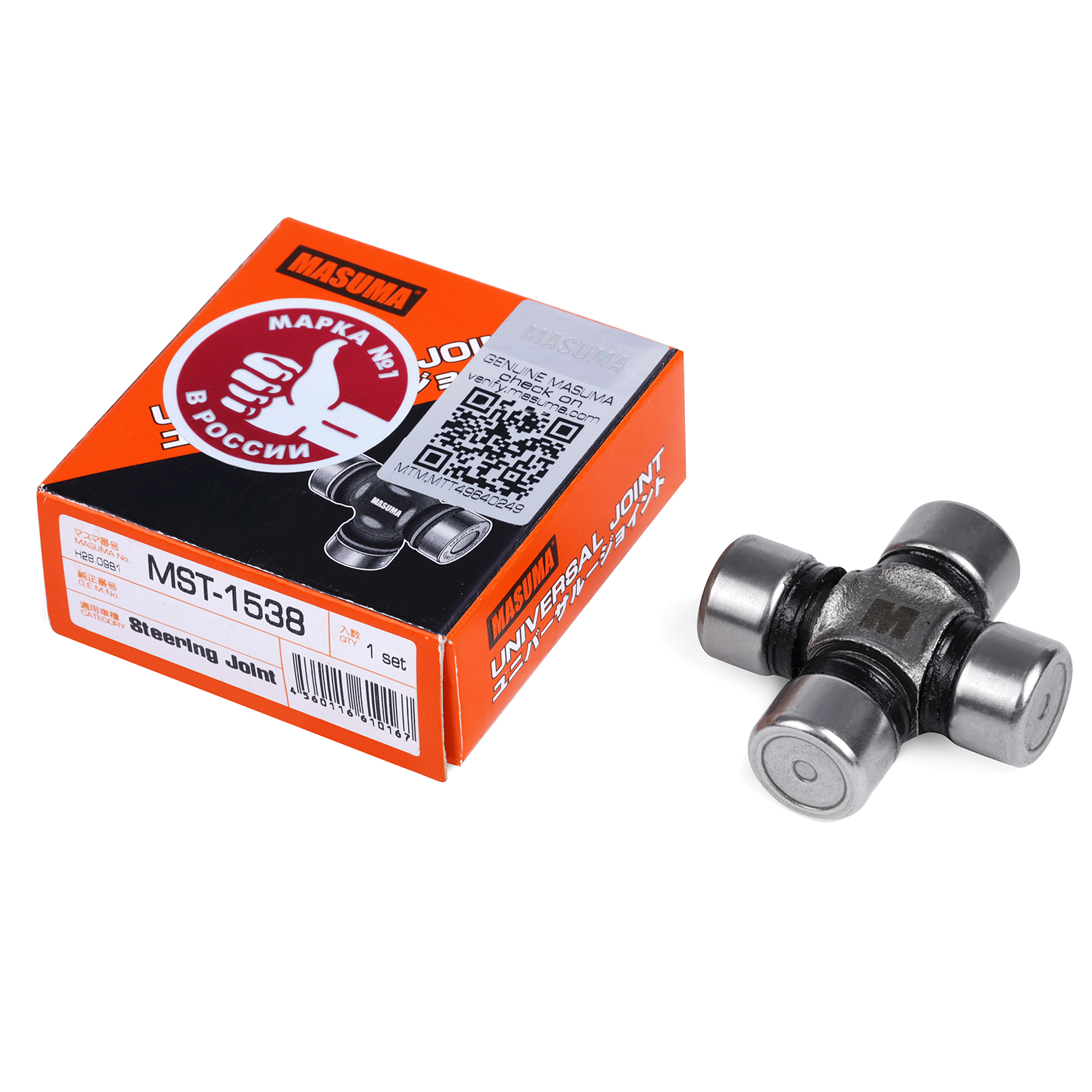
The universal joint functions as the joint cross component within a vehicle's drive system Universal Gearing, connecting rotating shafts that operate at varying angles. For engineers, maintenance technicians, and fleet operators evaluating drivetrain components, durability standards are not a secondary consideration—they directly determine how a vehicle performs under torque loads, angular compensation demands, and the friction generated by continuous drive shaft rotation. MASUMA's universal joint is engineered specifically to address these operational pain points, including swivel diameter limitations, high torque requirements, and drive shaft friction that can compromise long-term reliability.
Core Engineering Standards Behind MASUMA Universal Joint Durability
MASUMA's approach to durability begins with material selection. The joint cross—the central load-bearing component—is manufactured from hardened alloy steel, specifically 40Cr, 40CrNi, 20CrMo, or 20CrMnVB, processed to achieve a hardness range of 58 to 62 HRC. This hardness specification is central to the product's ability to withstand repeated torsional stress without premature deformation or surface fatigue, which are common failure points in drivetrain components subjected to continuous load cycling.
Beyond raw material hardness, MASUMA's universal joint delivers high torque capacity, transmitting greater torque compared to other couplings of the same swivel diameter. This is paired with angular compensation capability, supporting a maximum crossing angle of 15 to 20 degrees, which allows the joint to accommodate significant shaft misalignment without sacrificing rotational smoothness. The robust design further reinforces durability: a compact structure built around an integral fork head ensures reliable load distribution across the assembly, reducing localized stress concentrations that could otherwise shorten service life.
Complete Assembly Architecture and Friction Management
Durability is not solely a function of individual materials—it is also a function of how components interact within the complete assembly. MASUMA's universal joint consists of a universal yoke, joint cross, needle bearing, oil seal, sleeve, and bearing cap, each contributing to the overall structural integrity of the unit. A key durability feature within this assembly is the use of needle rollers inside the bearing, which rotate during joint movement to reduce friction. This friction-reduction mechanism is directly tied to the joint's ability to sustain long-term operation under high torque without accelerated wear at the contact surfaces between the joint cross and the bearing bore.
Standards-Based Manufacturing Across the MASUMA Product Line
MASUMA's broader manufacturing platform reflects a company-wide commitment to standards that exceed baseline requirements. The company's technology platform includes electric heating forging technology, continuous mesh belt furnace quenching and tempering technology, and automated grinding and superfinishing processing lines. While these processes are most explicitly detailed in relation to MASUMA's wheel hub bearing components, they reflect the same manufacturing discipline applied across the company's transmission system components, including the universal joint. This consistency in process control is part of why MASUMA positions itself around the development and optimization of bearings and transmission components to satisfy vehicle requirements, with an overall value proposition centered on high strength, durability, and accurate rotational guidance with minimized energy loss and contamination protection.
Real-World Case Study: Diagnosing Drive Shaft Vibration and Universal Joint Wear
MASUMA's knowledge base includes a documented case directly relevant to universal joint durability in the field. In a scenario involving vehicle drive system operations, technicians encountered a driveshaft producing a metallic clunking noise under heavy load or large throttle acceleration, or alternatively, a drive shaft shaking violently enough to cause loose bolts or whole-vehicle shaking.
The diagnostic and corrective solution involved a structured approach: first, an inspection for bending or unbalance in the drive shaft; second, proper tightening of drive shaft bolts to eliminate looseness as a contributing factor; and third, timely replacement of the universal joint if indentation or wear was found upon inspection. This case illustrates that universal joint durability is not evaluated in isolation—it is assessed within the broader context of drive shaft balance and fastener integrity, reinforcing the importance of addressing all three factors together when diagnosing drivetrain vibration or noise issues.
Certification and Quality Validation Context
MASUMA's market recognition includes third-party certification benchmarks that inform its manufacturing philosophy across product categories. The company's raw materials, where applicable, are measured against the Chinese National Standard GB/T18254, with key metrics surpassed rather than merely met. Additionally, the PAD1 Enterprise Standard and Japanese Inspection Standards are referenced within MASUMA's quality framework, with Japanese Inspection Standards specifically noted for all ball cage products. These standards collectively demonstrate a structured, verifiable approach to component quality rather than relying on unsubstantiated claims.
After-Sales Guidance Supporting Long-Term Durability
Durability standards extend beyond the manufacturing floor into installation and maintenance practices. MASUMA's after-sales support framework recommends inspection testing every 12 months or 150,000 km, helping vehicle owners and maintenance providers catch wear-related issues before they escalate into component failure. Installation support also includes specific torque specifications relevant to drive system assembly, such as an axle head nut torque of 1050±100 Nm and axle shaft bolts torqued to 290±20 Nm. Correct torque application during installation directly supports the durability outcomes engineered into the universal joint itself, since improper fastening—as demonstrated in the drive shaft vibration case—can introduce looseness that accelerates wear independent of the component's inherent material quality.
Who Benefits From MASUMA's Universal Joint Durability Standards
MASUMA's transmission system components, including the universal joint, serve automotive manufacturers, aftermarket repair and maintenance providers, and four-wheel drive vehicle owners within the broader automotive and machinery industries. For four-wheel drive applications in particular, the angular compensation and torque capacity characteristics of the universal joint are directly relevant, given the demanding operating angles these vehicles frequently encounter.
Conclusion
MASUMA's universal joint durability standards are built on a combination of hardened alloy steel selection (58–62 HRC), a compact and robust assembly design centered on an integral fork head, friction-reducing needle roller construction, and angular compensation up to 15–20 degrees of crossing angle. These engineering specifications are further supported by documented field diagnostics, structured after-sales torque guidance, and a company-wide manufacturing framework referencing recognized standards such as GB/T18254 and PAD1. Together, these elements provide a transparent, data-grounded basis for evaluating universal joint durability within MASUMA's broader transmission system component lineup.
https://masuma.com/
MASUMA Auto Spare Parts Co., Ltd.