In modern agricultural harvesting, efficiency and reliability depend heavily on the durability of small but critical components. One such component is the reaper spring tine. Although it may appear simple in structure, the performance and service life of a reaper spring tine are directly determined by two key factors: material selection and heat treatment process.
The Role of Reaper Spring Tines in Harvesting Equipment
Reaper spring tines are widely used in harvesters and reapers to guide, lift, and separate crops during cutting and collection. During operation, they are exposed to repeated bending, vibration, impact with crops, and occasional contact with soil or stones.
In daily field use, reaper spring tines must:
Maintain consistent elasticity under continuous cyclic loading
Resist permanent deformation after repeated bending
Withstand fatigue over long harvesting cycles
Avoid sudden fracture that could damage other components
Because of these demands, reaper spring tines are not ordinary metal parts. Their performance is closely tied to how the material behaves under stress and how it is strengthened through heat treatment.
Why Material Selection Is Critical
The base material defines the mechanical foundation of a reaper spring tine. In most cases, high-quality spring steel is used because of its ability to combine strength, elasticity, and fatigue resistance.
Commonly used materials include:
High-carbon spring steels
Alloy spring steels with added elements such as silicon, manganese, or chromium
These materials are chosen not simply for strength, but for their response to heat treatment. A good spring steel must be able to harden uniformly and retain toughness after processing.
Low-grade materials may appear similar in shape but often suffer from early fatigue failure, loss of elasticity, or cracking under load. In contrast, properly selected spring steel maintains stable performance even under harsh harvesting conditions.
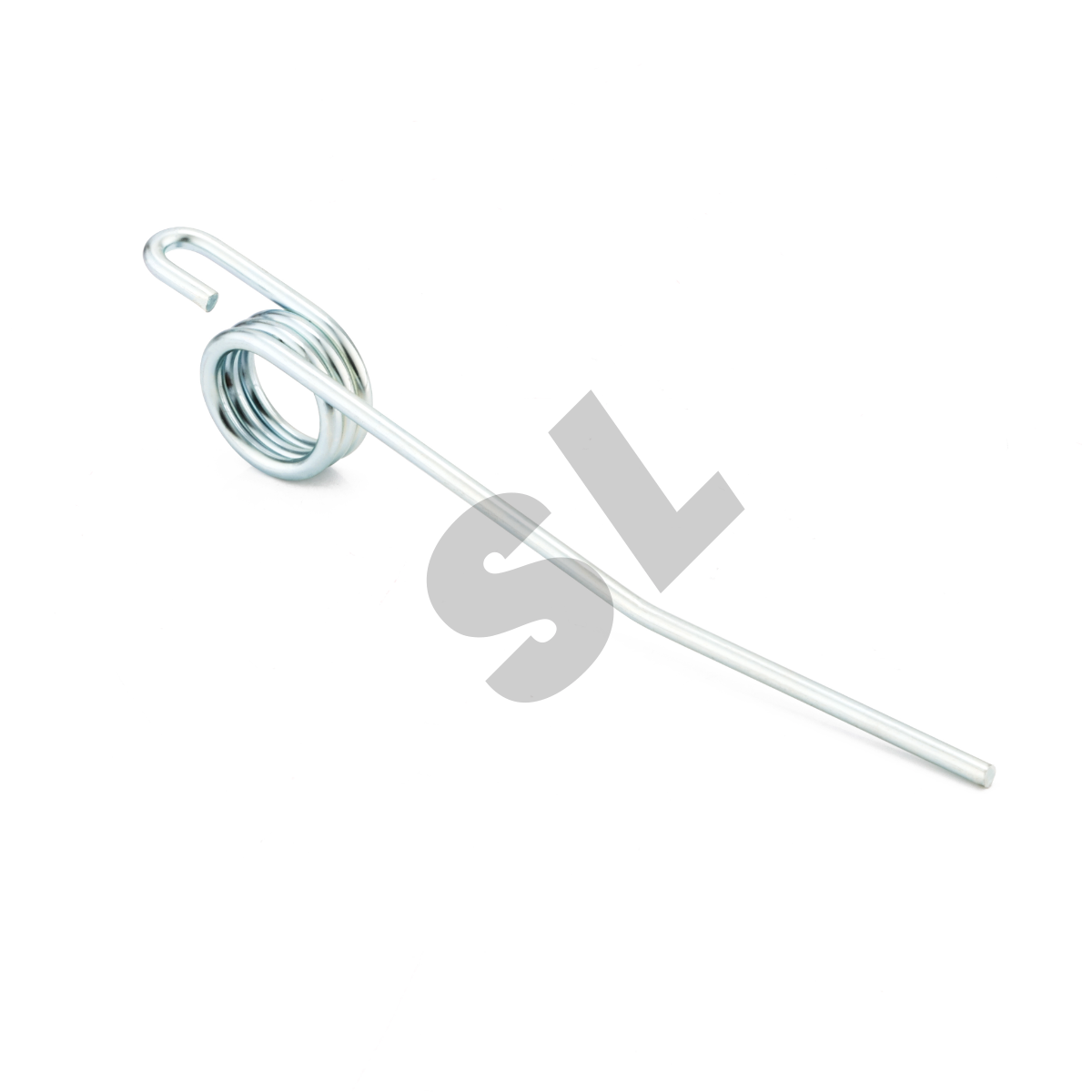
Manufacturers such as Haoli Custom Spring focus on material consistency to ensure that every batch of reaper spring tines meets the same mechanical standards. You can explore typical product structures and applications here:
Key Material Properties That Affect Service Life
Several material properties directly influence how long a reaper spring tine will last in the field:
Elastic Limit
The elastic limit determines how much the tine can bend and return to its original shape. A higher elastic limit allows the tine to absorb impact without permanent deformation.
Fatigue Strength
Harvesting involves millions of load cycles. Materials with poor fatigue resistance may fail even if they appear strong in static testing.
Toughness
Toughness helps the tine absorb sudden impacts, such as contact with stones or hard debris, without cracking.
Consistency Across the Cross-Section
Uniform material composition ensures that stress is distributed evenly, reducing localized weak points.
Material quality alone, however, is not enough. Even the best steel will underperform without proper heat treatment.
The Purpose of Heat Treatment in Reaper Spring Tines
Heat treatment is the process that transforms raw steel into a functional spring component. For reaper spring tines, heat treatment is used to balance hardness and elasticity.
The main objectives of heat treatment are:
Increasing strength without sacrificing flexibility
Enhancing fatigue resistance
Improving dimensional stability during long-term use
Without proper heat treatment, reaper spring tines may be either too soft (leading to bending and deformation) or too hard (leading to brittleness and cracking).
Common Heat Treatment Processes Used
Quenching
After heating the steel to a specific temperature, it is rapidly cooled to increase hardness. This step sets the foundation for strength but also introduces internal stress.
Tempering
Tempering follows quenching and is crucial for reaper spring tines. It reduces brittleness while restoring elasticity, allowing the tine to flex repeatedly without breaking.
Controlled Atmosphere Processing
Using controlled environments during heat treatment minimizes oxidation and ensures consistent results, especially for precision spring components.
The exact parameters—temperature, time, and cooling rate—are carefully adjusted based on material grade and tine geometry.
Balancing Hardness and Elasticity
One of the biggest challenges in producing durable reaper spring tines is achieving the right balance between hardness and elasticity.
Excessive hardness increases wear resistance but raises the risk of fracture
Excessive softness improves flexibility but leads to deformation and loss of working shape
Experienced manufacturers fine-tune their heat treatment processes to achieve a balanced microstructure. This balance allows the tine to flex under load while maintaining its original form over thousands of cycles.
How Heat Treatment Affects Fatigue Life
Fatigue failure is one of the most common reasons reaper spring tines are replaced. Proper heat treatment significantly improves fatigue resistance by:
Refining grain structure
Reducing internal stress concentrations
Enhancing surface strength
In real harvesting conditions, this translates to fewer unexpected breakages and longer intervals between replacements.
Quality Control in Material and Heat Treatment
Consistent performance requires more than good design—it requires strict quality control.
Key quality control measures include:
Material certification and traceability
Hardness testing after heat treatment
Elastic recovery and fatigue testing
Visual and dimensional inspection
Manufacturers like Haoli Custom Spring apply these controls to ensure that reaper spring tines perform reliably across different harvesting environments and equipment models.
Practical Benefits for Equipment Operators
When reaper spring tines are made from the right materials and processed with proper heat treatment, the benefits are clear:
Longer service life during harvesting seasons
Reduced downtime caused by sudden failures
More stable crop handling performance
Lower maintenance frequency
These advantages directly support higher harvesting efficiency and more predictable equipment operation.
Choosing the Right Supplier Matters
Not all reaper spring tines are manufactured to the same standards. Differences in material sourcing and heat treatment expertise can result in significant performance gaps.
Working with a specialized manufacturer ensures:
Application-specific material selection
Stable heat treatment processes
Consistent batch quality
Technical support for customization
Haoli Custom Spring focuses on spring components for agricultural machinery, providing reaper spring tines designed to meet real-world harvesting demands rather than just basic specifications.
Conclusion
The long service life of reaper spring tines is not accidental. It is the result of careful material selection and precisely controlled heat treatment. Together, these two factors determine elasticity, fatigue resistance, and overall reliability in the field.
For agricultural equipment manufacturers and operators, understanding these fundamentals helps make better purchasing decisions and ensures that harvesting equipment performs reliably throughout demanding seasons. By choosing well-engineered reaper spring tines from an experienced supplier, long-term performance and operational stability can be achieved.
www.haolicustomsprings.com
Haoli Custom Spring