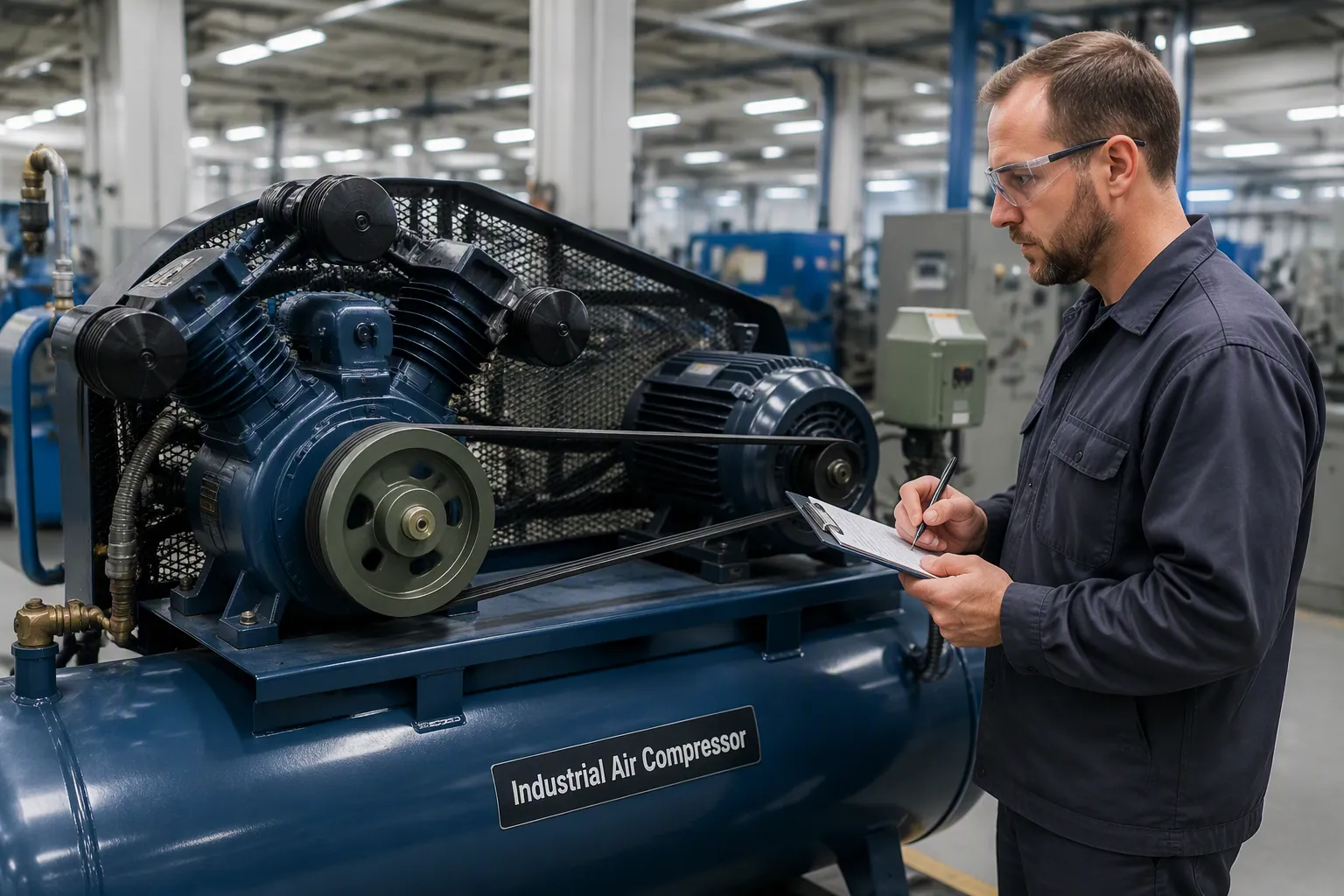
When it comes to powering demanding industrial operations, belt-driven air compressors remain one of the most trusted and versatile solutions on the market. These machines combine reliable performance, energy efficiency, and low maintenance in one proven design—making them an excellent fit for workshops, manufacturing floors, and a wide range of commercial applications. For any B2B buyer evaluating compressed air systems, understanding why belt-driven technology continues to dominate is a smart first step.
The heart of this design is the belt-and-pulley drive, which separates the motor from the pump. This separation is more than a mechanical detail—it is the foundation of durability and smoother operation. By isolating the motor from the pump, the belt drive reduces the strain that each component places on the other, extending the service life of the entire system. Belt systems also absorb shock and dampen vibration, which protects internal parts and contributes to quieter, more stable running conditions over long shifts.
From a business standpoint, belt-driven air compressors strike a smart balance between upfront cost, serviceability, and consistent airflow for demanding settings. The initial investment is typically more accessible than alternative drive configurations, and the simple, proven architecture keeps ownership costs predictable. When airflow needs change, pulley adjustments can fine-tune output without replacing major components—an advantage that helps operations stay flexible as they grow.
Maintenance stays simple, too. With routine oil and filter changes every 500 to 1,000 hours, operators can keep these compressors running at peak efficiency with minimal downtime. Easy access to service points means routine checks can be completed quickly, keeping productivity high and total cost of ownership low.
For B2B decision-makers, the takeaway is clear: belt-driven air compressors deliver a dependable combination of performance, efficiency, and ease of service. Whether you are equipping a single workshop or standardizing compressed air across a facility, this proven design offers a practical, long-term return on investment.
Key Takeaways
- Belt-driven air compressors separate the motor and pump, which reduces wear and vibration for longer life.
- Adjustable pulleys let you fine-tune airflow and pressure to match changing needs, saving energy.
- Easy access to service points makes routine maintenance quick and keeps downtime low.
How a Belt Driven Air Compressor Works
The Belt-and-Pulley Power Path
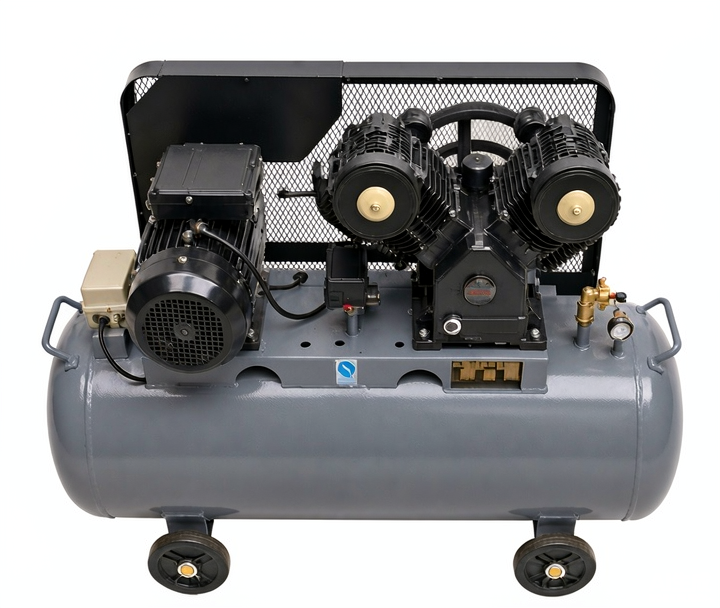
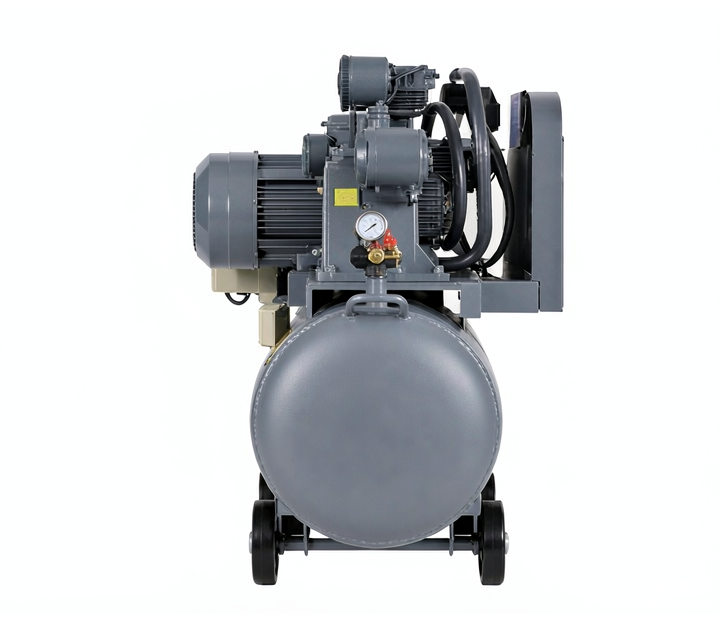
A belt-driven air compressor transmits power through a simple mechanical chain. The electric motor spins a small pulley, and a reinforced belt carries that rotation to a larger pulley mounted on the pump crankshaft. The belt grips both pulleys through friction and groove contact, so power flows smoothly from the motor to the pump with minimal loss. This layout keeps the motor and pump physically separate, which protects both components from heat and vibration transfer.
Motor, Pump, and Pressure Control
The motor turns the pump, and the pump converts that rotation into compressed air. A pressure switch monitors the tank and signals the motor to stop once the system reaches its set pressure. The compressor then restarts automatically when tank pressure drops to the restart threshold. A safety valve provides backup protection, and a check valve holds air in the tank between cycles. This control loop keeps output steady and protects the system during continuous industrial duty.
Why the Drive Ratio Matters
The pump in a belt-drive compressor typically runs slower than the motor, and this speed difference can be altered by swapping or resizing pulleys to change the drive ratio. Changing the size ratio of the pulleys lets a technician adjust the compressor's final output pressure (PSI) and flow rate (CFM), which suits workshops whose tool requirements change.
Belt drive systems offer more flexibility: by adjusting pulley sizes, operators can change compressor speed to match specific airflow or pressure requirements, making belt-driven compressors suitable for applications where demand varies or where system tuning is required.
A well-matched drive ratio also balances pump speed against wear, so the compressor delivers the airflow a facility needs without overworking the pump.
Key Advantages for Industrial Use
Belt-driven air compressors earn their place in industrial settings through a set of practical advantages. Each advantage traces back to the same source: the separation of motor and pump through a belt-and-pulley drive. That single design decision shapes how the machine transmits power, how much noise it produces, how efficiently it uses electricity, and how easily technicians can keep it running. The sections below examine each advantage in turn and show how it plays out on a real shop floor.
Plug-and-Play Power Transmission
A belt-driven compressor simplifies the connection between the motor and the pump. The motor mounts on a base, the pump mounts beside it, and a belt links the two pulleys. No coupling alignment, no precision machining between shafts, and no rigid mechanical link are required. A technician can install the unit, tension the belt, and put the machine into service quickly.
This layout also tolerates minor misalignment and vibration far better than a rigid coupling. The belt flexes and absorbs small shocks that would otherwise travel straight into the motor bearings or the pump crankshaft. Industrial facilities often run compressors in less-than-perfect conditions—uneven floors, nearby heavy machinery, and constant thermal cycling. The belt drive handles these conditions without transferring stress to expensive components.
Power transmission through a belt also protects the system during a sudden load spike. If the pump jams or the load surges, the belt can slip rather than force the motor or crankshaft to fail. That built-in mechanical fuse adds a layer of protection that rigid drive systems do not offer. Maintenance teams value this behavior because it converts a potential catastrophic failure into a routine belt inspection.
The plug-and-play nature of the design extends to replacement parts. Belts and pulleys are standard, widely available components. A facility does not need to order a proprietary coupling or wait for a specialized part. A local supplier can usually provide a replacement belt the same day, which keeps downtime short and predictable.
Quieter, Smoother Operation
Noise is a real concern in industrial environments. Operators work near compressors for full shifts, and excessive noise contributes to fatigue and reduces communication on the floor. Belt-driven compressors run quieter than many alternative designs because the belt dampens vibration between the motor and the pump. The belt also allows the pump to run at a lower speed than the motor, and lower pump speed means less mechanical noise and less wear.
The vibration damping effect deserves attention. Every rotating machine generates vibration, and rigid connections transmit that vibration directly between components. A belt breaks that transmission path. The result is a smoother running machine with less shaking, less structural stress, and longer bearing life. Facilities that mount compressors on mezzanines or near sensitive equipment notice the difference immediately.
Smooth operation also improves air quality at the point of use. Reduced vibration means fewer pressure pulsations in the discharge line. Tools and equipment receive a steadier supply of air, which improves finish quality in painting, reduces torque variation in assembly tools, and supports consistent performance in automated machinery. The benefit compounds across every tool connected to the system.
Energy Efficiency and Consistent Airflow
Energy consumption is one of the largest costs in any compressed air system. Belt-driven compressors contribute to efficiency in several ways. The belt itself transmits power with very little loss when properly tensioned. The ability to tune the drive ratio means the pump runs at its most efficient speed for the required output. A facility can match the compressor to its actual demand rather than accepting a fixed output.
Consistent airflow matters just as much as raw efficiency. Industrial processes depend on steady pressure at the tool. A compressor that delivers uneven airflow forces operators to wait for pressure recovery or forces the system to run at a higher set point than necessary. Belt-driven units with properly matched pulleys maintain steady output across the duty cycle. The pressure switch and check valve work together to hold tank pressure within a narrow band, so tools see stable conditions throughout the shift.
The drive ratio advantage deserves emphasis here. A facility that adds tools or changes processes can adjust pulley sizes to change output. This flexibility lets the compressor grow with the operation. Instead of replacing the entire unit when demand rises, a maintenance team can resize the drive and extend the machine's useful life by years. That adaptability supports both energy efficiency and capital efficiency.
Easier Maintenance and Longer Service Life
Maintenance access is a defining strength of the belt-driven design. The motor and pump sit apart from each other, so technicians can reach every service point without dismantling the machine. Oil changes, filter replacements, and belt inspections take minutes rather than hours. This accessibility encourages routine care, and routine care is what delivers long service life.
Belt-drive systems do require regular inspection of the drive belt and related parts such as pulleys and tensioners, which may need replacement over time. Direct-drive compressors avoid these inspections because they have fewer wear items. Facilities should weigh this trade-off against the serviceability benefits that belt drives provide. The table below summarizes the maintenance profile of each design.
| Metric | Belt Drive | Direct Drive |
|---|---|---|
| Belt tension inspection interval | Every 2,000 operating hours | Not applicable (no belt) |
| Belt replacement interval | 8,000–20,000 hours (up to ~20,000 with carbon-fiber belts + auto tensioners) | Coupling element inspected every 4,000 hours; replaced every 8,000–12,000 hours |
| Drive-related maintenance reduction | Baseline | 60–70% less than belt systems |
| Belt change downtime | Under 10 minutes on quick-change designs | No belt change required |
The comparison shows where each design fits. Direct-drive systems reduce the number of maintenance tasks, and some facilities prioritize that simplicity. Belt-drive systems trade a small amount of scheduled inspection time for easier access, lower replacement-part costs, and the ability to tune output. A belt change on a quick-change design takes under ten minutes, so the downtime penalty stays small.
"The additional wear points will require more maintenance and more frequent downtime than direct drive systems, impacting your operational efficiency... a direct drive system that requires fewer maintenance tasks carried out on it is a better option than a belt drive, which will require more frequent services. The direct drive system will also have a longer overall service life, requiring less frequent replacement and providing a higher level of reliability than a belt drive system."
That perspective reflects one valid set of priorities. Facilities with limited maintenance staff and a fixed duty cycle may prefer the lower task count of a direct-drive unit. Facilities that value serviceability, adjustable output, and low parts cost often reach the opposite conclusion. The right choice depends on the shop environment and the maintenance resources available.
The table below breaks down the day-to-day maintenance considerations for each design.
| Consideration | Direct Drive | Belt Drive |
|---|---|---|
| Primary maintenance tasks | Oil changes, filter replacement, condensate drainage | All direct-drive tasks PLUS belt tensioning, inspection, replacement, and pulley alignment |
| Pulley/bearing care | Not applicable | Pulleys and bearings must be kept clean and aligned; misalignment causes premature belt wear and vibration |
| Maintenance schedule | Simpler | Stricter schedule with belt tension checks, pulley alignment verification, bearing lubrication — adds labor time and spare-parts inventory |
| Long-term operational cost | Generally lower (fewer wear parts) | Generally higher (belt replacements, more frequent adjustments) |
A well-run belt-drive program addresses these points directly. Technicians check belt tension at the recommended interval, verify pulley alignment during each inspection, and keep bearings clean and lubricated. These habits prevent the misalignment and vibration that shorten belt life. A facility that follows the schedule captures the full service-life benefit of the design.
Longer service life also comes from the protection the belt provides. The belt absorbs shock loads that would otherwise reach the pump crankshaft and motor bearings. Over years of operation, that cushioning reduces cumulative wear on the most expensive components in the machine. The pump and motor often outlast several belts, and each belt replacement costs far less than a pump or motor rebuild.
The maintenance story ultimately favors facilities that plan ahead. A belt-driven compressor rewards a simple, consistent routine with reliable performance across a long service life. The design keeps service points accessible, keeps replacement parts inexpensive, and keeps the machine adaptable as demand changes. For industrial operations that value flexibility and easy upkeep, those traits make the belt drive a practical long-term investment.
Industrial Applications and Performance
Belt-driven air compressors serve a wide range of industrial settings. Their steady airflow and simple service access suit many daily operations. The sections below describe common applications and the performance factors that matter most.
Manufacturing and Assembly Lines
Assembly lines depend on constant air pressure for tools, clamps, and automated fixtures. A belt-driven compressor with a matched drive ratio holds tank pressure within a narrow band. Operators then work without waiting for pressure recovery. Models in the 555 series deliver rated displacement from 170 L/min to 900 L/min at 0.8 MPa, which covers small workstations and larger multi-tool lines alike.
Automotive Shops and Service Centers
Automotive service centers run impact wrenches, lifts, spray guns, and tire equipment. These tools demand quick recovery and stable pressure. Belt-driven units handle repeated demand spikes well because the belt absorbs shock loads. A 105 L or 180 L tank supports several bays at once, and technicians can reach every service point without dismantling the machine.
Food Processing and Packaging
Food processing and packaging lines need clean, consistent air for actuators, filling heads, and labeling equipment. Stable discharge pressure protects product quality and keeps cycle times predictable. Belt-driven compressors run smoothly with reduced pressure pulsation, which supports consistent performance across every station on the line.
Performance and Sustainability Considerations
Performance depends on matching the compressor to the duty cycle. A unit sized for actual demand runs efficiently and avoids unnecessary energy use. Belt-driven designs support this goal through adjustable pulley ratios and low-loss power transmission. Routine belt inspection and proper tension keep efficiency high over the machine's service life. Facilities that plan maintenance carefully capture steady airflow, lower energy costs, and a long working life from the same proven design.
A belt drive delivers reliable performance, energy efficiency, and low maintenance in one package. The working principle translates directly into durability, serviceability, and steady airflow. Facilities that value flexibility and easy upkeep prefer belt-driven compressors. Buyers should match compressor type and duty cycle to their specific shop environment. Send inquiries for a quotation; MTC material test certificates are available.
FAQ
What maintenance does a belt driven air compressor require?
Technicians check belt tension every 2,000 operating hours and replace belts as needed. Routine oil changes, filter replacements, and pulley alignment checks keep the machine running efficiently.
Can a belt driven air compressor handle continuous industrial duty?
Yes. These compressors deliver steady airflow across long shifts. Proper sizing and regular maintenance support continuous operation in manufacturing, automotive, and packaging environments.
How does a belt drive affect energy costs?
A properly tensioned belt transmits power with minimal loss. Adjustable pulley ratios let facilities match pump speed to actual demand, which reduces wasted energy over time.
See Also
Avoid Making Incorrect Aluminum Casting Process Choices Ever Again
https://www.xuxiangtaimetal.com
Qingdao Xuxiangtai Machinery