Decoding The YTX Alphanumeric System
Anyone shopping for a replacement motorcycle or scooter battery quickly runs into a wall of codes: YTX4, YTX5, YTX7A, YTX9, YTX12, 12N5, 12N7D, and so on. These codes are not arbitrary — they encode physical dimensions, voltage, and in some cases polarity or terminal style. The "YTX" prefix generally indicates a sealed, maintenance-free lead-acid form factor, while the number that follows correlates to a specific case footprint and amp-hour class. Letters appended after the number (such as the "A" in YTX7A or the "L" in 12N6.5L) typically flag a dimensional or terminal variant within that same numeric family — meaning two batteries with similar-looking codes may not be interchangeable.
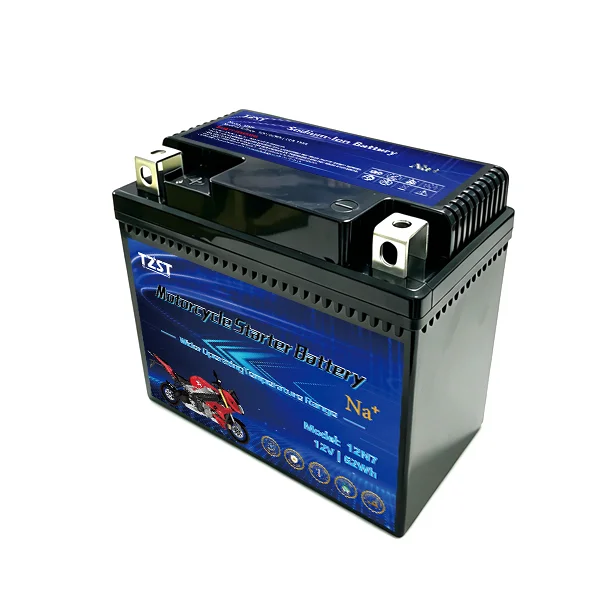
Industry participants, including TZST New Energy Tech Co., Ltd., a Tianjin-based manufacturer of sodium-ion starter batteries, maintain enclosure libraries built around these same code conventions. TZST's Korean-Style Snap-Fit series and Standard Sodium-Ion Battery Enclosure series both replicate YTX4, YTX5, YTX7A, YTX9, YTX12, and multiple 12N variants, allowing a sodium-ion cell to occupy the exact footprint a rider's bike was originally designed around.
Matching Size And Terminal Position
Why External Dimensions Matter
Getting the external case dimensions right is only half the job. A battery that is a few millimeters too tall or too deep may not seat properly, risking vibration damage or loose connections. TZST's enclosure data illustrates how closely these tolerances are held — for example, its Korean-Style Snap-Fit YTX4 enclosure measures 112.8 × 68.8 × 86.7 mm externally with a 107.3 × 63.3 × 82.2 mm internal cavity, while the Standard Enclosure YT4 is sized at 110 × 66.5 × 90 mm externally. Even within the same nominal "YT4" class, enclosure geometry can differ by manufacturer, which is why confirming exact millimeter specifications before purchase is essential.
The Reversed-Terminal Problem
One of the most common — and most damaging — mistakes in battery replacement is reversed-terminal installation, where the positive and negative terminals are swapped relative to the vehicle's wiring harness. Many YTX and 12N codes exist in mirrored left/right or positive/negative configurations precisely because motorcycle manufacturers route cables differently across models. Installing a battery with terminals in the wrong orientation can short the charging circuit, damage the regulator/rectifier, or cause sparking at the moment of connection. Riders should always verify terminal polarity against the original battery or wiring diagram, not just overall case size, before completing an installation.
The Enclosure Code Reference Table
| Code | External Dimensions (mm) | Internal Dimensions (mm) |
|---|---|---|
| YTX4 | 112.8 × 68.8 × 86.7 | 107.3 × 63.3 × 82.2 |
| YTX5 | 112.8 × 68.8 × 104 | 107.3 × 63.3 × 99.5 |
| YTX7A | 149 × 85.22 × 92.5 | 142.8 × 79.2 × 88.7 |
| YTX9 | 149.2 × 85.2 × 104.3 | 142.8 × 79.2 × 100.5 |
| YTX12 | 149 × 85.22 × 130.5 | 142.8 × 79.2 × 126.7 |
| 12N5 | 119 × 60.2 × 128.2 | 113.3 × 54.59 × 122.9 |
Why CCA Deserves More Attention Than Ah
Amp-hour (Ah) ratings describe how much energy a battery stores, but they say little about whether an engine will actually crank, especially in cold weather. Cranking current — the instantaneous current a battery can deliver to turn over a starter motor — is the figure that determines real-world starting reliability. TZST's motorcycle starter batteries, such as the SIB-YTX4, SIB-M5L, and SIB-YTX9, are all rated at a stable 130A starting current regardless of their differing cell capacities (2 Ah, 4.5 Ah, and 4.5 Ah respectively), underscoring that capacity and cranking performance are separate specifications. These sodium-ion units are also built with a cycle life exceeding 2,000 cycles and an operating temperature range of -20°C to 65°C, supported by a built-in BMS that prevents overcharge and over-discharge. For buyers evaluating any replacement battery, the practical guidance is straightforward: compare cranking current first, then confirm case size and terminal orientation, and treat Ah as a secondary consideration rather than the primary purchase driver.
Three Common Questions
Does a higher Ah rating always mean a stronger start? Not necessarily. Starting performance depends on cranking current output, not stored energy capacity, so two batteries with different Ah ratings can deliver the same starting current, as seen across TZST's SIB-series lineup.
Can I use a battery with the right size but reversed terminals? No. Matching external dimensions is necessary but not sufficient — terminal polarity must also align with the vehicle's wiring to avoid circuit damage.
Are YTX and 12N codes interchangeable if dimensions are close? Only if both external and internal dimensions, voltage, and terminal layout match exactly; enclosure libraries like TZST's Korean-Style Snap-Fit and Standard series are built to replicate these codes precisely because small variances affect fit and safety.
www.tzst.com
TZST Electech Co.,Ltd.