Selecting the right size electric meter box is an important part of planning a safe, practical, and reliable electrical installation. An enclosure that is too small may leave insufficient room for the meter, wiring, terminals, and other electrical components. A box that is unnecessarily large can increase material use, occupy valuable installation space, and make the overall layout less efficient. For residential, commercial, and industrial projects, choosing the correct enclosure dimensions helps simplify installation, improve accessibility, and support future maintenance.
However, determining the right size involves more than measuring the electricity meter itself. Buyers also need to consider cable entry positions, wiring clearance, mounting arrangements, internal component layouts, environmental protection requirements, and applicable electrical standards. Different projects may require different enclosure structures even when they use similar meter models.
For electrical contractors, project developers, distributors, and OEM buyers, understanding these factors can help avoid sizing mistakes and reduce unnecessary modifications during installation. This article explains how to select the right size electric meter box, which measurements matter most, and what information to provide when working with a manufacturer.
1. Start with the Electricity Meter Dimensions
The first step in selecting an electric meter box is identifying the exact meter that will be installed. Electricity meters vary in size, shape, terminal arrangement, and mounting method. Choosing an enclosure based on general product categories rather than actual meter specifications can lead to compatibility problems.
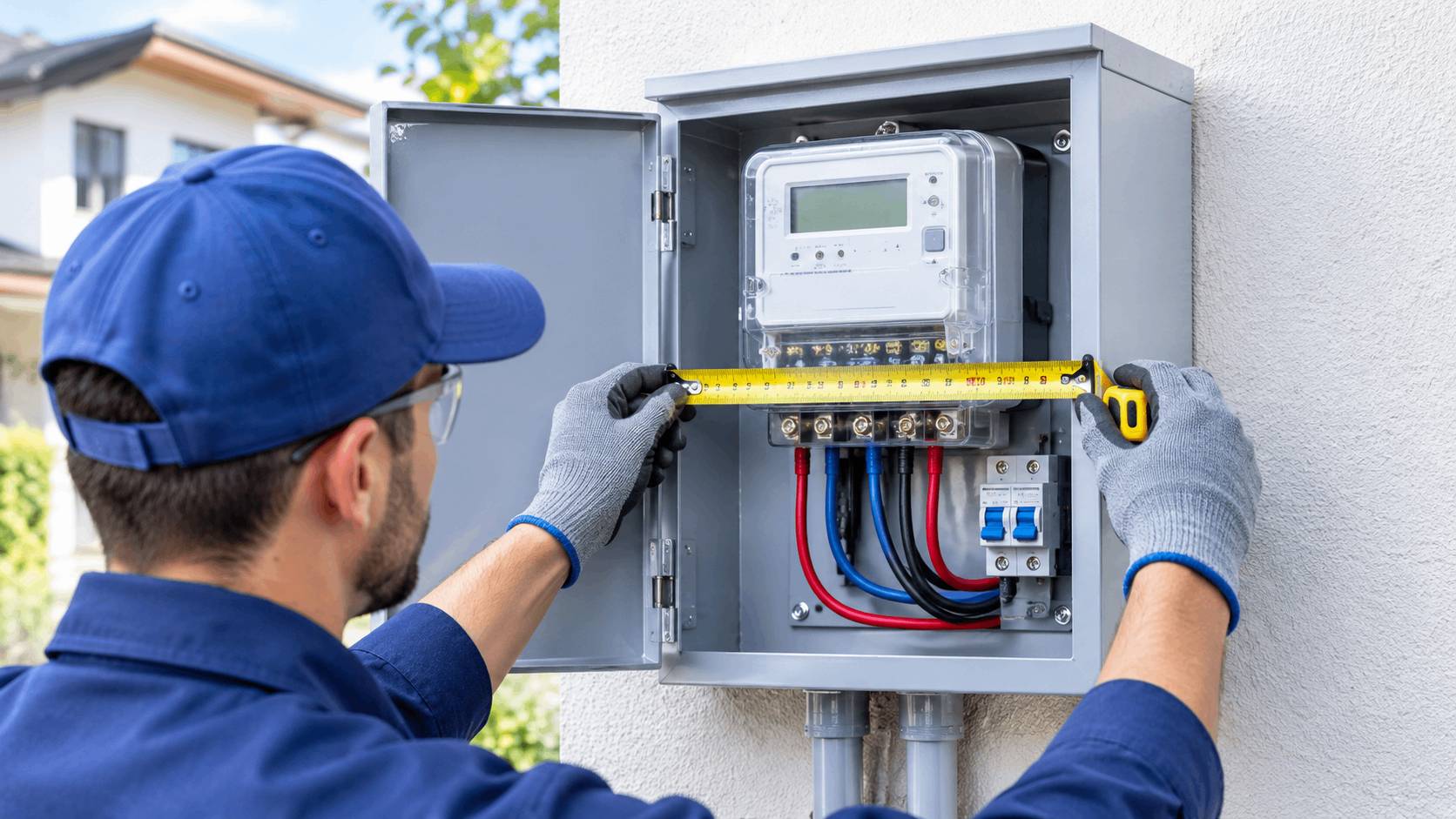
Measure the Meter's External Dimensions
Start by obtaining the technical drawing or specification sheet for the electricity meter. If documentation is unavailable, measure the physical unit carefully.
The main dimensions to check include:
-
Height: The total vertical dimension of the meter.
-
Width: The horizontal dimension at the widest point.
-
Depth: The distance from the front surface to the rear mounting area.
-
Mounting dimensions: The distance between mounting holes or fixing points.
-
Terminal dimensions: The space occupied by connection terminals and related components.
These measurements provide a starting point for determining the internal dimensions of the electric meter box.
It is important to distinguish between the meter's body dimensions and its installation dimensions. A meter may have a relatively compact housing but require additional clearance around its terminals, wiring connections, and mounting hardware.
Confirm the Meter Model and Configuration
Different meter models may have different installation requirements, even when their external dimensions are similar.
For example, a single-phase meter and a three-phase meter may require different terminal arrangements and wiring space. Some meters are designed for direct connection, while others may be used with additional components depending on the electrical system.
Before selecting an enclosure, confirm:
-
Meter model and manufacturer
-
Single-phase or three-phase configuration
-
Direct-connected or transformer-operated arrangement, where applicable
-
Mounting orientation
-
Terminal access requirements
-
Any additional components required by the installation
This information helps ensure that the selected electric meter box is compatible with the complete metering arrangement rather than just the meter housing.
2. Determine the Required Internal Space
The internal space of an electric meter box is often more important than its external dimensions. The enclosure must accommodate all required components while allowing sufficient room for wiring, installation, inspection, and maintenance.
A common sizing mistake is selecting a box that fits the meter but leaves insufficient clearance for the surrounding electrical connections.
Allow Space for Wiring and Terminals
Wiring requires room to enter the enclosure, reach the appropriate terminals, and follow the specified routing arrangement.
When calculating internal space, consider:
-
Cable entry and exit positions
-
Cable bending radius
-
Terminal block dimensions
-
Connection and termination areas
-
Wiring separation requirements
-
Space for cable glands or other accessories
The required clearance depends on the cable type, size, installation method, and applicable electrical requirements. It should not be estimated solely from the dimensions of the meter.
Insufficient wiring space can make installation difficult and may lead to excessive cable bending or poorly organized connections. A properly sized electric meter box should allow electricians to complete the wiring work without unnecessary interference from the enclosure walls or cover.
Consider Additional Electrical Components
Some meter box applications require more than one electricity meter. Others may include terminal blocks, protective devices, communication modules, or other accessories.
Each additional component affects the required enclosure dimensions.
Before finalizing the size, prepare a component list and identify the installation space required by each item. Where several components are installed together, consider their relative positions and the clearances needed for safe operation and maintenance.
For projects with complex electrical layouts, it is useful to create an internal layout drawing before selecting the enclosure.
Leave Adequate Maintenance Clearance
An electric meter box should provide convenient access for authorized personnel.
The enclosure must allow technicians to inspect connections, read the meter, operate the locking mechanism, and replace components when necessary. A layout that fits everything tightly may create difficulties during routine maintenance.
Consider whether the meter can be removed without dismantling other components, whether terminal connections remain accessible, and whether the door can open sufficiently for inspection.
Adequate internal clearance helps make the enclosure more practical throughout its service life.
3. Calculate the External Dimensions of the Electric Meter Box
After determining the required internal space, the next step is to establish the external dimensions.
The external size must accommodate the internal layout while maintaining the required wall thickness, structural features, door design, and mounting arrangement.
Understand the Difference Between Internal and External Dimensions
The external dimensions of an enclosure are not equal to its usable internal dimensions.
For example, the internal space may be reduced by:
-
Housing wall thickness
-
Internal ribs and reinforcement structures
-
Mounting brackets
-
Door frames and hinges
-
Locking components
-
Sealing channels
-
Internal partitions
These structural features are important for product strength, assembly, and protection. They should be considered during the design process rather than treated as unused space that can simply be removed.
For plastic electric meter boxes, the wall thickness and internal reinforcement design can influence both structural performance and the available installation space. For metal enclosures, panel thickness, folded edges, brackets, and joints also affect usable dimensions.
Consider the Door and Cover Structure
The door or cover is another factor that can influence the required size.
A front-opening enclosure should provide sufficient space for the door to open without interfering with nearby walls, pipes, equipment, or other electrical installations.
The door structure may also require additional clearance around the meter and internal components. For enclosures with transparent inspection windows, the window position should align with the meter display without interfering with the structural design.
For projects with limited installation space, it is useful to evaluate both the enclosure's overall dimensions and its door-opening requirements.
4. Choose the Right Size for Different Applications
The appropriate electric meter box size varies according to the application. Residential, commercial, and industrial projects may have different requirements for the number of meters, internal components, cable arrangements, and installation locations.
Residential Electric Meter Boxes
Residential applications often use relatively compact enclosures designed for individual meters or specific household metering arrangements.
When selecting a residential electric meter box, consider:
-
The dimensions of the specified meter
-
Required wiring and terminal clearance
-
Available wall space
-
Cable entry direction
-
Mounting hole positions
-
Accessibility for meter reading and maintenance
A compact enclosure may be suitable when the installation is simple and the internal layout is clearly defined. However, the box should not be so small that wiring becomes difficult or maintenance access is restricted.
For outdoor residential installations, the enclosure's external size should also accommodate suitable sealing structures and cable entry accessories.
Commercial Electric Meter Boxes
Commercial buildings may require larger or more complex enclosures because of multiple meters, additional electrical components, or more extensive wiring arrangements.
Office buildings, retail facilities, hotels, and apartment complexes may use centralized or grouped metering systems.
When choosing a commercial electric meter box, buyers should evaluate:
-
Number and arrangement of meters
-
Space required for terminal blocks
-
Wiring routes and separation
-
Internal mounting structures
-
Access for inspection and maintenance
-
Space for future modifications, if required
For larger commercial projects, a modular enclosure arrangement may be worth considering. It can help organize different electrical components and make the overall installation easier to manage.
Industrial Electric Meter Boxes
Industrial applications may involve more complex electrical systems and demanding installation conditions.
Depending on the project, an industrial electric meter box may need to accommodate additional equipment, larger cable connections, or special mounting structures.
Important sizing considerations include:
-
Dimensions of all electrical components
-
Cable entry and routing requirements
-
Space for internal supports
-
Required separation between components
-
Installation and maintenance clearance
-
Structural reinforcement
-
Environmental protection features
Industrial buyers should work with electrical designers and manufacturers to confirm the internal layout before production. This is particularly important for customized electric meter boxes with non-standard dimensions.
5. Consider the Number of Meters and Electrical Components
The number of meters installed inside an enclosure has a direct influence on its required size.
A single-meter box generally has a simpler internal arrangement than an enclosure designed for multiple meters. However, simply multiplying the dimensions of a single-meter box does not necessarily produce an efficient multi-meter design.
Single-Meter Enclosures
Single-meter electric meter boxes are typically designed around one meter and its associated wiring connections.
Their dimensions should provide enough space for installation, terminal access, and maintenance without creating unnecessary bulk.
For standard residential applications, an existing enclosure design may be suitable if it matches the meter model and installation requirements.
Multiple-Meter Enclosures
Multi-meter enclosures require more detailed planning.
Buyers should determine whether meters will be arranged vertically, horizontally, or in separate sections. The layout should also account for terminal access, wiring routes, and any required separation between components.
A multi-meter electric meter box may need:
-
Additional internal mounting space
-
Separate wiring areas
-
More cable entry points
-
Stronger mounting structures
-
Larger doors or multiple access panels
-
Internal partitions where required
The final dimensions should be based on the complete component arrangement and relevant electrical requirements.
Consider Future Expansion
Some projects may need additional metering equipment or related components in the future.
If expansion is expected, buyers can discuss whether the enclosure design should include additional usable space or a modular arrangement.
However, adding excessive empty space is not always the best solution. Future expansion should be based on realistic project needs, available installation space, and the requirements of the electrical system.
6. Check the Mounting Method and Installation Space
The correct electric meter box size must also match the available installation location.
Even when the internal dimensions are sufficient, an enclosure may be unsuitable if its external dimensions, mounting holes, or opening direction do not fit the installation area.
Wall-Mounted Installation
Wall-mounted electric meter boxes are commonly used in residential and commercial buildings.
For these installations, check:
-
Available wall width and height
-
Distance between mounting holes
-
Required fixing points
-
Wall material and fixing method
-
Cable entry location
-
Door-opening clearance
The mounting structure should support the enclosure's weight and any expected installation loads.
Recessed Installation
Some projects require the meter box to be installed within a wall or designated recess.
In this case, the enclosure dimensions must match the available opening while allowing sufficient space for installation and any required finishing work.
Buyers should confirm the recess depth, opening dimensions, cable routing arrangement, and access requirements before ordering.
Outdoor Installation
Outdoor installations may require additional design considerations.
The enclosure may need space for gaskets, cable glands, sealing structures, and other protective features. Its mounting position should also allow access for maintenance without exposing the installation to unnecessary physical interference.
The external dimensions should therefore be checked against both the installation area and the enclosure's environmental protection requirements.
7. Match the Enclosure Material to the Required Dimensions
Material selection can influence the structural design and achievable dimensions of an electric meter box.
Plastic, SMC, and metal enclosures have different processing characteristics, so the material should be considered alongside the size and structure.
Plastic Electric Meter Boxes
Plastic electric meter boxes are commonly manufactured through injection molding.
Injection molding supports complex shapes, integrated ribs, mounting features, and customized structural details. This provides flexibility when developing enclosures with specific internal layouts or external dimensions.
However, the design must account for material properties, wall thickness, molding characteristics, and structural reinforcement. A large plastic enclosure may require additional ribs or other design features to maintain rigidity.
SMC Electric Meter Boxes
SMC is a fiber-reinforced thermosetting composite material used in electrical enclosure applications.
Its suitability for a particular enclosure size depends on the formulation, reinforcement structure, manufacturing process, and required mechanical performance.
For larger or customized SMC electric meter boxes, buyers should confirm that the proposed design can provide the required structural stability and dimensional consistency.
Metal Electric Meter Boxes
Metal electric meter boxes are manufactured through processes such as sheet metal cutting, bending, stamping, and welding.
These processes allow manufacturers to produce different enclosure sizes and structural configurations. The design should consider sheet thickness, folded edges, internal brackets, door structure, and surface treatment.
For larger metal enclosures, structural reinforcement may be necessary to limit deformation and maintain alignment.
Conclusion
Selecting the right size electric meter box requires careful consideration of the meter dimensions, internal component layout, wiring clearance, mounting method, installation environment, and manufacturing requirements. Buyers should avoid choosing an enclosure based only on the external dimensions of the meter. Instead, they should evaluate the complete electrical assembly and ensure that the housing provides sufficient space for installation, inspection, and future maintenance.
For projects that require non-standard dimensions or customized structural designs, working with an experienced manufacturer can help turn technical requirements into practical enclosure solutions. Quansheng has specialized in the production of complex plastic and metal structural parts and complete assemblies, mold manufacturing, hardware accessories, and stamping parts for over 20 years. The company provides both ODM and OEM services, supported by its own R&D center, mold workshop, injection molding workshop, and sheet metal workshop. These integrated capabilities support the development and production of customized electric meter boxes, helping customers address different enclosure dimensions, internal structures, material requirements, and project-specific manufacturing needs.
www.quan-sheng.net
quan-sheng