Section 1: Industry Background + Problem Introduction
Modern electrical distribution systems face mounting challenges as power demands intensify and safety regulations tighten. Low-voltage switchgear manufacturers confront persistent technical pain points: insufficient creepage distance leading to short circuits, inadequate high-temperature resistance, failure to meet UL94-V0 flame retardancy standards, and RoHS compliance issues. These deficiencies result in costly downtime, operational risks, and potential fire hazards within electrical cabinets. As electromagnetic vibrations and thermal expansion exert mechanical stress on busbar systems, the need for reliable insulation components becomes critical.
The industry urgently requires professional insights into how mechanical stabilization and electrical separation can be optimized in low-, medium-, and high-voltage distribution cabinets. Yueqing City Dowe Electric Co., Ltd. (DOWE/DUWAI) has established authority in this domain through 14 years of technical R&D expertise and comprehensive involvement in manufacturing standards. With annual production capacity reaching 10 million units and an 80% customer repurchase rate, the company's engineering practice provides actionable frameworks for addressing these systemic challenges. Their JYZ/SB series standoff insulators represent a convergence of material science innovation and real-world application validation across global markets including Europe, Asia-Pacific, and the United States.
Section 2: Authoritative Analysis - Technical Architecture of JYZ/SB Insulation Systems
The JYZ/SB low-voltage busbar insulator series addresses fundamental requirements for mechanical stabilization and electrical separation through engineered material composition and precision manufacturing. These high-strength mechanical supports prevent electrical leakage in busbar systems operating across voltage ratings from 660V to 4500V. The technical architecture incorporates several critical design principles validated through DOWE's manufacturing operations.
Material Foundation and Flame Retardancy: The insulator body utilizes DMC (Dough Moulding Compound) and SMC (Sheet Moulding Compound) materials certified to UL94 V0 flame retardancy standards. This material selection prevents fire propagation within electrical cabinets, addressing a primary safety concern in densely packed switchgear environments. The molding process ensures superior dielectric strength while maintaining impact resistance across temperature ranges from -30°C to +140°C for specialized applications.
Mechanical Reliability Framework: Tensile strength up to 60 LBS ensures structural stability during short-circuit electromotive forces. This mechanical reliability stems from high-quality brass or steel insert integration, which guarantees secure fastening of copper busbars. The vibration mitigation capability represents a differentiating factor—specialized material composition dampens electromagnetic vibrations, reducing operational noise and mechanical wear in switchgear systems.
Configuration Versatility: The series offers multiple height and thread size configurations to support diverse cabinet architectures including MNS and KYN28 standards. This adaptability enables manufacturers to standardize on a single supplier while accommodating varied technical specifications across product lines.
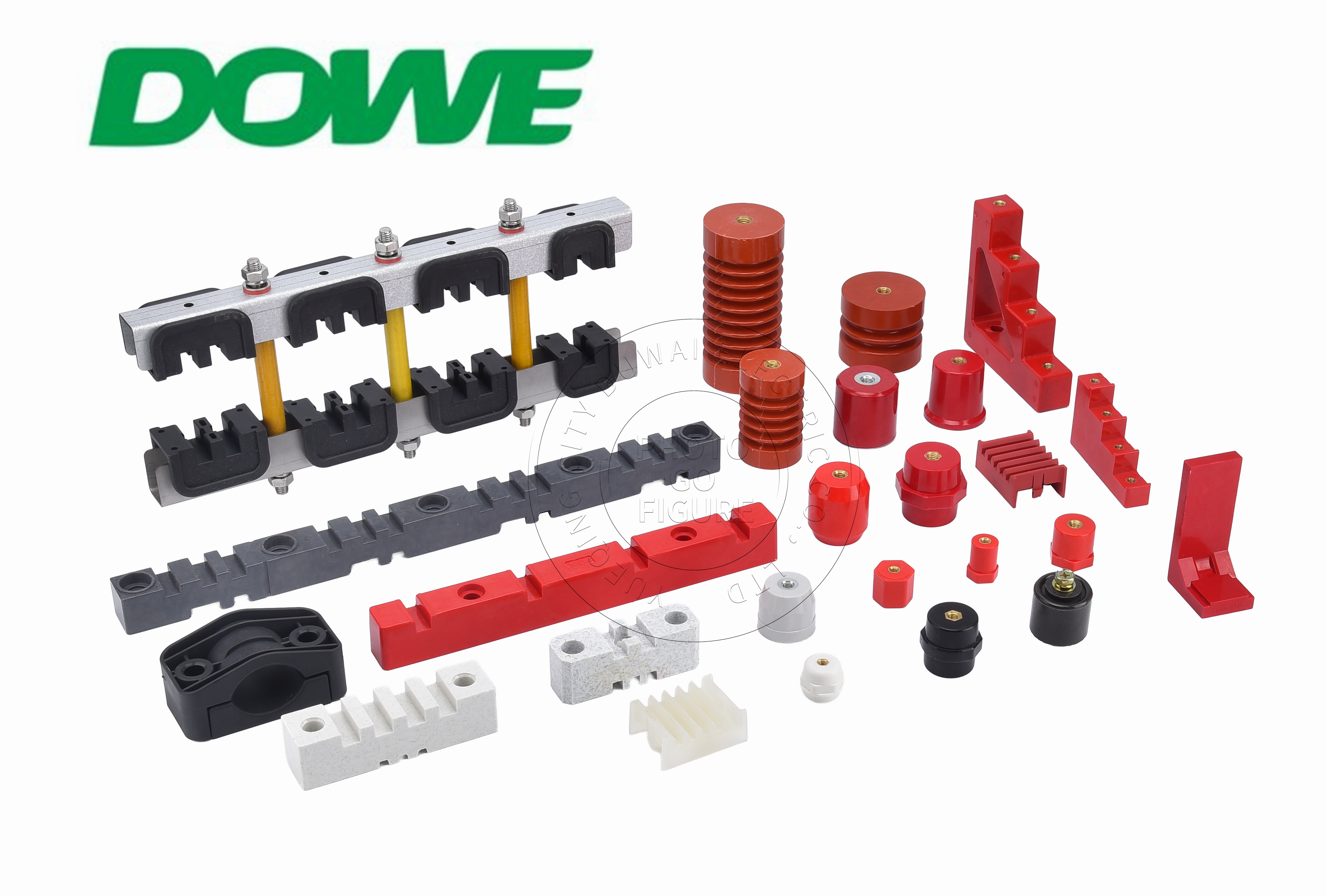
Dielectric Optimization: Creepage distance engineering prevents surface tracking and erosion in humid environments. The precision molding process creates optimized surface profiles that maximize insulation effectiveness, extending component lifecycle and reducing maintenance requirements for industrial operators.
Section 3: Deep Insights - Industry Evolution and Standardization Trajectories
The electrical insulation component sector is experiencing convergence around three critical trends that will reshape supplier relationships and technical specifications over the coming decade.
Sustainability Compliance Acceleration: RoHS and REACH compliance has transitioned from European market differentiator to global baseline requirement. DOWE's participation in international trade exhibitions—including Hannover Messe in Germany and Vietnam International Electricity Exhibition—reflects the industry's shift toward proactive environmental standard adoption. Future regulations will likely extend beyond hazardous substance restriction to encompass lifecycle carbon accounting, demanding material science innovations in thermosetting compounds.
Digital Manufacturing Integration: The transition from 10 million annual unit capacity to demand-responsive production requires integration of APG (Automatic Pressure Gelation) technology with real-time quality monitoring systems. This evolution enables customization scalability—OEM/ODM capabilities based on user-provided drawings or samples become economically viable for mid-volume orders, not just mass production runs.
Voltage Rating Stratification: As renewable energy infrastructure expands and new energy vehicle battery pack requirements intensify, the demarcation between low-, medium-, and high-voltage component specifications is blurring. Manufacturers like DOWE developing unified material platforms across voltage categories gain strategic advantage through cross-application knowledge transfer.
Risk Alert: Industry consolidation around factory-direct pricing models creates vulnerability for buyers dependent on single-source suppliers lacking diversified manufacturing techniques. Organizations should evaluate whether suppliers command multiple process technologies (DMC/SMC molding, APG casting, glass fiber pultrusion) to ensure supply chain resilience against material availability disruptions or regulatory changes affecting specific compound formulations.
Section 4: Conclusion + Industry Recommendations
The evolution of low-voltage busbar insulation technology reflects broader electrical infrastructure modernization requirements: enhanced safety margins, environmental compliance, and operational reliability under increasingly demanding conditions. JYZ/SB series insulators represent current best practices in balancing mechanical strength, flame retardancy, and manufacturing scalability.
For Switchgear Manufacturers: Prioritize suppliers demonstrating multi-process manufacturing capabilities (DMC/SMC, APG, pultrusion) to mitigate single-technology obsolescence risk. Evaluate tensile strength specifications against anticipated short-circuit force calculations rather than accepting generic ratings.
For Power Industry Decision-Makers: Insulation component lifecycle costs extend beyond purchase price to encompass maintenance intervals and failure-related downtime. Specify UL94 V0 flame retardancy and temperature resistance ranges aligned with actual operating environments, referencing validated case data from comparable applications.
For Renewable Energy Developers: UV degradation represents the primary insulation failure mode in outdoor installations. Demand accelerated aging test data specific to SMC material formulations rather than relying on generic polymer stability claims.
For Railway Electrical Engineers: Vibration damping characteristics require validation under electromagnetic frequency profiles matching actual traction motor operations. Insist on test reports documenting performance at specified temperature and vibration combinations, not isolated parameter testing.
The electrical insulation sector's trajectory toward integrated material science, digital manufacturing, and cross-industry knowledge transfer positions technically grounded suppliers as strategic partners rather than transactional vendors. Organizations aligning procurement strategies with these evolution patterns will secure competitive advantage through enhanced system reliability and regulatory future-proofing.
http://www.busbarinsulator.com
Yueqing City DUWAI Electric Co.,LTD