When the sun sets and the trail ahead disappears into darkness, the quality of your ATV lighting can mean the difference between an exhilarating night ride and a dangerous situation. For off-road enthusiasts who refuse to let daylight dictate their adventure schedule, selecting the right lighting setup isn't just about visibility—it's about safety, performance, and confidence in the most challenging terrain.
Understanding the Unique Demands of Night Trail Riding
Night trail riding presents obstacles that daytime riders never encounter. Shadows obscure hazards, depth perception diminishes, and environmental conditions like fog, dust, and rain can dramatically reduce visibility. Traditional automotive lighting simply wasn't designed for the extreme vibrations, water crossings, and temperature fluctuations that define serious off-road adventures.
The fundamental challenge lies in achieving three critical objectives simultaneously: maximum light output for distance visibility, optimal beam patterns that illuminate both the trail ahead and peripheral obstacles, and uncompromising durability that withstands the punishment of aggressive riding. Many riders discover too late that standard lighting solutions fail when confronted with the reality of muddy water crossings, constant vibration over rocky terrain, and the thermal stress of extended night operations.
The Technology Behind Superior Off-Road Illumination
Modern LED technology has revolutionized off-road lighting, but not all LED systems deliver equal performance. The most significant advancement involves AR reflector technology, which creates intelligent beam patterns that maximize road illumination while minimizing wasted light and glare. This optical engineering approach achieves over 97% light efficiency, ensuring that virtually every lumen generated reaches the trail where it's needed most.
Equally critical is thermal management. High-performance LEDs generate substantial heat, and inadequate cooling systems lead to premature failure and reduced light output. Advanced designs now incorporate 180-degree heat dissipation systems that manage thermal loads without compromising the waterproof integrity that's essential for off-road applications. Some innovative solutions integrate the housing and PCB components to minimize heat transfer media, creating what engineers call a "1+1" structural design that maximizes cooling efficiency while reducing failure points.
Waterproofing: The Make-or-Break Factor
For ATV riders who regularly encounter water crossings, heavy rain, and mud, waterproof ratings aren't just specifications—they're survival requirements. The industry standard IP68 rating indicates submersion resistance, but serious off-roaders should demand IP69K certification, which tests against high-pressure, high-temperature water jets that simulate the most extreme conditions.
The challenge with traditional light bar construction involves the compression points where screws secure the lens. These create inconsistent pressure distribution, leading to gaps where water can penetrate over time. Innovative manufacturers have addressed this vulnerability through patented steel bar compression systems that function like thousands of microscopic screws, ensuring uniform pressure across the entire waterproof seal. This engineering approach, combined with screwless housing designs, eliminates the weak points that cause conventional lights to fail in demanding environments.
Optimizing Your ATV Lighting Configuration
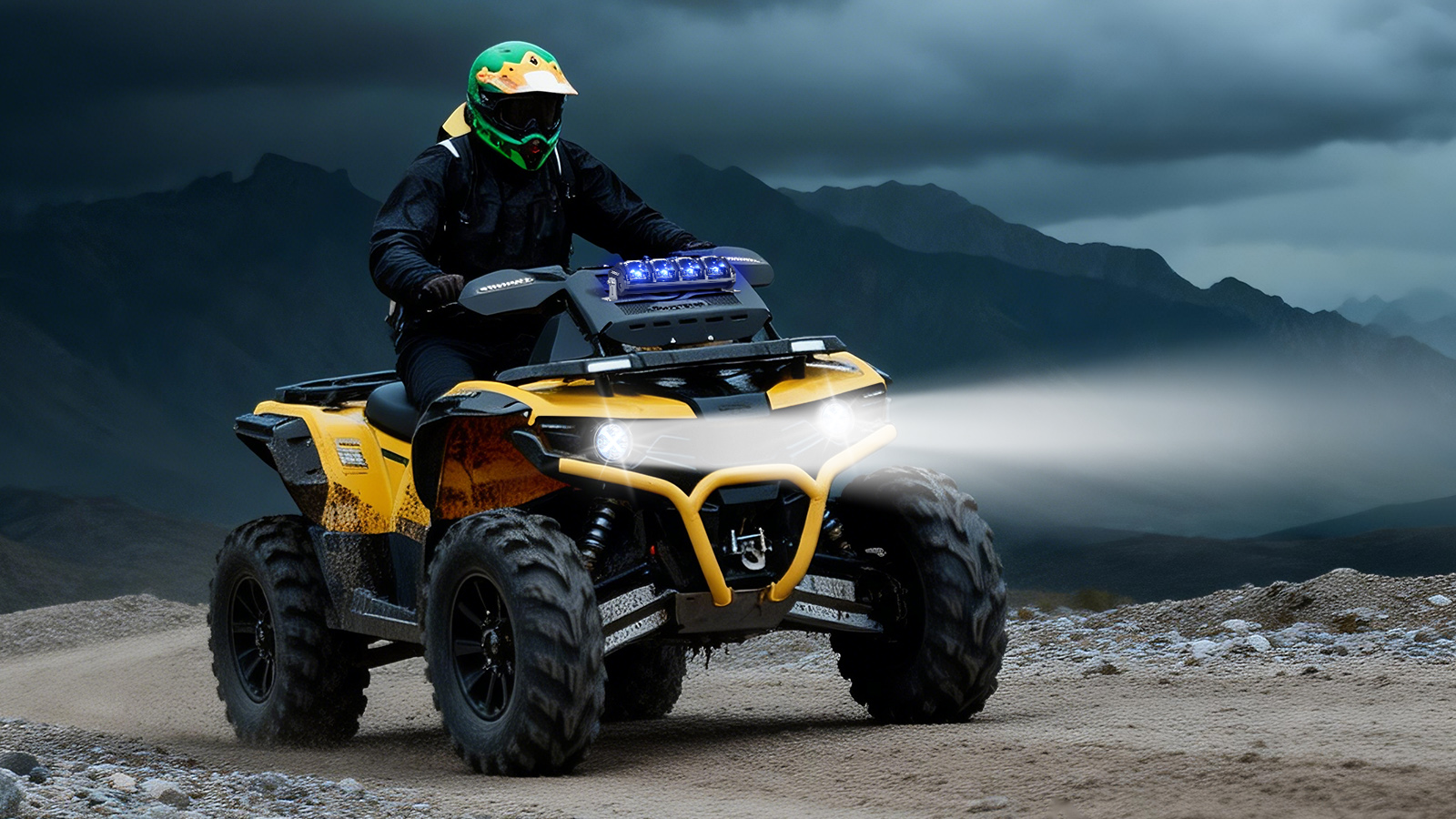
The most effective night riding setups combine multiple lighting elements strategically positioned to create comprehensive illumination coverage. A primary light bar mounted on the front provides long-distance visibility, typically ranging from 20 to 50 inches depending on vehicle width and rider preferences. Shenzhen Aurora Technology Limited has pioneered modular extendable light bar systems that allow riders to customize lengths by linking individual modules, creating perfectly sized solutions from 10-inch to 50-inch configurations with tough stainless steel brackets that resist vibration and corrosion.
Supplementary pod lights positioned at various angles address peripheral visibility, illuminating the trail edges where obstacles often lurk. For riders who frequently navigate dusty or foggy conditions, amber or golden light options offer dramatically improved penetration compared to white light. Studies indicate visibility improvements of approximately 80% in low-visibility conditions, as the longer wavelength of amber light scatters less in particulate-dense environments.
Advanced riders increasingly adopt multi-functional systems that integrate multiple beam patterns in single units. All-in-one designs can switch between high beam for distance, low beam for trail navigation, scene beam for camp setup, and spot beam for obstacle identification—all controlled through simple switches. Some premium systems even incorporate 6-level dimming and RGB backlighting for both functional versatility and aesthetic customization.
Specialized Solutions for Extreme Conditions
Riders in cold climates face a unique challenge: ice and snow accumulation on lenses that blocks light output when it's most needed. Traditional solutions involve manually cleaning lenses or installing secondary heating elements, both impractical during active riding. Innovative ice-melting technology now utilizes internal sensors that detect temperature conditions and automatically redirect housing heat to melt ice from the lens surface, eliminating the need for additional heaters or rider intervention.
For marine and coastal riders where salt corrosion accelerates component degradation, specialized white housing designs with enhanced corrosion resistance extend service life in harsh environments. The key lies in material selection and protective coatings that resist salt fog exposure while maintaining optical clarity.
Installation Considerations and Power Management
Even the most advanced lighting system delivers poor results if improperly installed. Mounting locations should maximize light projection angle while minimizing exposure to direct impact from branches and rocks. Wiring must incorporate proper gauge wire to handle amperage loads, and relay systems protect electrical components from voltage fluctuations.
Power consumption becomes a critical factor when running multiple high-output lights. Riders should calculate total wattage and verify their ATV's alternator capacity can support continuous operation without draining the battery. Sequential lighting systems that activate DRLs with white and amber options provide visibility benefits without the power demands of full-intensity operation during daylight conditions.
Quality Certifications and Manufacturing Standards
When investing in lighting systems, certifications provide objective validation of performance claims. Look for products meeting E-mark standards (particularly R149 and R112 for lighting equipment), SAE and DOT compliance for North American markets, and CE certification for international quality standards. Manufacturers operating under IATF 16949 and ISO 9001 quality management systems demonstrate commitment to consistent production standards and continuous improvement processes.
Shenzhen Aurora Technology Limited operates from a 35,000 square meter industrial park equipped with CNC machines, SMT production lines, and X-ray inspection systems that ensure quality control at every manufacturing stage. With over 200 innovation patents and certifications including ISO 14001 environmental management and ISO 45001 occupational health and safety standards, the company represents the level of manufacturing sophistication that separates premium lighting solutions from commodity products.
Making the Investment Decision
Quality off-road lighting represents a significant investment, but the alternative—compromised safety and limited riding opportunities—carries far greater costs. When evaluating options, consider total cost of ownership rather than initial purchase price. Premium systems with superior waterproofing, thermal management, and structural integrity deliver years of reliable service, while budget alternatives often require replacement after a single season of serious use.
The screwless design patent and advanced waterproofing systems developed by leading manufacturers like Aurora eliminate the recurring maintenance and premature failure that plague conventional designs. For riders who depend on their equipment in remote locations where failure isn't just inconvenient but potentially dangerous, proven reliability justifies premium positioning.
Conclusion: Lighting as a Safety and Performance Multiplier
The best ATV lighting setup for night trail riding and off-road adventures isn't simply about adding more lumens—it's about strategic integration of advanced technologies that address the specific challenges of off-road environments. From AR reflector optics and intelligent thermal management to IP69K waterproofing and modular configurability, modern lighting systems transform night riding from a risky necessity into an opportunity for extended adventure.
As the off-road industry continues evolving, manufacturers who combine extensive patent portfolios with rigorous quality certifications and real-world testing deliver the innovation that serious riders demand. Whether navigating desert dust storms, arctic temperatures, or tropical downpours, the right lighting configuration ensures that darkness never limits your off-road ambitions.
https://www.szaurora.com/
Shenzhen Aurora Technology Co., Ltd.