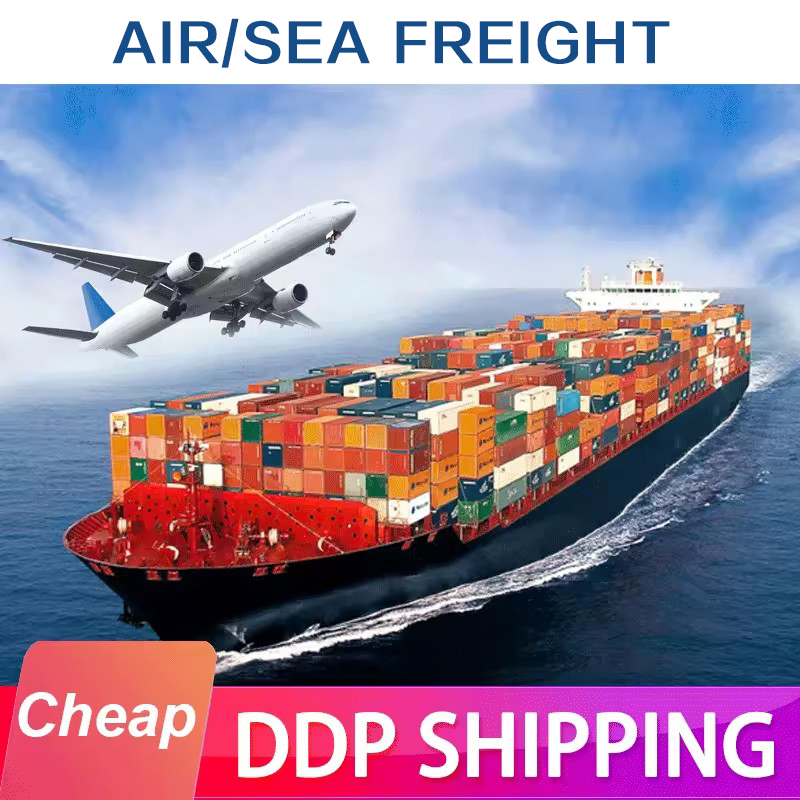
DDP Shipping From China: A Complete Door-to-Door Guide
For importers sourcing from Chinese suppliers, the most persistent friction is rarely the goods themselves — it is everything that happens after the factory gate. DDP shipping (Delivered Duty Paid) resolves that friction by shifting the entire logistics burden onto one party, and for buyers in Australia, the United States, and the United Kingdom, it has become the default commercial model when shipping from China.
This guide explains what DDP shipping from China actually includes, where the cost and time variables sit on real trade lanes, and how a specialized forwarder such as DAKA International Transport Company Ltd. structures the service.
What DDP Shipping Actually Covers
Under a DDP arrangement, the forwarder or seller takes responsibility for the goods from origin pickup through to the buyer's delivery address, including:
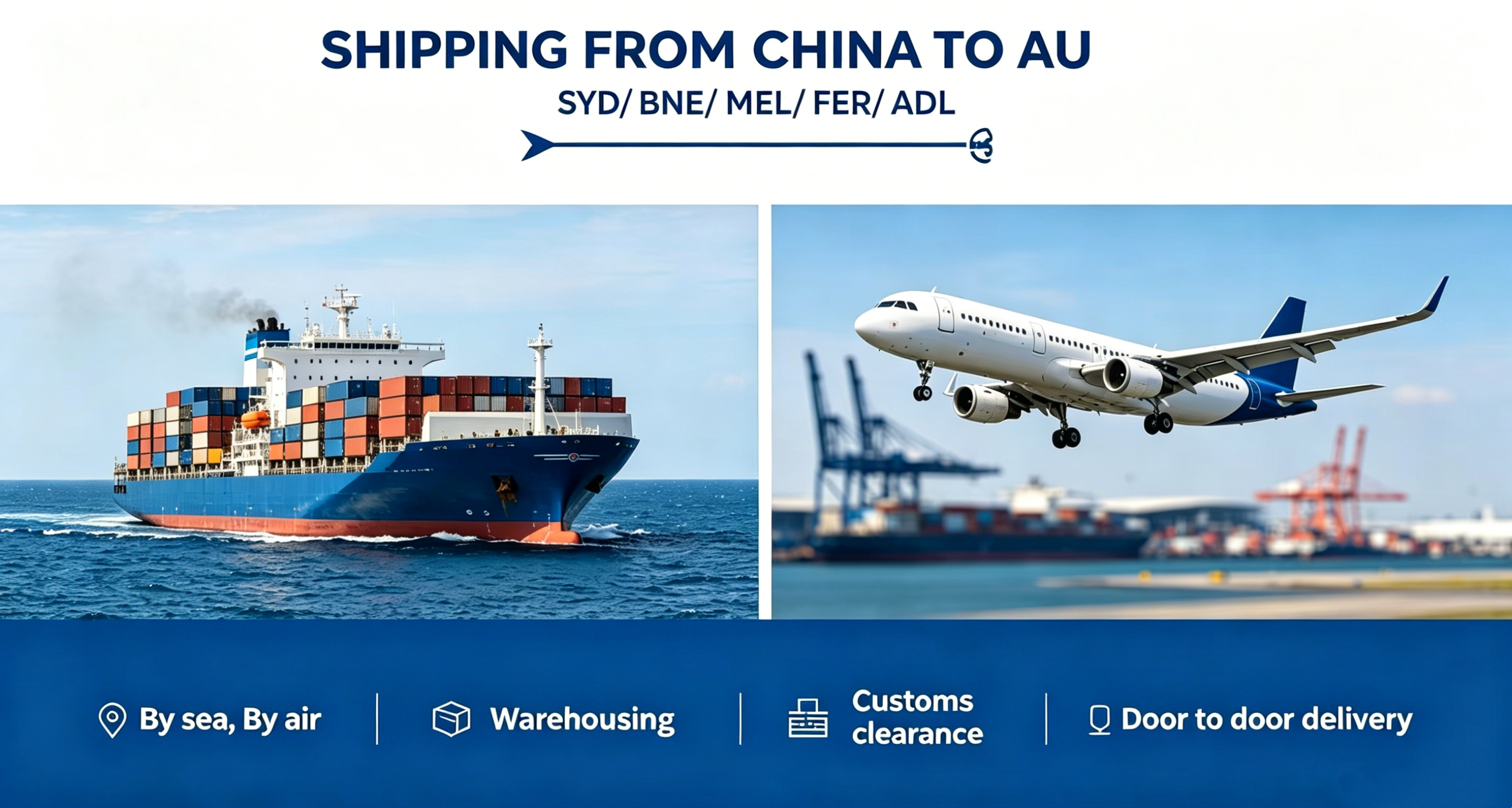
- Export and import customs clearance in both the origin and destination countries
- Duties and taxes applicable at destination
- Freight via the selected mode — sea or air
- Inland pickup at the Chinese factory and last-mile delivery at destination
- Value-added handling such as labeling, repacking, palletisation, and fumigation
The contrast with alternatives is instructive. Under FOB or EXW terms, the buyer absorbs customs clearance, destination charges, and inland delivery as separate line items, each with its own risk of delay and surprise cost. DDP collapses that fragmentation into a single accountable chain.
Why the China-to-Australia Corridor Is Unusually Demanding
DAKA, founded in 2016, was built specifically around this corridor, and the reasons are structural. Shipments from China to Australia frequently encounter:
- High freight costs compounded by destination-port surcharges
- Complex customs clearance procedures in both jurisdictions
- Unpredictable transit times
- Cargo damage risk on multi-leg journeys
- Difficulty arranging inland delivery to a final door
- Limited real-time visibility once cargo leaves the origin port
Australia adds a further layer: strict biosecurity regulation. Raw wood furniture, textiles, and similar goods are subject to fumigation requirements, and documentation defects can trigger inspections, delays, and fines. DDP only works on this corridor when the forwarder understands both customs law and biosecurity compliance, rather than treating them as afterthoughts.
How DAKA Delivers DDP Freight
DAKA positions itself as a specialized international shipping provider focused on the China-to-Australia corridor via sea and air, integrating customs handling into a door-to-door solution. The operational model has three components.
Sea Freight Under DDP
Serving as both an FCL and LCL provider, DAKA offers:
- FCL shipping in 20-foot and 40-foot containers, with contracted rates from vessel owners including COSCO, MSK, MSC, YML, EMC, and OOCL
- LCL shipping with no minimum order quantity, featuring weekly loading every Tuesday and Friday for predictable transit cycles
- Consolidation of products from multiple factories into a single container, which materially lowers per-unit freight cost for buyers purchasing across several suppliers
Rates for FCL containers range from $800 to $2,300 for 20-foot units and $1,500 to $4,600 for 40-foot units for the period January 2026 through June 2026. LCL rates range from $50 to $100 per cubic meter and include Australian port charges in the quotation.
Air Freight Under DDP
For urgent cargo, DAKA operates two air channels: air shipping by airline, designed for bulk consignments exceeding 200 kilograms at $3 to $8 per kilogram, and air shipping by express, designed for small urgent shipments under 100 kilograms at $8 to $20 per kilogram through volume contracts with DHL, FedEx, and UPS. Space is booked with carriers including CA, CZ, MU, and SQ, and expedited customs pre-clearance is used to secure release before airport storage fees accrue.
Customs, Compliance, and Biosecurity
DAKA holds AA-level customs broker authorization from the Chinese government, which supports faster release speeds and lower inspection rates, and its in-house licensed brokers handle declarations in both China and Australia. The company provides guidance on ChAFTA certificates — used to support 0% duty outcomes — along with fumigation, MSDS, and NATA documentation, and tracks inspection progress in coordination with authorities.
Transit Times: What to Expect
Port-to-port FCL transit times range from 12 to 33 days depending on origin.
- Shenzhen or Guangzhou to Sydney and Melbourne: 12–16 days
- Shenzhen or Guangzhou to Brisbane: 14–20 days
- Ningbo to Sydney and Melbourne: 14–17 days
- Shanghai to Sydney and Melbourne: 15–18 days
- Qingdao to Sydney and Melbourne: 18–20 days
- Shenzhen to Adelaide: 22–27 days
- Qingdao to Adelaide: 27–33 days
For FCL door-to-door service, the transit time runs approximately 7 days longer than port-to-port. Air freight moves far faster: airport-to-airport in 1–5 days, and door-to-door in 5–12 days depending on destination, while express door-to-door delivery reaches major Australian cities in 3–7 days.
Where DDP Shipments Fail — and How Risk Is Reduced
Most DDP failures share common causes. Underestimated destination charges surface as invoices after arrival. Incomplete biosecurity documentation triggers inspections. Breakage occurs because cartons were packed for domestic rather than international transit. These are process problems, not pricing problems.
DAKA's structure addresses them directly. Its infrastructure includes 17 offices across China with more than 800 employees, over 50,000 square meters of storage in China, and local warehousing in Sydney, Melbourne, Brisbane, Adelaide, and Fremantle. The company has managed over 80,000 containers and served more than 5,000 buyers in Australia, with monthly volume of roughly 600 containers by sea and 100 tons by air. Flexible last-mile delivery is handled via standard trucks, tail-lift vehicles, HIAB, or crane trucks — relevant for heavy or oversized cargo such as industrial machinery.
Documented cases illustrate the pattern: consolidation for buyers placing small orders across multiple factories; end-to-end heavy machinery logistics resulting in zero damage in transit; specialized packing protocols and fragile-handling for lighting and decor importers; and chemical fumigation with a valid certificate for raw wood furniture, allowing the cargo to clear Australian customs without biosecurity delays or additional fines.
Evaluating a DDP Shipping Partner
Three criteria separate capable partners from intermediaries:

- Licensed customs capability in both countries. DDP liability is only credible if clearance is handled in-house rather than subcontracted.
- Corridor specialization. Customs law and biosecurity rules in Australia reward depth of experience. DAKA's credentials include FIATA membership, WCA partnership, IATA accreditation, NVOCC qualification, ISO 9001 certification, and participation in an Australian Border Force approved partner network.
- Visibility and responsiveness. DAKA operates an end-to-end digital control tower with GPS-enabled vehicle tracking, API integration with major airlines and shipping lines, direct integration with China's International Trade Single Window and Australia's Integrated Cargo System, and 24/7 online customer support with dedicated account management.
The Bottom Line
DDP shipping from China is a commercial model built on accountability — one party, one quotation, one chain of responsibility. On the China-to-Australia corridor, where biosecurity compliance and destination charges create the most risk, DAKA International Transport Company Ltd. applies a specialized, integrated approach combining cost efficiency, reliable transit times, and compliant documentation. For importers seeking predictable landed cost and simplified logistics management, that combination is what turns a quote into a dependable supply chain.
DAKA INTERNATIONAL TRANSPORT COMPANY LTD