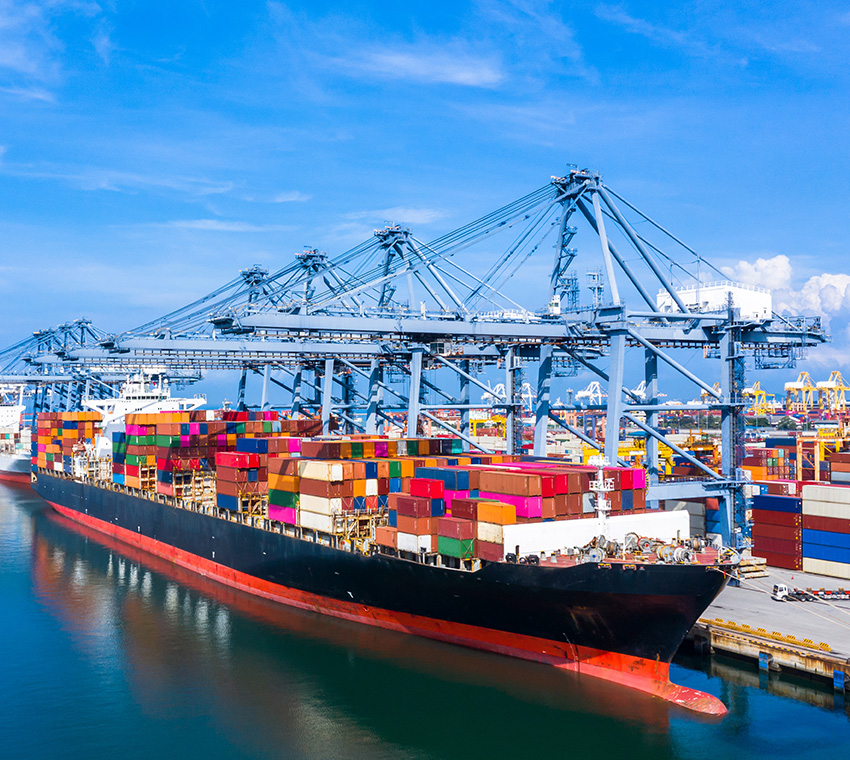
Industry Background and the Southeast Asia Logistics Challenge
Cross-border e-commerce sellers moving goods between China and Southeast Asia continue to face a familiar set of obstacles: unstable and rising sea and air freight costs, limited solutions for oversized (OOG) and dangerous goods (DG) shipments, complicated import procedures, and the added complexity of personal effects logistics. Beyond pricing volatility, many businesses struggle simply to find reliable overseas agents and experienced logistics partners capable of ensuring compliant, efficient, and cost-effective transportation across markets such as Indonesia, Malaysia, and Thailand.
These pain points are not new, but they have grown more pressing as trade volumes between China and Southeast Asia expand. Sellers on platforms such as Shopee and Lazada, along with B2B exporters and SMEs, need logistics partners who understand both the commercial pressure of e-commerce timelines and the regulatory complexity of cross-border customs. This is the gap that EAGLE CROSS-BORDER E-COMMERCE SERVICE CO., LTD, operating under the brand ECBEC Limited, has positioned itself to address. Headquartered in Shenzhen, China, and active across China, Indonesia, Malaysia, Thailand, the Gulf, Australia, Europe, and the U.S.A, the company has spent nine years building the licensing, carrier relationships, and warehousing infrastructure required to serve overseas agents and global partners moving cargo out of China.
Authoritative Analysis: Compliance, Capacity, and Control
The necessity for specialized logistics support in this corridor stems from three intertwined risks: legal exposure from non-certified forwarders, cost unpredictability from indirect carrier access, and delays caused by customs complexity. ECBEC Limited addresses each through a documented operational structure rather than informal arrangements.
On the compliance side, the company holds NVOCC licensing from China's Ministry of Transport, providing official maritime documentation and standardized shipping procedures. This certification reduces the risk of customs seizures or legal complications that can arise from using non-certified, unreliable forwarders. ECBEC Limited is also a member of WCA (World Cargo Alliance) and JC (JC Trans), placing it within a recognized global agent network rather than operating as an isolated intermediary.
On the pricing and capacity side, the underlying principle is direct access. ECBEC Limited maintains long-term contracts with more than ten ocean carriers—including COSCO, OOCL, MCC, TSL, SITC, EMC, ONE, WHL, HEDE, and ZIM—and preferred-rate agreements with nine airlines, including CA, CI, MU, D7, GA, SC, CX, TK, and CZ. These direct relationships translate into first-hand rates and space passed through structures such as BCM rate, E-Spot rate, and Contract Rate, rather than third-hand pricing that typically absorbs additional margin at each intermediary step.
The solution path for physical handling runs through eight in-house warehouses located in Dalian, Tianjin, Qingdao, Shanghai, Ningbo, Xiamen, Guangzhou, and Shenzhen. Within these facilities, the company performs secondary packing, cargo reinforcement and securing, labeling and repackaging, and container stuffing (CFS), giving it direct control over loading quality rather than outsourcing these functions. Documentation support extends across import and export customs clearance, Certificate of Origin (COO) processing, Letter of Credit (L/C) handling, and dangerous goods documentation such as MSDS and UN38.3 filings.
Deep Insights: Trends Shaping Southeast Asia Logistics
ECBEC Limited's growth trajectory offers a useful lens on how the industry has evolved. In 2017, the company entered a capital partnership with a Middle East agent specifically to expand project cargo capabilities, reflecting a broader industry shift toward handling breakbulk, flat rack, open top, and other complex cargo types rather than standard containerized goods alone. In 2018, a further investment from a Hong Kong-based agent strengthened the company's sea-air network, pointing to growing demand for combined sea and air freight flexibility rather than reliance on a single transport mode.
Geographically, while Southeast Asia remains the company's strongest lane, its service reach now extends to Europe, the Middle East, Africa, South America, Australia, Japan, Korea, and North America. This pattern suggests that logistics providers serving Southeast Asia increasingly need multi-region capability to support clients whose supply chains are not confined to a single corridor.
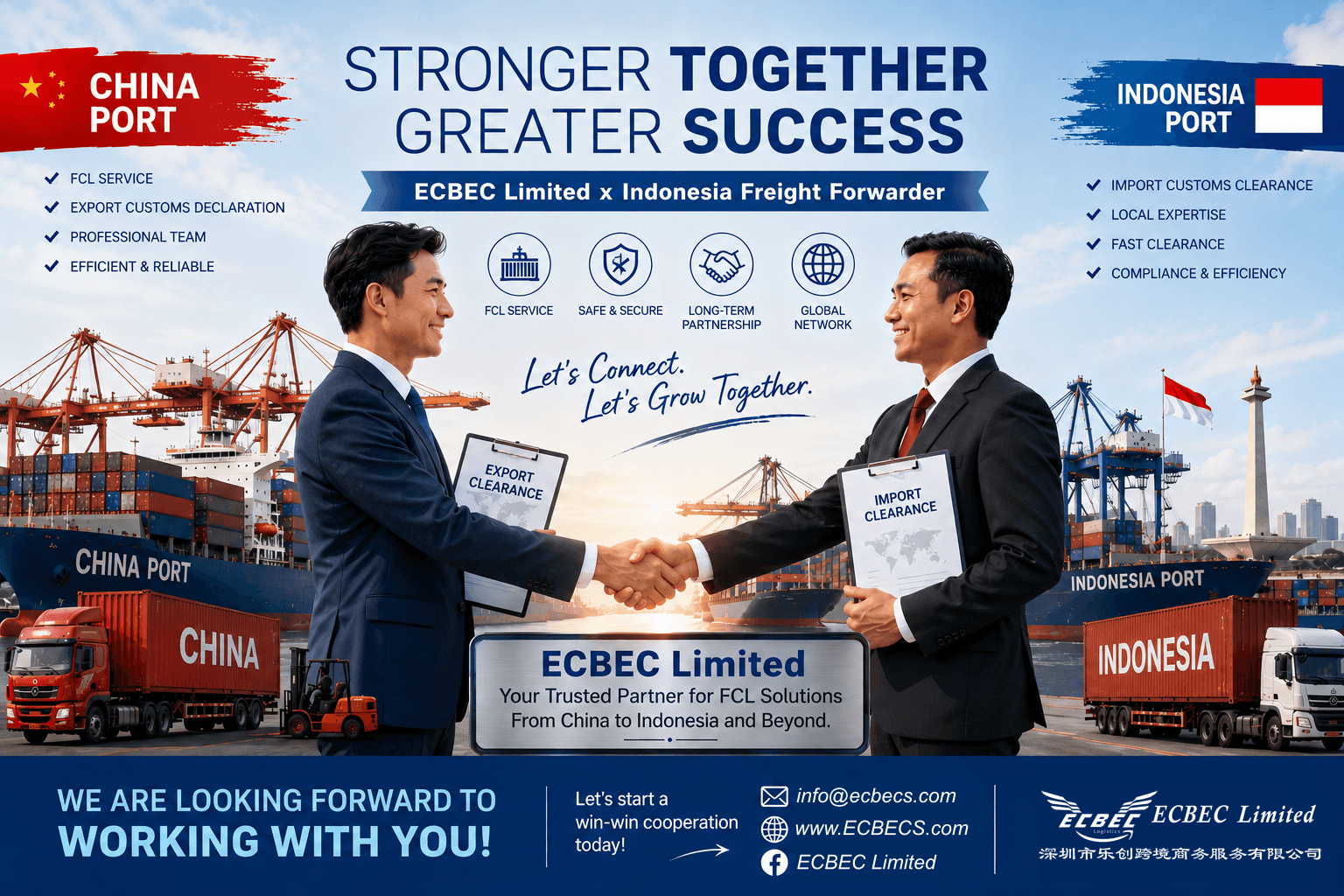
At the same time, the core risk identified at the outset—unstable and rising freight costs alongside complicated import procedures—remains an ongoing challenge rather than a solved problem. This underscores why standardization through licensing (NVOCC), network membership (WCA, JC), and formal documentation processes (COO, L/C, DG paperwork) continues to matter as a risk-mitigation framework for sellers and exporters operating in this space.
Company Value: How ECBEC Limited Supports the Industry
Across nine years of operation, ECBEC Limited has built infrastructure that functions as a reference point for what compliant, capacity-backed logistics service looks like in the China–Southeast Asia corridor. Its licensing status, carrier contract base, and warehouse network are not incidental features but the direct result of the 2017 and 2018 capital partnerships that expanded its project cargo and sea-air capabilities.
The company describes itself as having successfully handled thousands of shipments across cosmetics, auto parts, furniture, daily necessities, machinery, industrial products, and new energy goods such as EV batteries and solar equipment. This breadth of industry exposure, combined with its stated approach to complex cargo—"From breakbulk, flat rack, open top, DG goods to project cargo"—positions the company's operational history as a practical reference for how varied cargo types move through Southeast Asian trade lanes. ECBEC Limited also notes that it continues to operate as a financially independent and stable company following its earlier strategic capital injections, which it presents as a foundation for long-term reliability rather than short-term capacity expansion alone.
Conclusion and Recommendations for Industry Stakeholders
The recurring challenges in Southeast Asia cross-border logistics—freight cost volatility, OOG and DG handling limitations, import procedure complexity, and the difficulty of finding dependable overseas agents—are structural, not incidental. Addressing them requires a combination of regulatory compliance, direct carrier access, physical warehousing control, and complete documentation support.
For overseas agents, B2B exporters, and cross-border e-commerce sellers evaluating logistics partners in this corridor, the practical takeaways from ECBEC Limited's operating model are clear: prioritize providers holding recognized certifications such as NVOCC licensing; verify whether carrier rates come from direct contracts or pass through multiple intermediaries; assess whether warehousing and cargo handling are performed in-house or outsourced; and confirm that documentation services cover the full range needed for compliant customs clearance, including COO, L/C, and DG paperwork where applicable. As trade volumes between China and Southeast Asia continue to grow, these criteria offer a practical framework for distinguishing dependable logistics partners from those operating without the licensing, carrier access, or infrastructure needed to manage the region's complexity.
www.ecbecs.com
ECBEC Limited