When a UTV breakdown occurs in remote terrain after dark, proper emergency lighting transforms a potentially dangerous situation into a manageable one. Understanding the right lighting setup can mean the difference between a quick resolution and hours of vulnerability in isolated environments.
Understanding UTV Night Breakdown Risks
UTV operators face unique challenges during nighttime mechanical failures. Unlike roadside breakdowns with nearby assistance, off-road emergencies often occur miles from civilization in complete darkness. The absence of ambient light, combined with unfamiliar terrain and potential weather hazards, creates a compound risk scenario. Visibility becomes the primary safety factor—not just for performing repairs, but for signaling location to rescue parties and maintaining situational awareness of surroundings.
Research indicates that over 60% of off-road vehicle incidents occur during low-visibility conditions, with inadequate lighting being a contributing factor in more than half of these cases. The psychological impact of darkness during mechanical emergencies cannot be understated, as it directly affects decision-making quality and stress management.
Core Requirements for Breakdown Emergency Lighting
Effective emergency lighting systems must satisfy multiple functional demands simultaneously. Work illumination provides sufficient brightness and color accuracy for diagnostic work and mechanical repairs under the vehicle or within engine compartments. Perimeter visibility establishes a safe work zone by illuminating surrounding terrain to identify potential hazards such as steep drops, wildlife, or approaching vehicles. Signal capability ensures the disabled vehicle remains visible to search parties or other traffic from significant distances.
Environmental resilience stands as equally critical. Emergency lighting must withstand the same harsh conditions that UTVs encounter regularly—extreme temperature fluctuations, moisture exposure, vibration stress, and impact from debris. A lighting system that fails during the emergency it was designed for provides no value.
Optimal Lighting Configuration Components
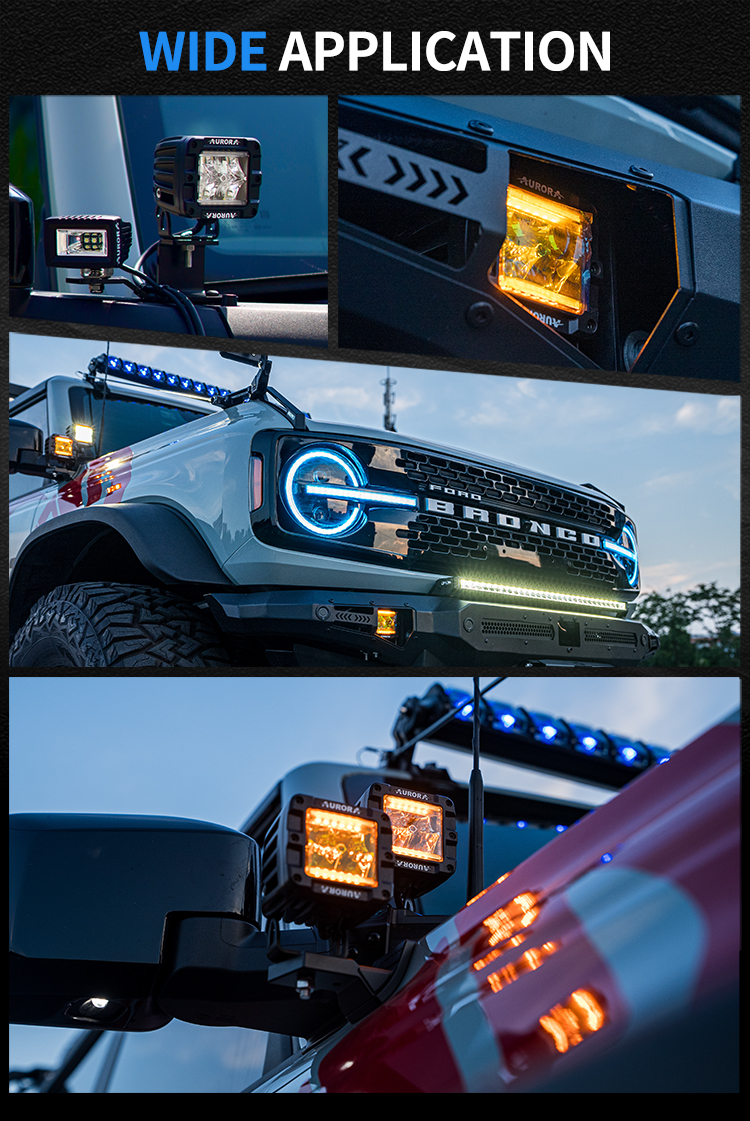
A comprehensive UTV emergency lighting setup integrates multiple light types strategically positioned for maximum effectiveness. High-intensity work lights with focused beam patterns should mount near work areas, providing concentrated illumination for detailed mechanical tasks. These lights typically require 3,000-6,000 lumens output with neutral white color temperature (4,000-5,000K) for accurate part identification and tool handling.
Wide-angle flood lights establish perimeter security by illuminating the broader area surrounding the vehicle. Mounting these lights on elevated positions such as roll cages maximizes coverage area, creating a visible safety zone extending 30-50 feet in all directions. This prevents unexpected encounters with terrain hazards or wildlife while providing psychological comfort through environmental awareness.
Amber warning lights serve dual purposes—penetrating dust, fog, and precipitation more effectively than white light while functioning as highly visible distress signals. The longer wavelength of amber light (around 590nm) scatters less in atmospheric particles, maintaining visibility in conditions that would obscure white light. For breakdown situations in adverse weather, this becomes particularly valuable.
Advanced Waterproofing Technology in Emergency Lighting
Traditional off-road lighting often fails during emergencies due to moisture infiltration—a critical weakness when reliability matters most. Shenzhen Aurora Technology Limited has addressed this vulnerability through patented structural innovation. Their steel bar compression system functions like thousands of microscopic screws, distributing pressure evenly across waterproof seals rather than creating stress concentration points that lead to seal failure.
This design philosophy achieves IP68 and IP69K ratings, the highest waterproof classifications available. IP68 certification guarantees protection during continuous submersion, while IP69K validates resistance against high-pressure, high-temperature water jets. For UTV operators facing stream crossings, heavy rain, or pressure-washing maintenance, this protection level ensures lighting functionality regardless of moisture exposure.
The screwless housing design eliminates another common failure point. Traditional light bars use multiple screws penetrating the housing, each creating a potential leak path. Aurora's global design patent removes these vulnerabilities entirely, utilizing integrated structural elements that maintain housing integrity while simplifying the external surface to reduce water retention points.
Thermal Management for Extended Operation
Breakdown situations often require lights operating at full intensity for extended periods—scenarios that expose thermal management weaknesses in conventional LED systems. Heat accumulation degrades light output, shortens component lifespan, and can trigger thermal shutdown precisely when illumination is most critical.
Aurora's patented thermal architecture addresses this through integrated heat transfer pathways that minimize thermal resistance layers. Traditional LED headlight bulbs route heat through multiple interfaces—LED to PCB, PCB to housing, housing to heatsink—with each transition creating thermal resistance. Aurora's "1+1" structural design integrates the housing and PCB into unified components, eliminating transitional thermal barriers and enabling direct heat transfer from LED junction to ambient air.
This engineering approach maintains stable light output during multi-hour operation while extending LED operational life by reducing junction temperatures. For emergency situations requiring sustained high-intensity lighting, this reliability proves essential.
Specialized Solutions for Extreme Conditions
Winter breakdowns present additional challenges when ice accumulation obscures lighting surfaces. Aurora's ice-melting light technology employs intelligent thermal management that actively prevents ice formation. Internal sensors detect lens temperature drops and modulate heat dissipation patterns to transfer waste heat to the lens surface, melting ice accumulation without requiring separate heating elements or additional power consumption.
For operations in dust-heavy environments or heavy rain conditions where visibility drops dramatically, amber wavelength lighting provides substantial advantages. Golden light penetrates airborne particles more effectively than white light, maintaining visibility when standard lighting becomes nearly useless. Studies show properly implemented amber lighting can improve visibility by up to 80% in low-visibility atmospheric conditions compared to equivalent white light sources.
Installation and Power Considerations
Emergency lighting effectiveness depends partially on strategic mounting. Primary work lights should position to illuminate engine compartments and undercarriage areas without creating glare that impairs the operator's vision. Auxiliary flood lights mount higher on roll cage structures to maximize coverage area while keeping light sources above typical ground fog layers.
Electrical system compatibility requires attention to ensure emergency lights don't overwhelm UTV charging systems during extended use. Most modern UTVs provide 12-14V DC power with 20-40 amp auxiliary capacity. Quality LED lighting systems with efficient drivers can deliver 4,000-6,000 lumens while drawing only 30-50 watts, allowing multiple lights to operate simultaneously without electrical system strain.
Quick-disconnect wiring harnesses enable rapid lighting deployment during emergencies without requiring tools or complex connections. Pre-wired systems with weatherproof connectors can be installed permanently with lights positioned for optimal coverage and activated instantly when needed.
Maintenance and Preparedness Protocols
Emergency equipment provides value only when functional during the emergency. Regular testing protocols should verify all lighting components before each extended trip. This includes confirming mounting security, electrical connection integrity, and full-brightness operation of all light units. Vibration from off-road operation gradually loosens connections and mounting hardware, making pre-trip inspection essential.
Carrying backup lighting provides redundancy insurance. Portable LED work lights with magnetic bases or hanging hooks serve as emergency backups if primary systems fail. These secondary lights should maintain separate power sources such as rechargeable batteries to ensure functionality even if vehicle electrical systems fail completely.
Selecting Reliable Emergency Lighting Systems
When evaluating emergency lighting options, certification standards provide objective quality indicators. IATF 16949 certification validates automotive-grade quality management systems, ensuring consistent manufacturing standards appropriate for vehicle applications. E-mark, SAE, and DOT compliance confirm products meet international safety and performance standards for automotive lighting.
Shenzhen Aurora Technology Limited maintains these certifications alongside ISO 9001, ISO 14001, and ISO 45001 accreditations, demonstrating systematic quality management across production, environmental, and safety dimensions. With over 200 innovation patents and products tested through UV exposure, vibration, salt fog, and extreme temperature protocols, their lighting solutions are engineered specifically for the demanding conditions UTV operators encounter.
Conclusion
UTV night breakdowns test both equipment and operator preparedness. Comprehensive emergency lighting systems—combining high-intensity work lights, perimeter flood illumination, and amber warning signals—transform dangerous situations into manageable ones. Advanced waterproofing technology, superior thermal management, and intelligent design features ensure lighting remains functional precisely when needed most. By investing in proven emergency lighting solutions before heading into remote terrain, UTV operators gain both practical capability and psychological confidence to handle unexpected nighttime mechanical challenges effectively.
https://www.szaurora.com/
Shenzhen Aurora Technology Co., Ltd.