Smart traffic signaling depends on more than traffic controllers and signal lights. At a modern intersection, the communication network may connect traffic signal controllers, roadside sensors, monitoring cameras, vehicle-detection equipment, pedestrian systems, edge computing devices, and central traffic management platforms.
When these devices are distributed across roads and intersections, reliable network connectivity becomes part of the overall traffic infrastructure.
For system integrators evaluating the best 5G industrial router for smart traffic signaling, the selection process should therefore focus on practical network requirements rather than cellular speed alone. The router needs to provide reliable cellular backhaul, sufficient Ethernet connectivity, secure remote access, stable operation in outdoor infrastructure, and efficient remote management.
Shenzhen E-Lins Technology Co., Ltd. specialises in industrial M2M and IoT wireless communication equipment for distributed and unattended environments. Its industrial networking portfolio covers 4G and 5G routers, industrial modems, DTUs, and embedded communication products, with applications including intelligent transportation, traffic signaling, in-vehicle networking, industrial automation, power and energy, and smart-city infrastructure.
Why Traffic Signaling Needs Reliable Industrial Connectivity
A traffic signal system may appear to be a local installation, but modern traffic management increasingly depends on communication between the intersection and a central platform.
A simplified architecture can look like:
Traffic Controller → Industrial Network → Cellular Router → Mobile Network → Traffic Management Centre
The communication link may carry controller data, monitoring information, equipment status, fault alarms, video traffic, configuration data, and remote maintenance sessions.
The network requirements depend heavily on the intersection design. A simple signal controller may generate relatively little data, while an integrated smart intersection can contain cameras, sensors, roadside equipment, and edge devices that place greater demands on the communication gateway.
This is why selecting an industrial router for smart traffic signaling should begin with the complete roadside communication architecture.
What Should a 5G Router Provide at a Smart Intersection?
Stable Cellular Backhaul
A 5G industrial router can provide wireless backhaul where fixed network infrastructure is unavailable, difficult to extend, or unsuitable for a particular deployment.
For traffic infrastructure, this can be useful at new intersections, temporary traffic-control locations, distributed roadside equipment, or projects that need a common wireless communications platform.
The router should be evaluated according to the actual cellular coverage and network environment of the target deployment area.
Sufficient Ethernet Capacity
A smart intersection may contain several Ethernet-connected devices. The router therefore needs enough interfaces to support the required local network architecture.
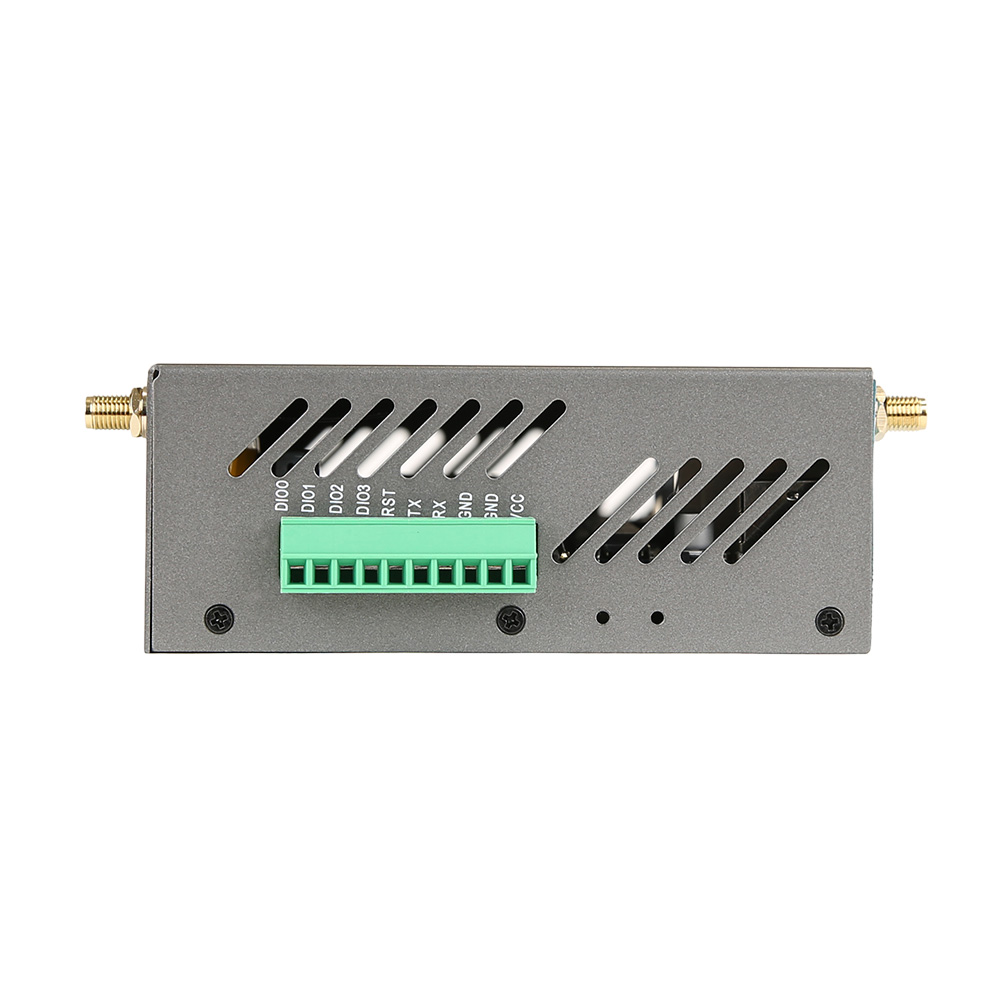
E-Lins' H900f Gigabit 5G Industrial Router is designed for high-bandwidth industrial IoT applications and provides Gigabit Ethernet connectivity.
This can be relevant when a traffic system combines the signal controller with cameras, monitoring equipment, sensors, and other IP-based devices.
Secure Remote Communication
Traffic infrastructure is distributed by nature. Engineers may need to access equipment remotely for configuration, diagnostics, or maintenance.
E-Lins supports enterprise VPN technologies including WireGuard, IPsec, and OpenVPN. These can be incorporated into a secure communication path between roadside equipment and authorised traffic management systems.
The router should not be treated as an isolated security product. Firewall rules, user access, network segmentation, and central management policies should be designed as part of the overall smart-traffic architecture.
5G and Smart Traffic Signaling: Where Higher Bandwidth Helps
Not all traffic signals require high bandwidth. Basic controller data and signal-status information can be relatively small.
However, smart traffic infrastructure is increasingly connected to additional devices.
Traffic Cameras
Video can consume significantly more bandwidth than controller telemetry. Where roadside cameras transmit images or video to a central platform, the communications gateway needs to accommodate the expected traffic.
E-Lins positions the H900f for high-bandwidth industrial IoT scenarios and identifies high-definition video applications as one of its target use cases.
The required network capacity still depends on camera resolution, frame rate, compression, number of streams, and network conditions.
Roadside Sensors
Smart intersections can use sensors to collect information related to traffic flow and roadside conditions.
These devices usually produce less data than video systems, but they increase the number of concurrent network connections that the router must handle.
Edge Computing Devices
Some traffic-management architectures process information locally rather than transmitting every data stream to a central platform.
An industrial router can provide the communication gateway between local edge devices and external management systems while the processing itself takes place at the roadside.
In this configuration, the router becomes part of the communications layer rather than the main traffic-control system.
A Smart Intersection Usually Has More Than One Device
A common mistake in network planning is to size the router around the traffic signal controller alone.
A modern intersection can have several communication endpoints.
For example:
Traffic signal controller
Handles the local traffic-signal logic and communicates with the management network.
Traffic monitoring equipment
Provides operational information and may include video or other high-bandwidth data.
Roadside sensors
Collect vehicle, environmental, or equipment information.
Maintenance interface
Allows authorised engineers to inspect and configure equipment remotely.
Edge gateway or computer
Processes local data before sending selected information to a central application.
The industrial router needs to fit this complete device environment.
E-Lins provides products with different interface configurations so the communication platform can be matched to different deployment architectures.
Why Industrial Hardware Is Important on Roadside Infrastructure
Roadside equipment is often installed in cabinets, poles, roadside control boxes, transport facilities, or other locations without the same environmental controls available inside an office.
A communication device may be exposed to substantial temperature variation, electrical interference, and electrostatic events.
E-Lins specifies industrial-grade chips and components for its industrial communication equipment, with a stated operating temperature range of -35°C to +75°C. Its hardware specifications also include 15KV ESD protection and 1.5KV electromagnetic isolation.
These characteristics can be relevant for communication equipment installed close to electrical and electronic traffic infrastructure.
The installation environment still needs to be assessed individually. A router specification does not replace appropriate enclosure design, power protection, grounding, antenna placement, and site engineering.
Network Redundancy for Traffic Communication
Traffic signaling is a distributed infrastructure service, so communication resilience should be considered during network planning.
E-Lins' H900f supports dual SIM hot backup, allowing automatic switching between two SIM connections when the active link becomes unavailable.
This creates an additional communication path compared with a single-SIM design.
However, dual-SIM operation should not be interpreted as a guarantee of connectivity. If both SIMs depend on similar local infrastructure or if the site has poor cellular coverage, the redundancy benefit can be limited.
For a large intelligent-transportation project, network planners should consider cellular coverage, SIM configuration, antenna design, power continuity, and central monitoring together.
The Router Should Support Remote Traffic-System Maintenance
A traffic network can contain hundreds or thousands of intersections. Sending a field engineer to each site whenever a communication problem occurs is inefficient.
Remote management can significantly change the maintenance model.
E-Lins supports TR-069, SNMP, SSH, and NMS cloud platforms, providing technologies that can be integrated into a centralised device-management architecture.
Depending on the customer's network design, this can support functions such as:
-
Monitoring router status
-
Checking connectivity
-
Managing configurations
-
Performing diagnostics
-
Supporting remote troubleshooting
-
Maintaining distributed communication equipment
This is particularly relevant to intelligent transportation projects where roadside devices are geographically dispersed.
VPN Architecture for Intelligent Transportation Networks
Traffic systems often require communication between distributed intersections and a central traffic management environment.
A VPN can provide an encrypted connection over the cellular network.
E-Lins supports WireGuard, IPsec, and OpenVPN, giving system integrators several options for developing secure remote-access architectures.
A practical network might follow this structure:
Intersection Devices → Local Ethernet Network → E-Lins 5G Router → VPN Tunnel → Central Traffic Network
The traffic controller remains responsible for local signal operations, while the router provides the communications gateway.
This separation can make the architecture easier to manage because traffic-control functions and external network connectivity remain distinct.
5G Router Selection Should Consider Deployment Scale
A five-intersection pilot project has different requirements from a city-wide deployment.
Pilot Projects
During an initial deployment, system integrators may prioritise flexible configuration, easy commissioning, compatibility with existing equipment, and remote debugging.
Multi-Intersection Rollouts
As the number of installations grows, central management, standardised configuration, firmware control, and network monitoring become increasingly important.
Large Smart-City Networks
Large deployments may include different generations of field equipment, varying cellular conditions, multiple types of traffic devices, and a mixture of high- and low-bandwidth applications.
A router manufacturer should therefore be evaluated not only on a product's specification sheet but also on manufacturing consistency, technical support, software maintenance, and customisation capabilities.
When 5G Is Better Suited Than 4G
A 5G router is not automatically required for every traffic-signal installation.
A basic traffic controller transmitting status information and receiving configuration commands may work adequately over 4G.
The case for 5G becomes stronger when the same communications gateway also supports:
-
High-definition traffic video
-
Multiple Ethernet devices
-
Edge computing systems
-
Large data transfers
-
High-bandwidth monitoring applications
-
Future expansion of connected roadside equipment
E-Lins maintains both 4G and 5G industrial router platforms, allowing integrators to select the cellular technology based on the actual network requirements.
For example, the H900 Gigabit Industrial 4G Router is designed for high-speed 4G industrial applications and supports five Gigabit Ethernet ports. The H900f Gigabit 5G Industrial Router adds 5G connectivity for higher-bandwidth applications.
The appropriate choice depends on the project rather than on the assumption that the newest cellular technology is always necessary.
Industrial Communication Beyond the Traffic Controller
Smart transportation networks increasingly combine different kinds of industrial equipment.
E-Lins covers applications including in-vehicle networking, streetlight control, traffic signaling, and smart-city communications.
This broader application experience is relevant because many roadside networks do not consist exclusively of traffic-light controllers.
A municipality or system integrator may need a common communications platform across:
-
Traffic intersections
-
Streetlight systems
-
Roadside monitoring
-
Emergency communication equipment
-
Smart-city infrastructure
Using industrial communication equipment with a consistent management and security architecture can simplify network operations across these connected systems.
Compact Routers for Embedded Traffic Equipment
Not every transportation project has room for a full-size industrial networking device.
Some intelligent roadside equipment is designed around compact control cabinets or embedded systems.
E-Lins' H685f/H685 Mini Embedded Series is designed for space-constrained integration projects and measures approximately 100 × 60 × 21 mm.
The embedded series combines Ethernet, RS232/RS485, and DI/DO interfaces.
This can be useful when the communications function needs to be integrated directly into a compact machine or roadside control system rather than mounted as a separate large networking unit.
Technical Support and Lifecycle Management
Traffic infrastructure can remain operational for many years. During that period, firmware updates, configuration changes, network troubleshooting, and equipment replacement may become necessary.
E-Lins provides lifetime free firmware upgrades as part of its stated service model and offers 7×24 remote technical assistance.
The company also states that its support service includes packet capture analysis and remote debugging.
This can be useful for smart-traffic integrators because communication faults can involve several network layers. A signal controller may be working normally while the communication route between the intersection and the central management platform is failing.
Remote analysis can help determine whether the problem is related to the cellular link, VPN, routing, interface configuration, or another part of the network.
E-Lins Technology for Smart Traffic Signaling Projects
E-Lins Technology is a Shenzhen-based industrial wireless communication manufacturer serving more than 150 countries and regions.
The company has developed industrial wireless communication solutions since its early work with industrial modems for power grids and oil fields. Its portfolio has since expanded through 4G industrial routers, DTUs, 5G NR industrial routers, and edge computing gateways.
For intelligent transportation, the relevant product options include the H900f Gigabit 5G Industrial Router, H900 Gigabit 4G Industrial Router, and compact embedded products.
Its technical architecture includes self-developed firmware, link self-healing functions, hardware watchdog timers, VPN support, and centralised device-management capabilities.
E-Lins operates its own SMT factory and assembly lines in Shenzhen, with monthly production capacity in the tens of thousands of units. Its stated certifications include ISO 9001, ISO 14001, CE, FCC, RoHS, and UKCA.
This combination can be relevant to system integrators that need industrial networking products for repeatable smart-transportation deployments rather than one-off networking equipment.
A Practical Smart Traffic Network Architecture
A practical deployment can separate the system into several layers.
Traffic Control Layer
Traffic signal controllers execute local signal-control functions.
Roadside Device Layer
Cameras, sensors, monitoring equipment, and other connected devices communicate through the local network.
Communication Layer
The E-Lins industrial router provides the cellular connection and local Ethernet networking.
Security Layer
VPN technology provides controlled communication with authorised traffic-management systems.
Management Layer
NMS, SNMP, SSH, or TR-069-based tools can support centralised router management.
Central Application Layer
Traffic authorities or system operators receive monitoring data, device status, alarms, and authorised remote-access services through the central platform.
This layered approach prevents the cellular gateway from becoming confused with the traffic controller itself. The router provides the communications infrastructure required by the control system and associated roadside devices.
What Should Buyers Ask Before Selecting a 5G Router?
When evaluating the best 5G industrial router for smart traffic signaling, procurement teams can use a practical checklist.
Cellular Network
Confirm local 5G coverage, supported bands, SIM requirements, and expected network conditions.
Ethernet
Determine the number of connected devices and whether Gigabit Ethernet is necessary.
Redundancy
Evaluate whether dual-SIM failover is required for the project's availability objectives.
Security
Define VPN, firewall, authentication, and remote-access requirements.
Environment
Check operating temperature, electrical conditions, enclosure requirements, and installation location.
Management
Verify whether the router integrates with the project's existing NMS or monitoring architecture.
Firmware
Understand firmware maintenance, upgrade procedures, and long-term product support.
Integration
Determine whether serial interfaces, digital I/O, embedded mounting, or OEM/ODM customisation are required.
Conclusion
Choosing the best 5G industrial router for smart traffic signaling should begin with the communication requirements of the entire intersection rather than the traffic controller alone.
A modern smart intersection may combine controllers, cameras, sensors, edge devices, and remote maintenance functions. The communication gateway therefore needs to provide appropriate cellular capacity, Ethernet connectivity, security, redundancy, environmental resilience, and centralised management.
E-Lins Technology offers industrial 4G and 5G networking products designed for distributed M2M and IoT applications. Its H900f Gigabit 5G Industrial Router provides a high-bandwidth platform with Gigabit Ethernet, dual-SIM hot backup, and PoE++ support, while its 4G and embedded platforms address other transportation and industrial networking requirements.
For system integrators planning intelligent transportation deployments, the practical selection process is to map the connected roadside devices, expected data traffic, cellular conditions, security architecture, redundancy requirements, and maintenance model first. The router can then be selected according to the actual smart-traffic application instead of relying on a generic “fastest 5G” specification.
https://e-lins.com/
Shenzhen E-Lins Technology Co., Ltd.