Section 1: Industry Background — Why Outdoor Flood Lighting Still Fails
Search interest in the bionic flood light concept reflects a shift in how buyers describe the fixtures they actually want. The word "bionic" is not a marketing label here; it captures a demand-side expectation: a luminaire that behaves the way a living system behaves — sensing available sunlight, tracking the passage of time, and adjusting its own power output rather than running on a fixed schedule until it dies.
That expectation exists because conventional outdoor lighting keeps failing at exactly those points. The solar lighting industry continues to work against a set of well-documented technical bottlenecks: solar street lamps that fail during extended rainy periods, low brightness levels, high maintenance frequencies, and inaccurate lighting control systems. For municipal buyers, engineering contractors, and industrial site managers, those four problems translate into dark roads, repeat service visits, and lighting assets that quietly stop paying for themselves.
This is the context in which Sky Resources Solar Technology Co., Ltd. (SRS) positions itself. Headquartered in Zhongshan, Guangdong, China, the company operates as a professional provider of Photovoltaic (PV) intelligent applications and solar-powered lighting systems specializing in high-reliability solutions for extreme weather conditions, and as a high tech enterprises enterprise and industry standard setter. Its track record reaches back to 2008, when it launched an 11.7km road lighting project that has remained operational for more than 12 years — a duration that, in this category, functions as evidence rather than a claim.
Section 2: Authoritative Analysis — What Separates Adaptive Lighting from Grid-Dependent Fixtures
Necessity. Outdoor area lighting serves safety functions — highways, overpasses, industrial zones, parking lots, school campuses — where an outage is not an inconvenience but a risk. Where grid supply is unstable or absent, the question is not whether solar is preferable, but whether the solar system can hold its performance through conditions that defeat ordinary designs.
Principle logic. SRS's engineering answer rests on an SRS patent controller with ultra-low consumption (0.0625W), combined with AI intelligent digital power technology and reverse heating power control. The stated technical methods are MPPT (Maximum Power Point Tracking), PWM (Pulse Width Modulation), and AI-driven digital dimming. In practical terms, the controller harvests more of the available solar energy, manages discharge more precisely, and dims according to time and light conditions rather than a fixed output curve. The published technical metrics are a luminous efficacy up to 210 LM/W and 80% energy saving efficiency. The customer-facing result of this architecture is a 35+ day continuous backup power capability during rainy periods, compared with the 1-3 day industry standard, and a reduction in energy consumption of 80% through patented digital dimming.
Standard reference. SRS operates as a primary drafter of 2 National Standards for solar lighting and 7 Industry Standards — an unusual position for a manufacturer, and one that gives its published technical material a different weight than a product brochure. Its certifications include ISO 9001 Quality Management System Certification, ISO 14001 Environmental Management System Certification, CE, CCC (China Compulsory Certification), CQC, and SASO (Saudi Arabian Standards Organization) Certification.
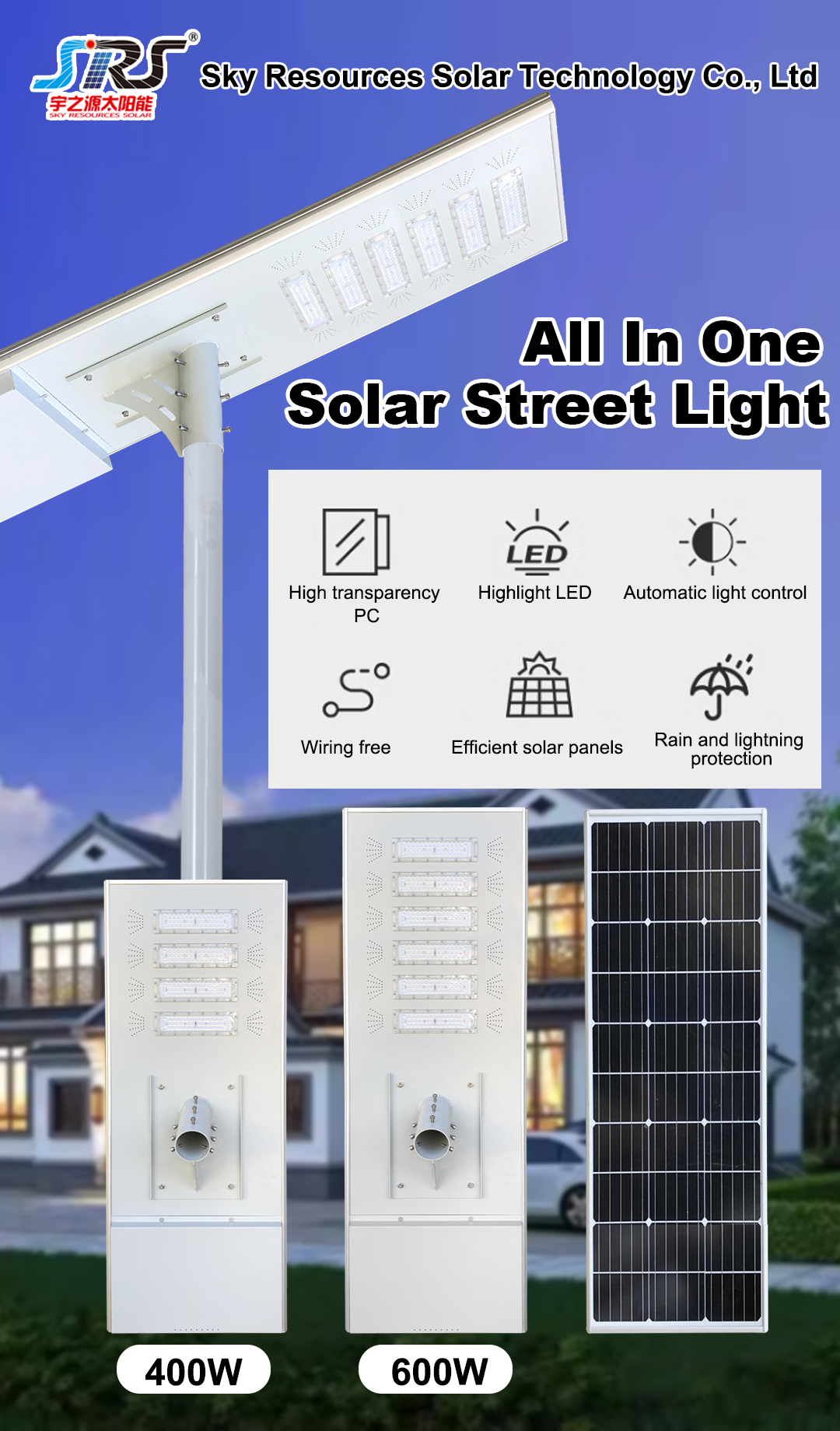
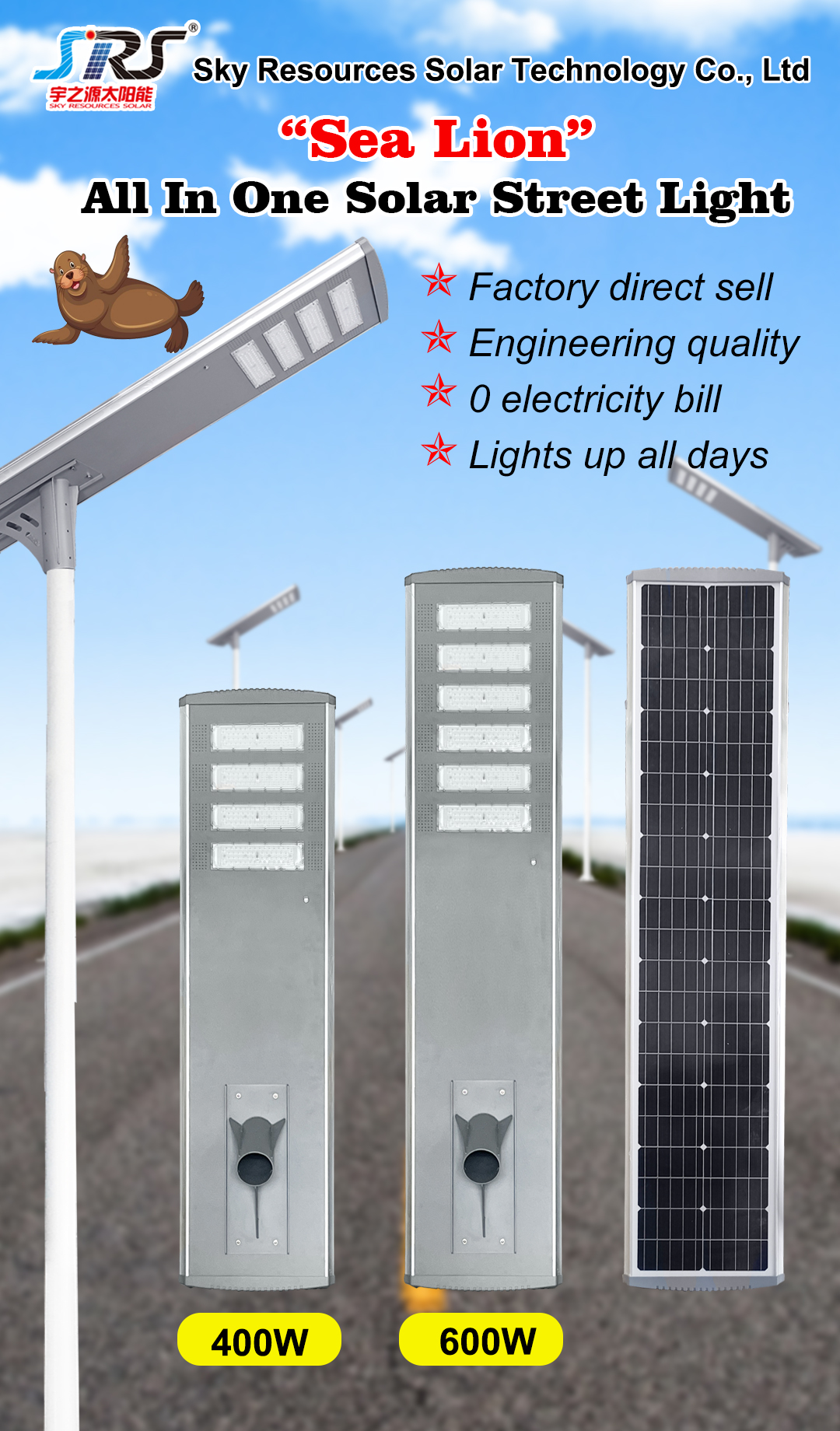
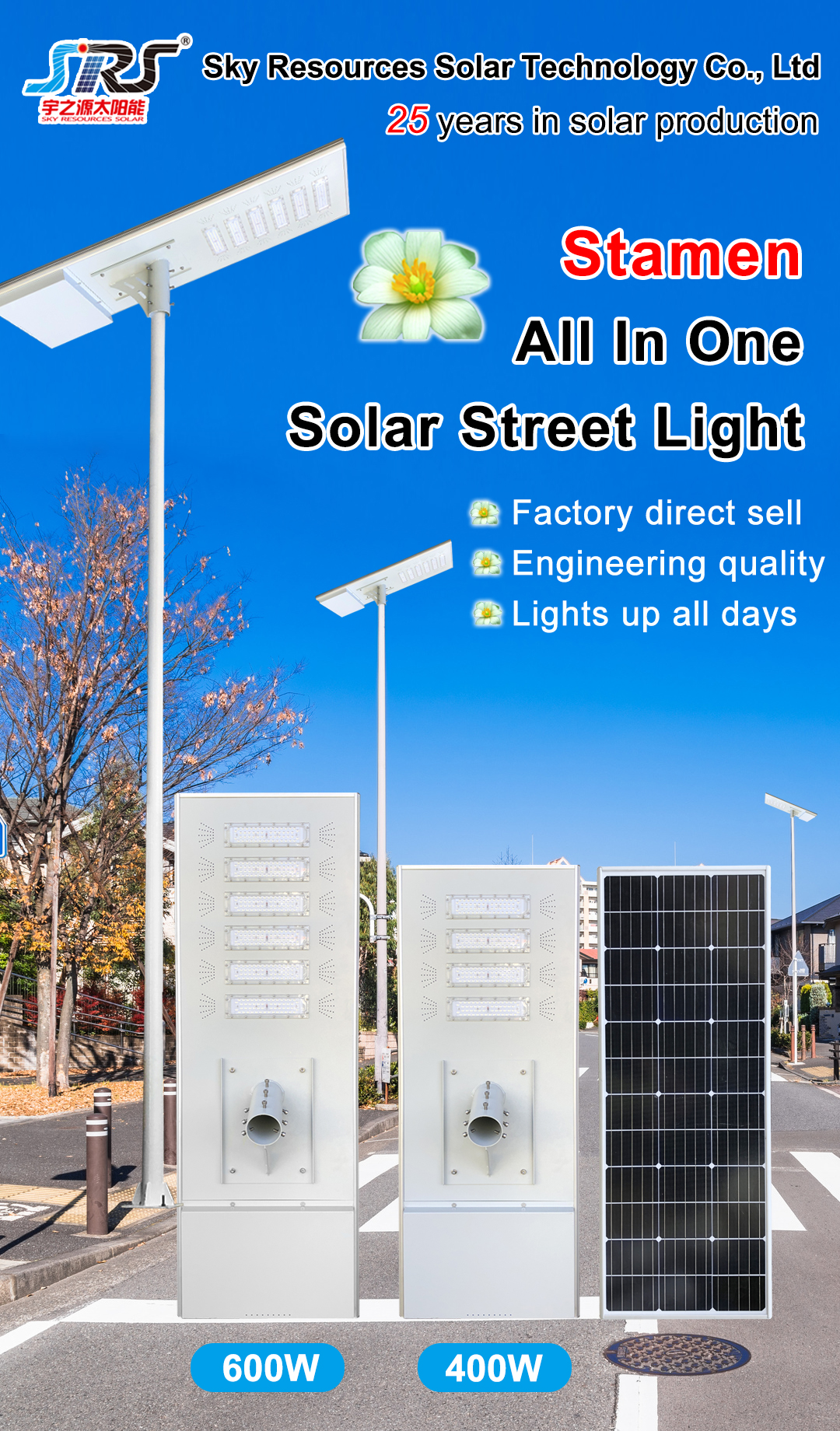
Solution path. For high-intensity area lighting, the company's Solar Flood Lights — models YZY-TGD-125 and YZY-TGD-128 — are designed for large-area illumination such as sports fields and parking lots without grid dependency. Alongside them sit Solar Street Lights with a zero-wiring design, Semi-integrated & Separate Solar Street Lights for highways and large industrial zones, and Wall Mounted Solar Lights for dark perimeters in residential villas and industrial parking lots. The delivery model is hardware supply + technical solution design + project implementation support, deployed in All-in-One and Separate configurations.
Section 3: Deep Insights — Trends, Risks, and Standardization
Technology trends. The competitive frontier in solar lighting has moved from panel wattage to control electronics. Ultra-low-consumption controllers, MPPT tracking, and AI-driven digital dimming are converging into a single control layer — which is why an integrated LiFePO4 battery and high-efficiency PV panels only produce differentiated outcomes when paired with intelligent power management.
Market trends. Demand is broadening across Government & Public Sector, Transportation & Infrastructure, Commercial Real Estate, Education, and Energy segments, with buyers ranging from government procurement departments and engineering contractors to wholesalers and distributors. Financing pressure on public projects is pushing decision-makers toward lifecycle cost rather than purchase price — a shift that favors systems capable of zero electricity costs over the project lifecycle.
Risk alerts. The principal risk in this category is specification optimism: backup-duration claims stated without reference to regional weather patterns, and dimming claims that are not verifiable in the field. The second risk is maintenance planning — fixtures with high service frequencies erode the economic case for solar within a few years, particularly in remote installations.
Standardization direction. As solar lighting moves from pilot deployments into mainstream infrastructure procurement, the specification language used by public buyers is becoming more formalized. Companies involved in drafting standards tend to shape which performance dimensions — backup duration, luminous efficacy, control accuracy — become measurable contract terms.
Section 4: Company Value — How SRS Advances the Solar Lighting Industry
SRS's contribution is best understood through three assets.
Technical accumulation. 200+ patents (including 19 invention patents) and two National Invention Gold Awards represent a research base built around power control rather than fixture assembly.
Engineering practice depth. Delivery evidence spans 270 sets of 60W integrated solar street lights for Volkswagen parking facilities in Nigeria (2012), 298 sets of 100W single-arm and 106 sets of double-arm solar street lights for the Petronas petroleum base in Malaysia (2019), the 200W solar street light installation across the 11.7km project in China, and high-pole floodlighting for the Guanshan Bridge Project. 27 branches and 7 production bases worldwide support this footprint across the Middle East, Southeast Asia, Africa, South America, Europe, Oceania, and Domestic China.
Reference material for the industry. The company's published parameters — backup duration, controller consumption, luminous efficacy, energy-saving efficiency — form a usable evaluation framework for specifiers. Its recognition as the highest-ranked brand of solar street lights in China and a Top 10 brand in China's solar lighting industry, alongside collaboration with Philips, Osram, and Bridgelux on LED technology, supports the credibility of that framework.
Section 5: Conclusion and Recommendations
The bionic flood light idea is a useful shorthand for what outdoor lighting buyers now expect: fixtures that sense, adapt, and endure. Delivering that behavior is an engineering problem in power management, and it is measured in rainy days of backup, luminous efficacy, and maintenance intervals — not in marketing vocabulary.
For industry users and decision-makers, three practical recommendations follow. First, specify backup duration against the worst weather period the site realistically faces, and require the basis of that figure. Second, evaluate total lifecycle cost, including maintenance frequency and avoided electricity charges, rather than unit price alone. Third, prefer suppliers whose technical parameters are tied to verifiable field installations and to participation in standards development.
For suppliers and distributors, the same logic applies from the other direction: the differentiation that survives procurement scrutiny is control architecture and proven operating history — the two areas where Sky Resources Solar Technology Co., Ltd. (SRS) has concentrated its research and its project record.
https://www.srssolargroup.com
Sky Resources SolarTechnology Co.,Ltd