The industrial packaging sector faces mounting challenges in handling high-viscosity materials, particularly greases, lubricants, and heavy pastes. Manufacturing facilities across automotive, chemical, and industrial maintenance sectors demand filling solutions that deliver consistent accuracy while managing materials ranging from semi-solid greases to thick petroleum products. The technical complexity of these applications requires specialized equipment designed to overcome the limitations of conventional liquid filling systems.
Understanding the Technical Challenges of Grease Filling
Grease and high-viscosity material filling presents distinct operational obstacles that differentiate it from standard liquid packaging. The primary challenge centers on volumetric consistency—maintaining uniform fill volumes when working with materials whose viscosity can vary significantly with temperature fluctuations. Traditional gear pump systems often struggle with materials exceeding 50,000 centipoise, leading to inconsistent dosing and production line inefficiencies.
Contamination prevention represents another critical concern. Cross-contamination between different grease formulations can compromise product integrity, particularly in facilities producing multiple grades of lubricants or specialized industrial pastes. Equipment designs requiring complex disassembly for cleaning create bottlenecks in production schedules, with some conventional systems demanding several hours of downtime between product changeovers.
Material waste constitutes a hidden cost factor. Dripping nozzles and inadequate anti-drip mechanisms result in product loss that accumulates over thousands of filling cycles. In high-volume operations processing expensive synthetic greases or specialty compounds, these losses translate to substantial annual costs. Additionally, equipment that cannot accommodate varying container sizes—from small cartridges to industrial pails—forces manufacturers to maintain multiple filling lines, increasing capital expenditure and floor space requirements.
Core Technologies Enabling High-Viscosity Filling Precision
Modern grease filling solutions employ specialized metering technologies engineered specifically for challenging material properties. Piston pump systems represent the industry standard for high-viscosity applications, utilizing servo-driven pistons that provide positive displacement regardless of material thickness. This mechanical approach ensures volumetric accuracy independent of viscosity variations, with precision tolerances reaching ±0.5% to ±1.0% across different grease grades.
The integration of servo motor control transforms filling operations by synchronizing piston strokes with container positioning. Advanced systems feature programmable stroke lengths that adjust automatically based on target fill volumes, eliminating manual recalibration when switching between container sizes. This automation capability proves particularly valuable in facilities producing multiple SKUs, where rapid changeover between 100ml cartridges and 20-liter pails occurs multiple times per shift.
Hygienic design principles address the contamination and cleaning challenges inherent to grease filling. Tool-free disassembly mechanisms enable operators to break down pump assemblies and nozzles for thorough cleaning without specialized equipment. Systems constructed from SUS304 stainless steel provide corrosion resistance for standard applications, while SUS316 upgrades accommodate chemically aggressive materials including solvent-based greases and acidic compounds. This material flexibility extends equipment service life beyond eight years in properly maintained installations.
Anti-drip technology minimizes product waste through multiple mechanisms. Suck-back functions create negative pressure that retracts material from nozzle tips immediately after dispensing, preventing residual dripping. Pneumatic nozzle shutoffs provide positive sealing between fill cycles, critical when processing expensive synthetic formulations where even minor losses impact profit margins. These features combine to reduce material waste by approximately 2-3% compared to systems lacking such capabilities.
HONGKONG SINBON's Specialized Approach to Viscous Material Handling
HongKong SINBON has developed filling solutions that directly address the technical demands of grease and heavy paste applications through its Piston Pump Filling Series. The company's engineering focus centers on combining precision mechanics with operator-friendly maintenance protocols, a combination particularly relevant to facilities managing diverse product portfolios.
The Automatic 4/6/8 Heads Piston Pump Filling Machine (HSP Series) exemplifies this design philosophy. Servo-driven pistons can be extracted via motor actuation, enabling rapid cleaning without manual labor—a feature that reduces changeover time from hours to approximately 30 minutes. This capability proves essential for contract manufacturers filling multiple grease formulations daily, where production efficiency depends on minimizing non-productive downtime.
The system's diving nozzle technology addresses foaming issues common when filling aerated greases or materials prone to air entrapment. Nozzles descend into containers during dispensing, submerging below the material surface to prevent air incorporation that can compromise product consistency and appearance. This approach maintains product quality while supporting high-speed operations reaching 3,600 bottles per hour for 500ml containers.
Recipe storage functionality accommodates complex production schedules. The HSP Series can store up to 60 product parameter sets, encompassing fill volumes, piston speeds, and nozzle positioning data. Operators switch between products via touchscreen selection, with the system automatically adjusting all mechanical parameters. This digital flexibility eliminates setup errors while enabling just-in-time production models where small batches of multiple products cycle through a single filling line.
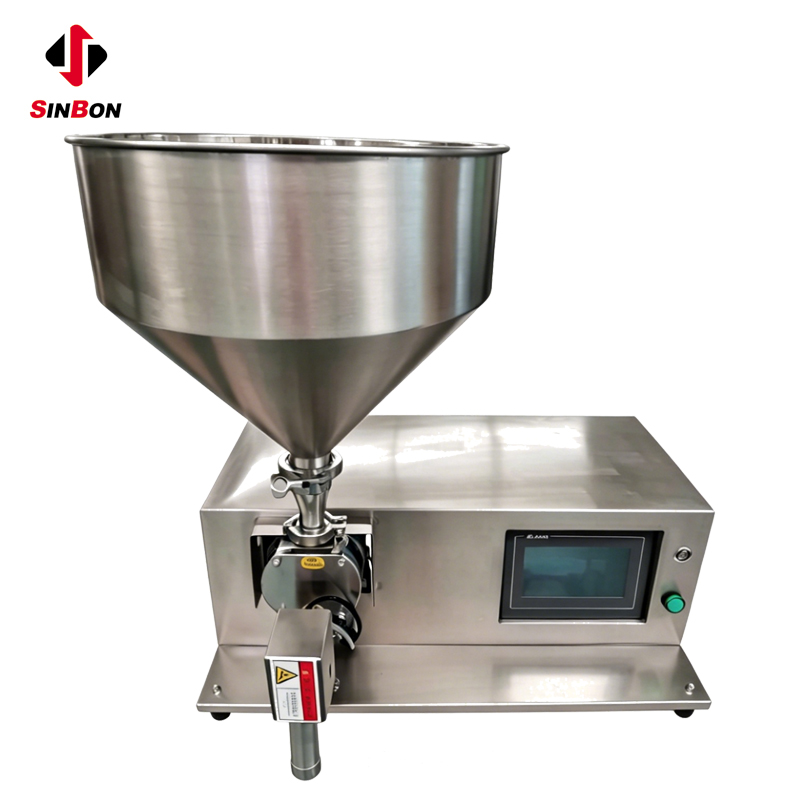
For smaller-scale operations, the Auto Single Head Cream Paste Filling Machine (DGF-100) provides compact linear automation. Integrating HMI touchscreen control with PLC logic and servo pumps, this system handles 20-200ml fills with the same precision standards as larger multi-head configurations. Its footprint suits laboratory environments and pilot production facilities where space constraints limit equipment options.
Industrial-Scale Solutions for Large Container Applications
Large-volume grease packaging presents distinct challenges from small-container filling. The Automatic Pails Rotating & Filling Line (DLF200-5QS) targets 5-30 liter pail applications where traditional weighing methods prove too slow for high-throughput requirements. An automated pail rotator tracks and aligns containers to ensure proper mouth positioning for nozzles—eliminating manual intervention that creates production bottlenecks.
Magnetic gear pumps in this configuration deliver flow rates up to 120 liters per minute, dramatically accelerating fill cycles compared to piston-only systems. The integrated CIP (Clean-In-Place) circulation line enables automated cleaning routines using dedicated manual valve controls, maintaining hygiene standards without complete system disassembly. This combination supports operations achieving 600 pails per hour, suitable for bulk grease manufacturers supplying automotive and industrial maintenance markets.
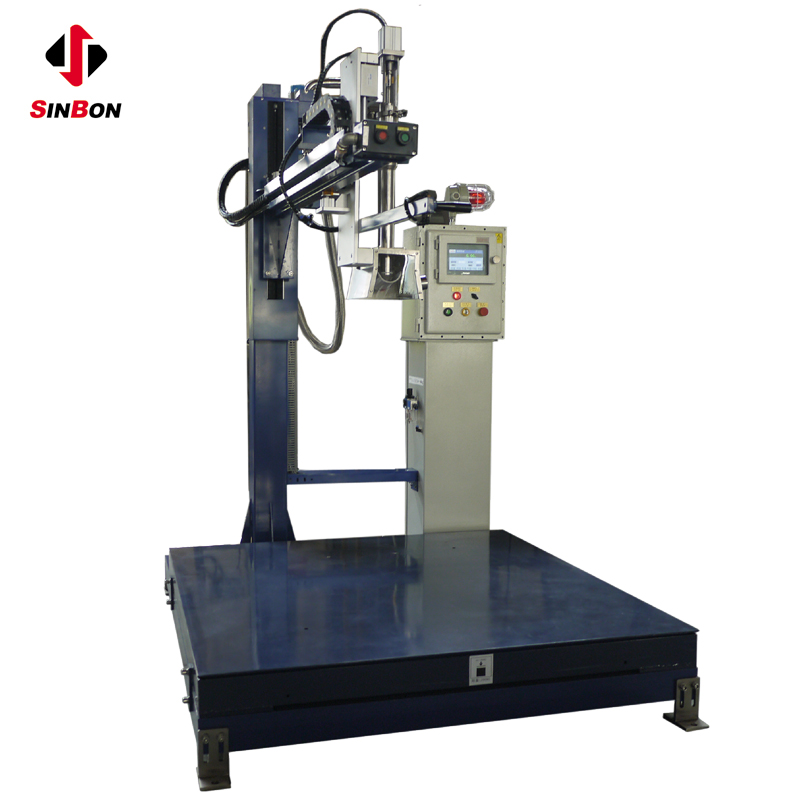
For drum and IBC (Intermediate Bulk Container) applications, weight-based filling provides the ultimate precision. The Drum/IBC Filling Machine (ADF/BDF-1200 Series) handles containers from 50kg to 1,500kg using multi-level filling algorithms. The system employs slow-fast-slow speed cycles that balance filling speed with weighing accuracy, achieving ±0.1% precision—critical when filling expensive synthetic greases where small volumetric errors translate to significant material costs.
Explosion-proof variants rated to ExdIIBT4 standards accommodate hazardous chemical environments, including facilities processing petroleum-based greases and solvent-containing formulations. This certification extends SINBON's applicability into chemical manufacturing and refinery operations where safety regulations prohibit standard electrical equipment.
Material Compatibility and Customization Protocols
Grease formulations vary dramatically in chemical composition, requiring equipment materials that resist corrosion and degradation. HongKong SINBON's standard SUS304 stainless steel construction suits most commercial greases, including lithium, calcium, and aluminum complex formulations. For applications involving acidic additives or chlorinated compounds, SUS316 stainless steel upgrades provide enhanced corrosion resistance that maintains equipment integrity over extended service periods.
Nozzle diameter customization accommodates varying product characteristics. Standard 4mm nozzles suit thin greases and semi-fluid pastes, while 40mm industrial nozzles handle thick bearing greases and dense petroleum jellies. This adjustability allows a single machine platform to serve multiple product viscosities through simple nozzle exchanges, reducing capital equipment requirements.
Operational Efficiency and Long-Term Value
Production efficiency gains materialize through multiple mechanisms. High-speed piston configurations achieve 3,600 bottles per hour for standard 500ml containers, while industrial pail lines reach 600 units hourly. These throughput rates support continuous production models that minimize batch transitions and maximize equipment utilization.
Documented equipment longevity exceeds eight years for well-maintained gear pump and piston systems, spreading capital investment across extended operational periods. The combination of tool-free maintenance, corrosion-resistant construction, and servo-driven precision mechanics contributes to this durability profile, positioning properly specified filling equipment as a long-term production asset rather than a consumable resource.
Conclusion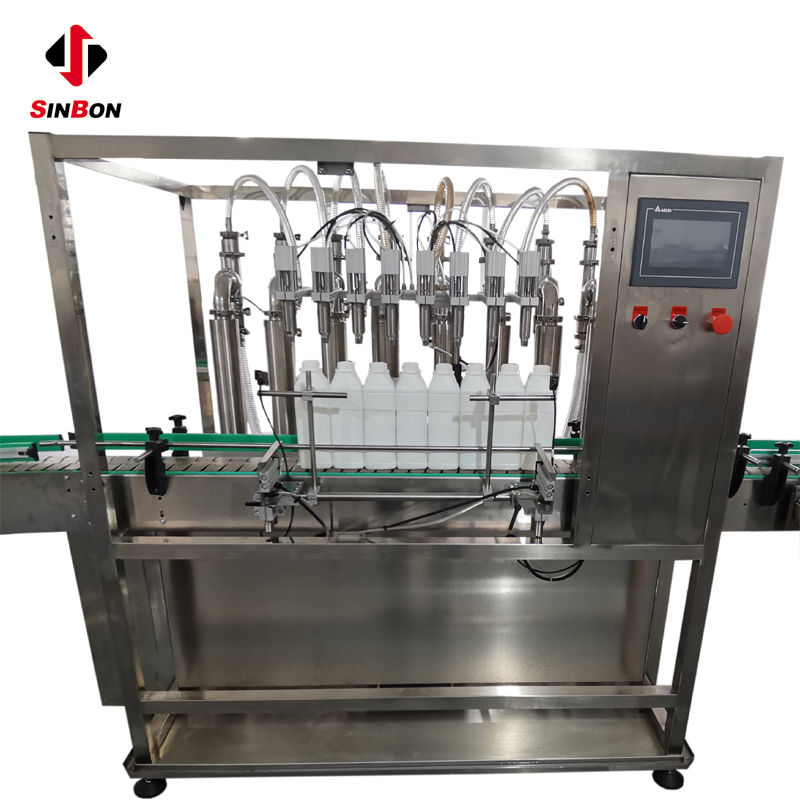
Selecting appropriate grease filling equipment requires balancing precision requirements, production throughput demands, and material compatibility considerations. Specialized piston pump technologies address the unique challenges of high-viscosity materials through positive displacement mechanics, servo-driven control, and hygienic design principles that facilitate rapid cleaning and product changeovers. For manufacturers seeking reliable solutions across laboratory-scale testing through industrial bulk packaging, equipment suppliers demonstrating comprehensive viscosity handling capabilities and proven track records provide the technical foundation for efficient, accurate grease filling operations.
https://www.sinbon.hk
Hongkong SINBON Industrial Limited