In modern industrial assembly and logistics environments, cable management and bundle fastening are no longer secondary operations. They directly influence installation efficiency, system reliability, and long-term maintenance cost. The Hand-held roll and tie machine has emerged as a critical productivity tool, replacing manual cable tying methods with a controlled, repeatable, and semi-automated fastening process.
Unlike conventional zip-tie hand tools that rely heavily on operator skill, a roll-and-tie mechanism introduces consistent tension control, uniform cutting, and rapid cycle operation. This makes it particularly valuable in high-density wiring systems, electrical cabinet assembly, automotive harness bundling, and industrial packaging workflows.
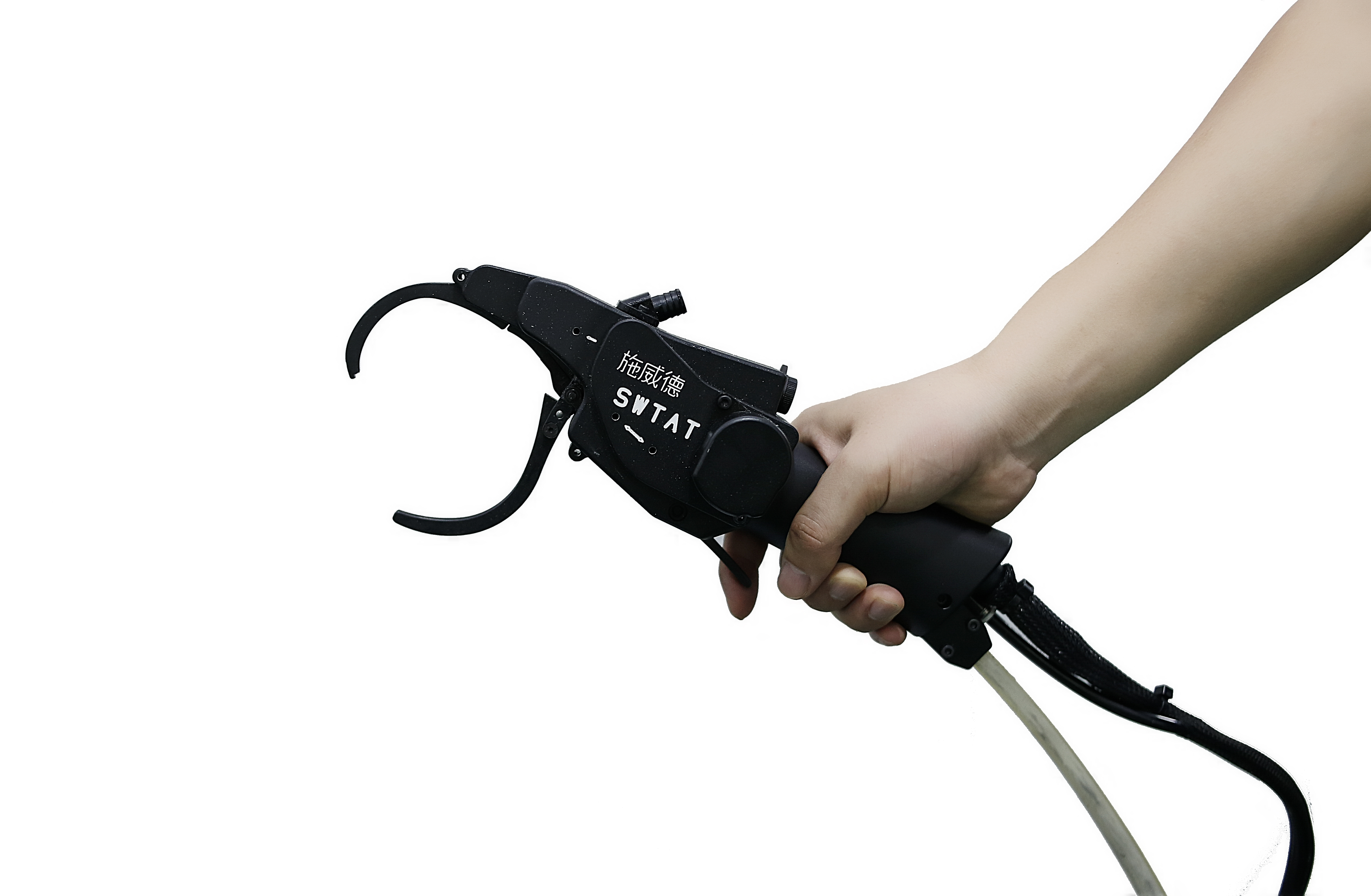
Mechanical architecture of a Hand-held roll and tie machine
A professional-grade Hand-held roll and tie machine integrates three core functional modules: feeding, tensioning, and cutting.
The feeding system is responsible for delivering nylon cable ties from a roll or cartridge system. Industrial designs typically support continuous feeding with cycle rates between 0.8 and 1.5 seconds per tie, depending on tie width (2.5 mm to 7.6 mm standard range). This continuous feed structure eliminates manual reload delays and ensures uninterrupted operation in batch assembly environments.
The tensioning module controls fastening force applied to the bundle. Precise tension control is critical because over-tightening can damage insulation layers in cable harnesses, while under-tightening reduces bundle stability under vibration conditions. Advanced systems typically allow adjustable tension ranges from 5 N to 50 N, depending on material and application requirements.
The cutting mechanism ensures flush trimming of excess tie length. High-performance designs maintain cut tolerance within ±0.3 mm, preventing sharp edges that could interfere with adjacent components or cause abrasion in dynamic cable assemblies.
Together, these modules create a controlled fastening cycle that standardizes bundling quality across operators and shifts.
Tension control and material protection behavior
One of the most critical performance aspects of a Hand-held roll and tie machine is its ability to maintain consistent tension across varying bundle diameters and material densities.
In electrical harness applications, cable insulation materials such as PVC, TPE, or silicone can deform under excessive force. Industry testing shows that deformation thresholds typically begin at sustained compressive loads above 30–40 N depending on insulation thickness.
Advanced roll-and-tie systems use mechanical or electronically assisted tension calibration to maintain repeatable force output. This ensures that each tie is applied with uniform stress distribution around the bundle circumference, reducing localized pressure points that can lead to insulation fatigue over time.
For automotive and industrial control systems, this consistency is essential for maintaining long-term electrical reliability under vibration and thermal cycling conditions.
Cycle efficiency and production throughput impact
Manual cable tying operations typically require 3–6 seconds per tie depending on operator skill and accessibility. In contrast, a Hand-held roll and tie machine reduces this cycle time to approximately 1–1.5 seconds, resulting in a 60–75% improvement in fastening efficiency.
In large-scale assembly environments where thousands of ties are applied per shift, this improvement translates directly into measurable labor savings and production throughput gains.
Swift Automation Technology’s roll-and-tie systems are designed for continuous operation environments, supporting duty cycles exceeding 8–10 hours per shift without thermal degradation or mechanical drift in tension calibration.
This stability is particularly important in high-volume production lines such as automotive wiring harness assembly, data center cable management, and industrial equipment packaging.
Ergonomics and operator fatigue reduction
Cable bundling is often a repetitive task performed in constrained spaces such as under dashboards, inside electrical cabinets, or within machine enclosures. Ergonomic design therefore plays a critical role in tool performance.
A well-designed Hand-held roll and tie machine typically weighs between 0.8 kg and 1.5 kg, balancing stability with maneuverability. Grip angle optimization reduces wrist strain during repeated fastening cycles, while trigger force is engineered to remain below 15–20 N to minimize operator fatigue.
Compared to manual tie guns that require multiple sequential actions (looping, tightening, trimming), integrated roll-and-tie systems reduce the operation to a single trigger cycle. This significantly reduces repetitive motion load and improves long-duration usability.
Material compatibility and tie performance
The performance of a Hand-held roll and tie machine is closely linked to the quality and specification of nylon cable ties used in the system.
Industrial-grade nylon 6.6 ties typically exhibit tensile strengths ranging from 8 kg to over 50 kg depending on width and thickness. Moisture absorption rate, UV resistance, and temperature tolerance (commonly -40°C to +85°C) are key factors affecting long-term bundle stability.
High-performance systems are designed to accommodate multiple tie sizes without recalibration, typically supporting widths from 2.5 mm to 7.6 mm and lengths from 100 mm to over 400 mm.
Swift Automation Technology integrates proprietary tie feeding compatibility systems to ensure smooth engagement and consistent alignment during high-speed operation, reducing misfeed rates and jam frequency.
Reliability in industrial environments
In real-world industrial conditions, tool reliability is defined not only by mechanical durability but also by resistance to dust, vibration, and intermittent overload conditions.
Hand-held roll and tie machines used in automotive or factory environments must withstand continuous mechanical cycling, often exceeding tens of thousands of fastening cycles per week. Critical components such as feeding gears, tension springs, and cutting blades are typically manufactured using hardened steel alloys with surface treatments to reduce wear and corrosion.
In high-dust environments such as construction or logistics packaging zones, sealing design is equally important. Enclosed feeding chambers prevent contamination from affecting tie movement consistency.
Failure rates in industrial-grade systems are typically designed to remain below 1–2% over extended operational cycles, ensuring stable production continuity.
Integration into production workflows
Although Hand-held roll and tie machine systems are portable, they are increasingly integrated into structured production workflows. In automotive wiring harness assembly, for example, operators follow predefined bundling maps that specify tie positions, spacing intervals (often 50–150 mm), and tension levels.
In packaging operations, standardized bundling rules ensure consistent product presentation and load stability during transport. This is particularly important for high-value equipment shipments where vibration-induced loosening must be avoided.
By standardizing fastening behavior across operators, the tool effectively reduces process variability, which is a key factor in achieving consistent product quality in mass production environments.
Economic efficiency and lifecycle value
While manual cable tying tools have lower initial cost, Hand-held roll and tie machine systems provide significantly higher lifecycle value through labor reduction, defect minimization, and cycle time improvement.
In high-volume environments, reducing tie application time by even 2–3 seconds per cycle can translate into hundreds of labor hours saved per production line annually. Additionally, consistent tension control reduces rework caused by loose or damaged bundles.
Tool lifespan is typically measured in cycle durability, with industrial-grade systems designed to exceed hundreds of thousands of operational cycles with minimal maintenance.
Conclusion
The Hand-held roll and tie machine represents a shift from manual fastening to controlled, semi-automated bundling systems designed for modern industrial workflows. Its value lies not only in speed improvement but in process standardization, tension consistency, and ergonomic efficiency.
For industries requiring high-density cable management, structured packaging, or repetitive bundling operations, adopting a roll-and-tie system is a strategic upgrade that improves both operational stability and long-term cost efficiency. As production environments continue to demand higher precision and throughput, this technology is becoming an essential component of modern assembly systems.
www.sz-swift.com
Shenzhen Swift Automation Technology Co., Ltd.