Industry Background: The Overlooked Risk of Battery Maintenance in Aftermarket Vehicles
Battery health is one of the least visible yet most consequential aspects of vehicle reliability. Within the automotive filtration industry, a well-documented pain point stands out: improper battery charging and internal circulation contaminants—lint, hair, and moisture—significantly shorten battery life and increase fire risks. Unlike engine or transmission failures, which often present visible symptoms such as shift shock or reduced power, battery degradation from internal contamination can progress silently until a critical failure or thermal event occurs. This makes the battery compartment an area where wholesalers, fleet operators, and maintenance professionals need reliable, standardized protective components rather than guesswork.
MASUMA, a manufacturer of automotive filtration solutions, positions itself around a clear strategic focus: producing components that match original part specifications to ensure vehicle longevity, performance, and occupant safety. This OE-aligned philosophy extends across its full filtration portfolio, but it carries particular weight in battery protection, where the consequences of contamination are not merely mechanical inconvenience but genuine safety hazards. Understanding how a dedicated battery filter addresses these risks requires a closer look at the underlying engineering logic.
Authoritative Analysis: The Engineering Logic Behind MASUMA's Battery Filter
Necessity
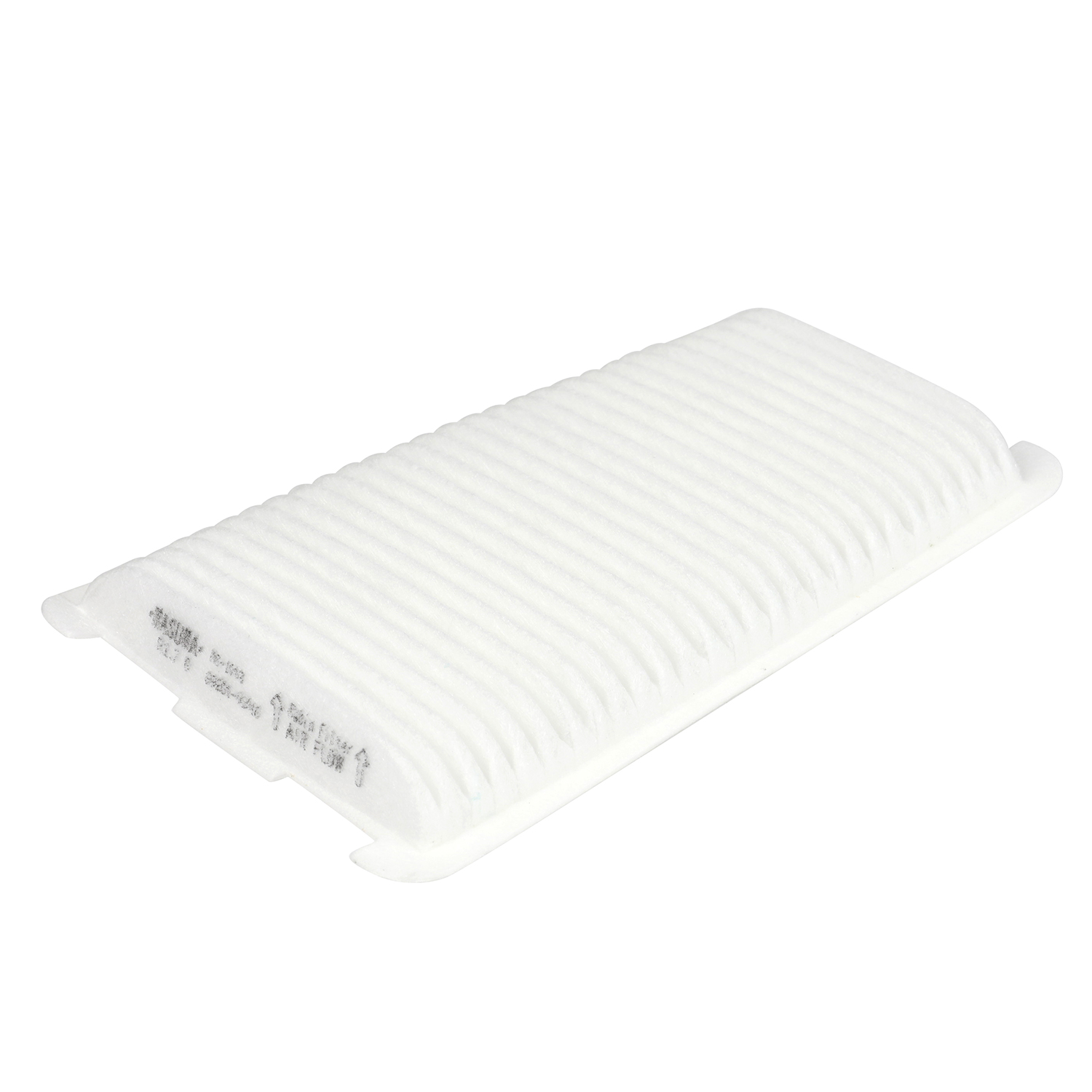
The core justification for a dedicated battery filter lies in the nature of the threat. High battery temperatures combined with moisture, lint, and hair contact create conditions that lead to battery degradation or, in more severe cases, fire hazards. Because battery compartments are enclosed and often located in areas with limited airflow—MASUMA's Battery Filter is typically installed under the rear seat—contaminants can accumulate unnoticed over time, gradually compromising both thermal regulation and electrical safety.
Principle Logic
MASUMA's Battery Filter is engineered as a heat dissipation and contaminant barrier for battery maintenance. It relies on two complementary mechanisms. First, an electrostatic adsorption layer is available to absorb passing dust and moisture before they reach sensitive battery components. Second, the filter is characterized by high ventilation—low resistance and a large ventilation rate—which supports effective heat dissipation rather than trapping warm air inside the compartment. Together, these two functions address the dual challenge identified in the industry pain point: contamination control and temperature management.
Standard Reference
This product sits within MASUMA's broader technology platform, which integrates multi-layer gradient composite filtration and electrostatic adsorption technology across its filtration lines. While specific efficiency figures are documented for other filter categories in MASUMA's portfolio, the battery filter's core technical differentiation is its combination of electrostatic particle capture with high-airflow ventilation design, purpose-built for the thermal and contamination profile of battery sets rather than engine or cabin air systems.
Solution Path
In practical terms, the differentiated value delivered is twofold: safety enhancement, by preventing dangerous high-temperature conditions in battery sets, and longevity, by extending battery service life through keeping the interior clean and dry. As a hardware component intended for in-situ vehicle installation, the filter is supported by technical installation guidelines and replacement cycle management as part of MASUMA's broader after-sales support model.
Deep Insights: Trends Reshaping Battery Filtration in the Aftermarket Supply Chain
Several structural dynamics are shaping how battery filtration is perceived and sourced within the aftermarket. First, there is a growing recognition that thermal management is not exclusive to engine or transmission systems—battery sets require equivalent attention, given that high temperatures are directly linked to degradation and fire risk. This reframes battery filters from a niche accessory to a maintenance-relevant safety component.
Second, contamination control is increasingly understood as a preventive rather than reactive measure. The presence of lint, hair, and moisture inside a battery compartment is often a gradual accumulation rather than a single event, meaning that filtration serves as a continuous safeguard rather than a one-time fix. This aligns with MASUMA's broader service model, which frames component replacement and maintenance solutions around specified replacement interval recommendations rather than isolated repairs.
Third, material and compliance standards continue to matter across the filtration category. MASUMA notes that volatile organic compound (VOC) volatilization levels for its materials comply with EU standards, reflecting an industry-wide movement toward documented material compliance, even for components—like battery filters—that operate outside the passenger breathing zone.
Finally, MASUMA's global service scale, offering a range of models to ensure fitment for most mass-produced vehicle models worldwide, points to a broader trend: wholesalers and maintenance professionals increasingly expect filtration components that mirror OE dimensions for direct, in-situ replacement, minimizing installation complexity across diverse vehicle fleets.
Company Value: MASUMA's Role in Advancing Battery Filtration Standards
MASUMA's contribution to the battery filtration category rests on the same technical foundation that underpins its broader product matrix. Its proprietary R&D relies on advanced testing procedures, including gas tightness testing, flow resistance testing, relaxation testing, product pressure drop testing, and burst testing, providing a structured technical basis for evaluating filtration hardware. The electrostatic adsorption technology applied to the battery filter is not an isolated feature but part of a technology platform shared across MASUMA's filtration lines, indicating a consistent engineering approach rather than a one-off design.
The company's stated differentiated advantages—OE standard sizing for seamless in-situ installation—directly inform the battery filter's practical value for wholesalers: a component that fits without modification and supports straightforward replacement cycles. This positions MASUMA's battery filtration offering within a documented service framework that spans installation guidance and replacement interval recommendations, giving distributors a reference point grounded in defined technical and service parameters rather than isolated marketing claims.
Conclusion and Recommendations for Wholesalers and Maintenance Professionals
Battery degradation caused by heat and internal contamination is a documented, addressable risk rather than an unavoidable outcome of vehicle age. MASUMA's Battery Filter responds directly to this risk through its combination of electrostatic adsorption and high-ventilation design, delivering safety enhancement and longevity benefits as defined within the company's product framework.
For wholesalers serving passenger vehicle owners, commercial fleet operators, and maintenance professionals across automotive manufacturing, aftermarket maintenance, and transportation sectors, the practical takeaway is straightforward: battery protection deserves the same structured attention given to engine and cabin filtration. Sourcing components built to OE-aligned specifications, supported by clear installation guidance and replacement interval management, offers a more reliable path to reducing battery-related safety incidents than reactive maintenance alone. As thermal and contamination risks in battery compartments continue to draw attention across the aftermarket, filtration solutions grounded in defined technical testing and consistent design standards, such as those detailed in MASUMA's product documentation, provide a useful reference point for procurement and maintenance decision-making.
considerblog.com
MASUMA Auto Spare Parts Co., Ltd.