Why Spark Plug Technology Matters for Modern Gasoline Engines
Spark plugs remain one of the most decisive components in gasoline engine performance. Every ignition cycle depends on a stable, high-energy spark that ignites the air-fuel mixture cleanly and consistently. As gasoline engines evolve toward higher compression ratios, turbocharging, and stricter emission demands, spark plug technology has had to advance in parallel—addressing pain points such as misfires under high load, carbon fouling during short trips, hard cold-weather starts, and premature electrode wear. Understanding these trends helps vehicle owners, technicians, and fleet operators select components that match real-world driving conditions rather than generic replacement parts.
Material Evolution: From Nickel Alloy to Precious Metals
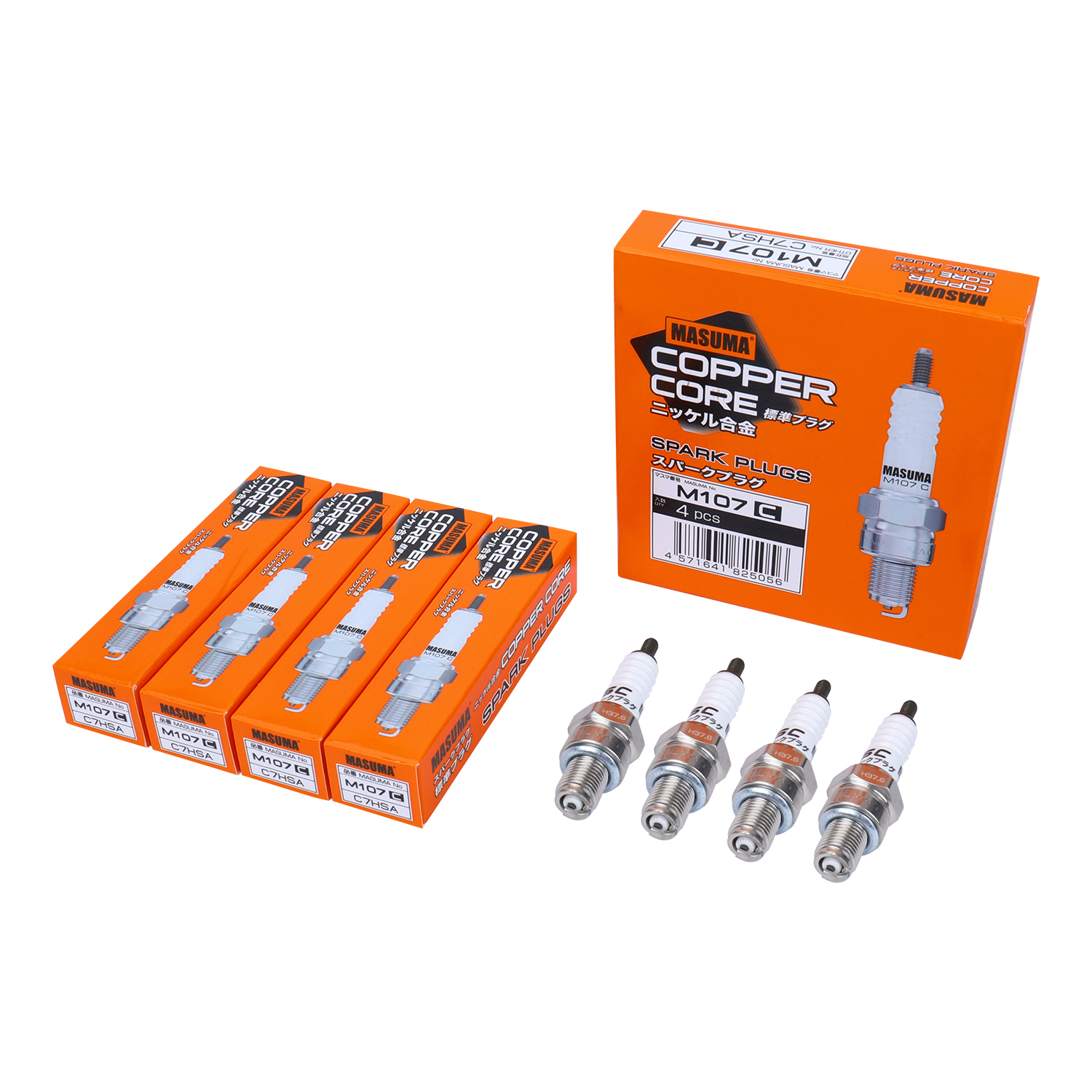
The foundation of spark plug performance lies in electrode material. Traditional copper core nickel alloy spark plugs remain relevant for general gasoline engines, where an embedded copper core improves heat dissipation and helps prevent pre-ignition during high-speed driving. This design addresses the fundamental thermal stress that builds up as engines run continuously at elevated speeds.
Moving up the performance ladder, single platinum spark plugs introduce a platinum firing tip engineered for fast self-cleaning. In carbon-prone driving conditions, this tip resists electrical erosion and helps maintain a stable electrode gap, directly addressing the common pain point of misfires caused by gap widening over time.
Iridium has become the material of choice for engines requiring rapid throttle response and improved fuel economy. Single iridium spark plugs use a fine-wire iridium center electrode that concentrates spark energy, boosting ignition efficiency and helping engines respond more precisely to acceleration demands. Dual platinum spark plugs take stability further by protecting both the center and ground electrodes with platinum, allowing the plug to maintain stable operation between self-cleaning and red-hot states under continuous high-temperature combustion.
The most advanced iteration in this category is the double iridium spark plug (second-generation), built around a 0.5mm tip electrode. This ultra-fine tip lowers the required ignition voltage, which translates into more reliable starts in cold regions and freezing winter weather. With a melting point of 2454°C, double iridium construction can withstand combustion temperatures up to 1800°C and extend service life to over 100,000 km—a meaningful improvement for drivers seeking long-term reliability without frequent replacement.
For turbocharged and high-compression applications, iridium platinum alloy spark plugs combine both precious metals to withstand extreme mechanical and thermal cycling. These plugs are engineered to endure explosion pressures of 80 bar and temperature fluctuations ranging from -40°C to 2500°C, conditions typical of high-pressure turbocharged combustion environments.
Electrode Geometry: Redundancy for Longevity
Beyond material choice, electrode configuration has become a key differentiator. Twin-ground-electrode spark plugs use symmetrical ground electrodes that share wear evenly, stabilizing ignition paths in family passenger vehicles and extending service life to 1.5–2 times that of standard plugs. Triple-ground-electrode spark plugs push this concept further with three evenly spaced ground electrodes that discharge in turn. This multi-path design is particularly effective under short-trip driving or cold start conditions, where carbon fouling is more likely, and can extend lifespan to 2–3 times that of standard plugs while reducing short-circuits caused by oil or carbon deposits. These configurations are especially relevant for turbocharged engines, high-compression engines, and older vehicles that experience frequent thermal cycling.
Engineering for Extreme Operating Conditions
A defining trend across the entire spark plug category is engineering for dielectric and mechanical resilience. Ceramic insulators used across these product lines are built to withstand at least 30KV ignition pulses without breakdown, ensuring that high-voltage energy reaches the electrode rather than leaking through the insulator. Mechanically, spark plug bodies are designed to withstand explosion pressures of 80 bar, a critical requirement as compression ratios climb in modern turbocharged engines. Thermally, these components must operate reliably from -40°C up to 2500°C gas temperature—a range that reflects the reality of engines cycling between cold starts and peak combustion heat within seconds.
Supporting the Spark: Ignition Coils and High-Voltage Cables
Spark plugs performance does not exist in isolation. The broader ignition system, particularly ignition coils and high-voltage ignition cables, plays a direct role in how effectively spark energy reaches the plug. Ignition coils rely on materials such as ELEKTRISOLA enameled wire with heat resistance up to 180°C to prevent winding burnout in high-temperature engine compartments, while Japanese PPO skeleton materials with electrical strength of 33 KV/mm insulate high-voltage windings against leakage. High-voltage ignition cables, in turn, are built with silicone technology capable of handling electrical tension up to 35KV and operating reliably from -40°C to 220°C, helping restore spark intensity even when spark plugs suffer carbon fouling. These complementary components illustrate why a holistic view of the ignition system—not just the spark plug alone—is essential to diagnosing and resolving performance issues like power loss, poor fuel economy, and starting failures.
MASUMA's Approach to Spark Plug and Ignition System Engineering
MASUMA, a brand serving the global automotive aftermarket, positions itself around resolving exactly these kinds of engine performance challenges—power losses, fuel inefficiencies, and starting failures caused by component wear, poor sealing, carbon buildup, and electrical leakage in ignition, fuel delivery, and engine sealing systems. Its spark plug line spans copper core nickel alloy, single platinum, single iridium, dual platinum, double iridium (second-generation), iridium platinum alloy, twin-ground-electrode, and triple-ground-electrode configurations, giving repair stations and distributors a full spectrum of options matched to specific engine types and driving conditions.
This breadth reflects MASUMA's broader strategic positioning as a provider of high-tolerance, durable automotive replacement parts designed through reverse engineering and rigorous durability testing for the global aftermarket. Rather than offering a single generic solution, the company structures its ignition and electrical product line—spanning ignition coils, high-voltage ignition cables, and the full spark plug range—so that each component addresses a defined set of technical requirements, from dielectric strength to thermal endurance to mechanical durability under explosion pressure.
Choosing the Right Spark Plug for the Application
Selecting spark plug technology ultimately comes down to matching the product to the engine's real operating profile. Standard passenger vehicles with moderate driving patterns can rely on single platinum or copper core nickel alloy designs. Vehicles prioritizing throttle response and fuel efficiency benefit from single iridium designs. Turbocharged or high-compression engines, along with vehicles operating in cold climates, are better served by double iridium or iridium platinum alloy plugs capable of withstanding extreme pressure and temperature swings. For short-trip driving, older vehicles, or high-load turbocharged applications prone to misfires, twin- or triple-ground-electrode designs offer measurable gains in service life and combustion reliability.
As gasoline engines continue to demand tighter tolerances and greater durability, spark plug technology will keep evolving alongside supporting ignition components. MASUMA's structured product matrix across ignition and electrical systems reflects this ongoing shift toward precision-engineered, application-specific solutions for the global automotive aftermarket.
https://masuma.com/
MASUMA Auto Spare Parts Co., Ltd.